

-
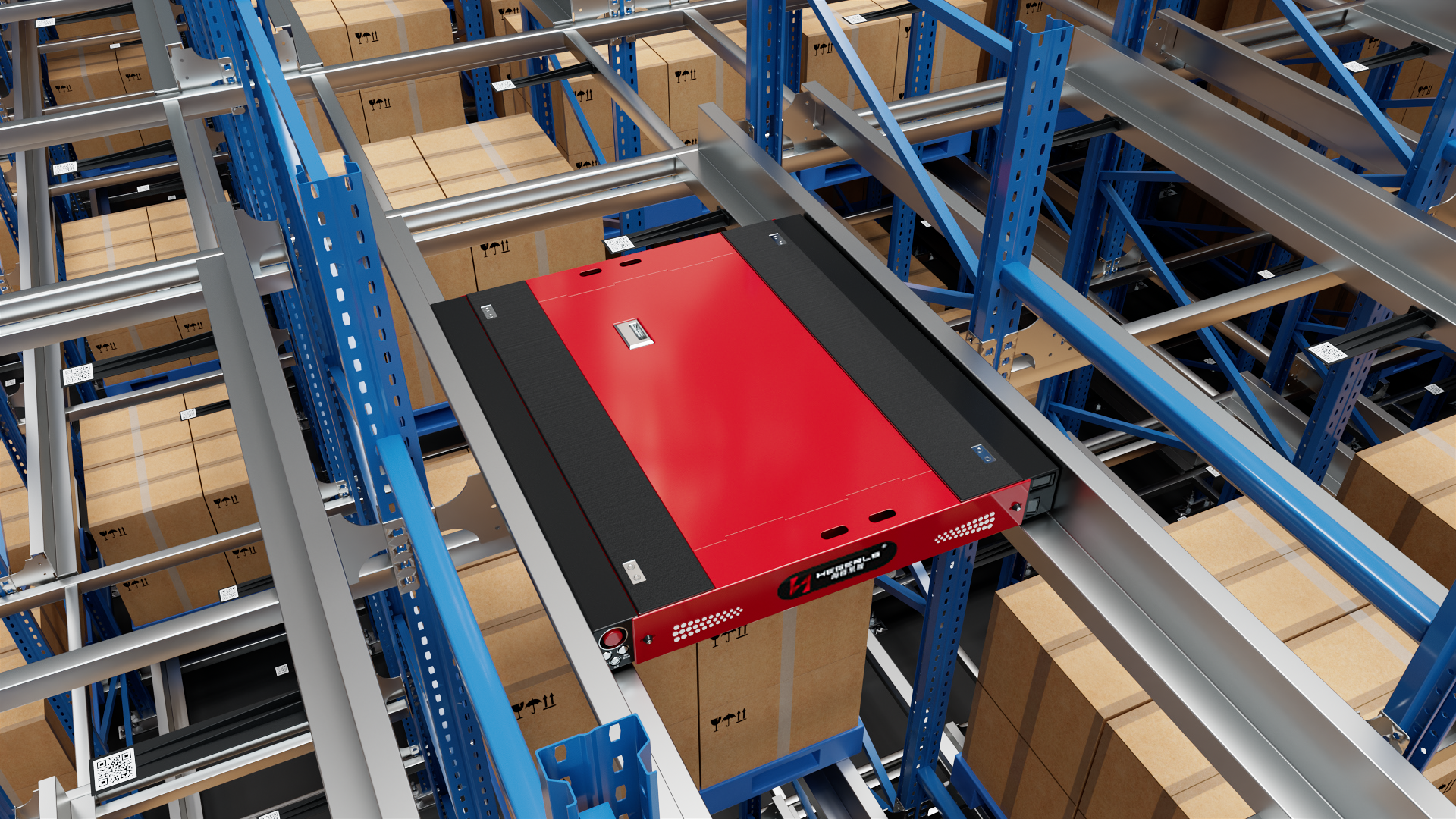
SOLUTIONSIn recent years, “Hegerls" HD shuttle storage system have improved, upgraded, more intelligent, flexible, and more systematic, which can meet the different needs of customers in various industries.
 SERVICE
 -
-
R & DObtained more than ten national patents for automated logistics warehousing equipment such as shuttle cars, stackers, and mobile shelves, awarded SGS, BV, and TUV international product quality inspection agency certificates, as well as the "Quality, Environment, Health" ISO three major system certification certificates.
SERVICE
-
PROJECTSAfter Haigelis entered the international market in 2011, it exported supermarket equipment, warehousing equipment, and related supporting products to countries and regions such as North America, South America, Europe, Southeast Asia, and Africa. In recent years, the company has increased its efforts in the research and development of automated warehousing equipment.
SERVICE
-
BlogProfessional articles, guides, and insights on warehouse racking and automated storage systems.
SERVICE
-
HEGERLSIt's developed over 20 years, our company has become a one-stop integrated service provider of warehousing and logistics, integrating warehousing and logistics project design...
SERVICE

APPLICATION
Warehouse Control Systems (WCS): A Complete Guide
Classification:
Industry Info
Release time:
2025-09-11
In today’s fast-paced logistics and e-commerce landscape, warehouses are no longer just storage hubs—they must be intelligent, agile, and highly efficient. At the heart of this transformation lies the Warehouse Control System (WCS). Acting as the “air traffic controller” of warehouse operations, a WCS ensures that automated equipment works seamlessly together, bridging the gap between warehouse management systems and the physical layer of automation.
What Is a Warehouse Control System?
A Warehouse Control System (WCS) is real-time software designed to direct and synchronize warehouse automation equipment such as conveyors, sorters, shuttles, robotics, and automated guided vehicles (AGVs). Sitting between a Warehouse Management System (WMS) and the equipment layer, the WCS translates high-level inventory or order instructions into precise execution steps.
In simple terms, a WCS orchestrates every movement inside the warehouse to keep goods flowing smoothly and efficiently.

Main Functions of WCS Warehouse Control System
The functionality of WCS is far more comprehensive than simple equipment control. It serves as a "connector" and "data distributor" in warehouse operations, with three core capabilities:
Multi-Interface Compatibility: WCS supports diverse interface options, including FTP, TCP/IP Sockets, ODBC, Shared Table, and Web Service, enabling seamless communication with multiple "Host Systems". For warehouses with unique needs, custom interfaces are also available—this flexibility ensures it integrates with existing systems without large-scale overhauls.
Direct Industrial Communication: Equipped with OPC (Open Platform Communication) software, WCS can communicate directly with industrial controllers like PLCs (Programmable Logic Controllers). For example, it can send lane assignment instructions to sorters or pass/fail signals to reject diverters, ensuring precise equipment operation.
Data-Driven Reporting: WCS records and stores operational data, generating three types of critical reports:
- Current Reports: Provide real-time performance metrics such as throughput rates, process totals, error counts, and scanner performance—helping managers grasp on-site operations instantly.
- History Reports: After a preset period, current reports are archived as history data for long-term analysis, supporting trend prediction and process optimization.
- Maintenance Reports: Detail equipment issues, including error descriptions, downtime duration per failure, and total downtime—laying the foundation for proactive maintenance.
Its core functions include:
Equipment Control and Coordination: Manages automated systems such as conveyors, shuttles, pick-to-light, and sortation equipment to ensure smooth workflows.
Real-Time Task Execution: Breaks down WMS instructions into actionable steps and dispatches them to the right machines or zones.
Routing and Flow Management: Determines optimal paths for cartons, pallets, or totes and dynamically redirects items to avoid bottlenecks.
Workload Balancing: Distributes tasks across automation systems to maximize throughput and reduce idle time.
Exception Handling: Detects jams, errors, or equipment failures and automatically reroutes items or alerts operators to minimize downtime.
System Integration: Connects seamlessly with WMS, ERP, and automation subsystems using APIs, web services, or PLC interfaces.
Real-Time Visibility and Reporting: Provides dashboards and monitoring tools that track equipment status, task progress, and throughput in real time.
Key Benefits and Highlights of HEGERLS YUNTU-WCS
Implementing a Warehouse Control System (WCS) brings far-reaching benefits that enhance efficiency, accuracy, and flexibility. Beyond general automation gains, modern HEGERLS YUNTU-WCS also supports advanced capabilities for shuttle-based storage systems.
1. Real-Time Optimization
- Dynamically routes cartons, totes, or pallets through conveyors, lifts, and shuttles.
- Uses fusion algorithms for real-time path planning to avoid congestion and minimize travel time.
- Dedicated vehicle dispatch algorithms balance resources across multiple shuttles.
2. Enhanced Accuracy and Fewer Errors
- Automated execution reduces human error and misrouting.
- Real-time system positioning is synchronized with actual shuttle locations, with a delay of less than one second.
- Over 90% of abnormal tasks can be automatically recovered by the system.
3. Seamless Integration and Visualization
- Bridges WMS/ERP systems with automation equipment and PLCs.
- Supports 2D and 3D visualization, enabling operators to monitor shuttle trajectories and warehouse status in real time.
- Integrates with conveyors, lifts, shuttles, and storage racks for end-to-end control.

4. Scalability and Flexibility
- Adapts to both small-scale automation and large, multi-level shuttle systems.
- Supports simulation of shuttle route planning and execution, helping test system efficiency before live operations.
- Scales easily as new equipment and technologies are introduced.
5. Improved Throughput and Productivity
- Balances workloads to maximize throughput and prevent idle time.
- Real-time monitoring of shuttle, lift, conveyor, goods, and storage locations ensures smooth task execution.
- Historical records of up to seven days of task execution can be stored, reviewed, and replayed for analysis.
6. Cost Reduction and ROI
- Lowers labor dependency through automation.
- Reduces downtime with proactive alerts: the system raises real-time alarms for abnormal tasks, pinpoints issues on the map, and suggests corrective actions.
- Ensures faster return on automation investments through higher efficiency.
7. Real-Time Visibility and Reporting
- Dashboards provide insights into equipment status, task progress, and order flow.
- Playback of historical routes supports troubleshooting and process optimization.
- Enables managers to make faster, data-driven decisions for continuous improvement.
WCS vs. WMS vs. WES: What are the Differences between WCS, WMS and WES?
To better understand the role of a WCS, it helps to compare it with Warehouse Management Systems (WMS) and Warehouse Execution Systems (WES). Here’s a clear comparison to avoid misunderstandings:
WMS: Primarily manages inventory, order processing, and warehouse-wide planning. It answers questions like “What needs to be picked?” and “Where should goods be stored?”
WCS: Focuses on real-time execution and equipment coordination. It answers “How should this pallet or carton move through the warehouse?”
WES: Combines elements of both WMS and WCS. Often seen as an evolution of traditional systems, WES provides end-to-end orchestration of resources, balancing labor, automation, and inventory flows under a single platform.
In short, a WMS manages the plan, a WCS executes the plan, and a WES blends both for complete warehouse optimization.
Here’s a clear comparison to avoid misunderstandings:
| System | Core Focus | Key Responsibilities |
| WMS (Warehouse Management System) | Broad process oversight | Manages receiving, put-away, inventory control, order fulfillment, and labor scheduling—focusing on "what to do" at the strategic level. |
| WCS (Warehouse Control System) | Real-time equipment execution | Controls automated equipment (conveyors, sorters, etc.) to execute tasks—focusing on "how to do it" at the operational level. |
| WES (Warehouse Execution System) | Dynamic planning & optimization | Develops optimal execution plans based on real-time conditions (e.g., workforce, order volume, equipment status)—combining strategic planning and operational adjustment. |
How to Choose the Right WCS for Your Business
Selecting a WCS that fits your needs requires considering both current operations and future growth. Key factors to evaluate include:
Product Characteristics: The type of products you store (e.g., fragile goods, perishables) determines the required equipment compatibility (e.g., gentle conveyors for fragile items).
Facility Size & Layout: A large, multi-zone warehouse needs a WCS with strong multi-island coordination capabilities, while a small warehouse may prioritize simplicity and cost-effectiveness.
SKU & Order Volume: Warehouses with thousands of SKUs or high order volumes (e.g., e-commerce fulfillment centers) require WCS with high throughput and real-time data processing capabilities.
Labor & Budget: Ensure the WCS matches your labor skills (e.g., user-friendly interfaces for teams with limited technical expertise) and aligns with your budget for software and implementation.
Scalability: Choose a scalable WCS to support future expansion (e.g., adding new automation equipment or expanding warehouse space) without replacing the entire system.
Conclusion
In today’s logistics landscape, where speed and accuracy are critical, Warehouse Control Systems (WCS) are no longer optional but essential. By bridging WMS and automated equipment, optimizing workflows, and providing data-driven insights, WCS helps warehouses reduce costs, improve productivity, and meet rising customer demands. If you’re ready to transform your warehouse to a smarter warehouse, investing in the right WCS is the first step. Contact our team today to explore Warehouse Control Systems tailored to your business needs.
FAQ
1. What is a warehouse control system (WCS)?
A warehouse control system (WCS) is software that manages and coordinates automated equipment in real time, ensuring that materials move efficiently through conveyors, shuttles, sorters, and other systems inside a warehouse.
2. What does a WCS do in warehouse operations?
A WCS translates high-level instructions into executable tasks, controls equipment movement, optimizes routing, balances workloads, and handles exceptions to keep operations running smoothly.
3. What is the difference between WCS and WMS?
A WMS focuses on inventory, orders, and overall warehouse planning, while a WCS focuses on real-time execution by controlling equipment and directing how goods physically move through the warehouse.
4. When does a warehouse need a WCS?
A warehouse typically needs a WCS when automation is introduced, such as conveyors, ASRS, or shuttle systems, because manual coordination becomes inefficient and error-prone at higher levels of complexity.
5. How does a WCS improve warehouse efficiency?
A WCS improves efficiency by optimizing material flow, reducing congestion, automating decision-making, and ensuring equipment operates in sync, which increases throughput and reduces downtime.
6. What types of equipment does a WCS control?
A WCS typically controls conveyors, sorters, automated storage and retrieval systems (ASRS), shuttle systems, AGVs/AMRs, and other material handling equipment to coordinate warehouse operations.
7. Can a WCS integrate with existing systems like ERP or WMS?
Yes, a WCS is designed to integrate with WMS and ERP systems, acting as a bridge between business-level planning and physical warehouse execution.
8. What are the key benefits of implementing a WCS?
Key benefits include improved operational accuracy, real-time visibility, optimized equipment utilization, reduced labor dependency, and faster order processing, making warehouses more efficient and scalable.
9. Is a WCS necessary for small warehouses?
Not always. Smaller warehouses with limited automation may operate efficiently without a WCS, but as operations grow and automation increases, a WCS becomes essential for coordination and control.
10. How scalable is a warehouse control system?
Modern WCS solutions are highly scalable, allowing businesses to add new equipment, expand warehouse areas, and increase throughput without replacing the entire system.
11. What challenges can occur when implementing a WCS?
Common challenges include system integration complexity, data synchronization issues, incorrect workflow design, and the need for proper training to ensure smooth adoption and operation.
12. How to choose the right warehouse control system?
Choosing the right WCS involves evaluating compatibility with automation equipment, system flexibility, scalability, ease of integration, and the supplier’s technical support and implementation experience.
Key words:
warehouse control system,WCS software,warehouse automation control,automated warehouse control system,ASRS WCS software
Related Cases

Related Products

MOBILE: +86 133 1595 3337
E-mails: hgls-wm@hbgysw.com
Office: Room 1118, Building No.6, Tatan Mall, Tatong Street, Shijiazhuang, China
Production base: 68 Shidai Road,Xinhe Industrial Park,Hebei Province
Website: https://www.woke-hercules.com



All rights reserved©2025 Hebei Woke Metal Products Co., ltd.