

-
SOLUTIONSIn recent years, “Hegerls" HD shuttle storage system have improved, upgraded, more intelligent, flexible, and more systematic, which can meet the different needs of customers in various industries.
 SERVICE
 -
-
R & DObtained more than ten national patents for automated logistics warehousing equipment such as shuttle cars, stackers, and mobile shelves, awarded SGS, BV, and TUV international product quality inspection agency certificates, as well as the "Quality, Environment, Health" ISO three major system certification certificates.
SERVICE
-
PROJECTSAfter Haigelis entered the international market in 2011, it exported supermarket equipment, warehousing equipment, and related supporting products to countries and regions such as North America, South America, Europe, Southeast Asia, and Africa. In recent years, the company has increased its efforts in the research and development of automated warehousing equipment.
SERVICE
-
BlogProfessional articles, guides, and insights on warehouse racking and automated storage systems.
SERVICE
-
HEGERLSIt's developed over 20 years, our company has become a one-stop integrated service provider of warehousing and logistics, integrating warehousing and logistics project design...
SERVICE

APPLICATION
WMS vs. WCS in Smart Warehousing: Roles, Collaboration and Engineering Practices
Classification:
Industry Info
Release time:
2026-01-12
Why Distinguish WMS and WCS?
In modern smart warehouse systems, many companies confuse Warehouse Management Systems (WMS) with Warehouse Control Systems (WCS). Engineering practice shows that lack of clear boundaries between WMS and WCS often leads to inefficiencies or frequent errors after implementation.
What Is WMS (Warehouse Management System)?
Warehouse Management System (WMS) focuses on inventory organization, operational strategy, and high-level decision logic. Key functions of WMS include:
- Order management and picking wave planning
- Inventory logic and optimized slotting
- Inbound/outbound strategy such as FIFO and shelf-life control
Typical WMS Traits:
✔ Decision-oriented layer
✔ Deep integration with ERP or production systems
✔ Does not directly control physical automation devices

What Is WCS (Warehouse Control System)?
Warehouse Control System (WCS) is the execution layer responsible for equipment coordination and real-time device control. Its core functions include:
- Device control for shuttle systems, stacker cranes, AMRs/AGVs
- Priority dispatch and route optimization
- Real-time exception handling and alarms
Typical WCS Traits:
✔ Focused on execution
✔ Real-time communication with automated devices
✔ Limits to actionable commands rather than strategic decisions

WMS vs. WCS: Functional Division
| System | Core Role | Inputs | Outputs |
|---|---|---|---|
| WMS | Inventory strategy and task planning | ERP/Order data | Picking, replenishment tasks |
| WCS | Scheduling and equipment execution | WMS tasks + device status | Device instructions & feedback |
Easy Summary:
👉 WMS decides what needs to be done; WCS determines how to do it.
Best Practices for WMS-WCS Collaboration
Interface Design
- Ensure clear and standardized interfaces so that:
- WMS publishes tasks → WCS executes
- WCS reports execution status → WMS updates inventory
Scheduling Strategy Optimization
- Peak periods: WCS dynamically adjusts priorities based on equipment status.
- Off-peak: Wave execution improves overall balance.
- Exception handling: Auto-reassignment improves system stability.
Simulation and Validation
Use simulation tools to:
✔ Predict bottlenecks
✔ Validate throughput capacity
✔ Reduce deployment risks
HEGERLS Engineering Case Studies
Case 1: Moroccan Rack-Supported Warehouse Project
Integrated: Rack-supported structure + stacker cranes + shuttle systems + HEGERLS proprietary WMS/WCS.
Results:
✔ 30% better slot utilization via WMS
✔ 35% higher throughput from dynamic WCS dispatch
✔ <1% annual system downtime
✔ Scalable software platform for future growth

Case 2: Domestic Automotive Parts Smart Warehouse
Configuration: stacker cranes + HEGERLS WMS/WCS
Benefits:
✔ Multi-SKU inventory accuracy improved
✔ High-peak stable execution with 12 stacker cranes
✔ 40% throughput rise; 25% labor cost reduction

Engineering Summary: Core WMS-WCS Integration Tips
Key Takeaways:
📌 Define clear boundaries – strategic vs. execution logic
📌 Standardize interfaces for tasks, status, and exceptions
📌 Apply dynamic dispatch strategies for peak efficiency
📌 Use simulation to avoid conflicts and deadlocks
📌 Plan for maintenance with modular design
Conclusion:
A successful automated warehouse system depends on optimized collaboration between WMS and WCS, supported by engineering planning, simulation, and practical data-driven control loops.
Looking to deploy or upgrade an automated warehouse? Contact HEGERLS to design a customized WMS + WCS solution tailored to your operational needs.
FAQ
What is WMS in warehouse automation?
WMS (Warehouse Management System) is responsible for inventory management, order processing, and operational strategy in automated and smart warehouses.
What is WCS and how does it work?
WCS (Warehouse Control System) manages real-time control and scheduling of automated equipment such as shuttles, stacker cranes, conveyors, and AGVs.
What is the main difference between WMS and WCS?
WMS focuses on decision-making and inventory logic, while WCS focuses on execution and real-time equipment control.
Do automated warehouses need both WMS and WCS?
Yes. Modern automated warehouses rely on both systems to ensure strategic planning and precise execution across all material handling equipment.
How does HEGERLS integrate WMS and WCS?
HEGERLS develops proprietary WMS and WCS platforms designed for seamless integration, scalability, and high-throughput automated warehouse operations.
Key words:
WMS,WCS,smart warehousing,warehouse automation,Warehouse Management Software
Related Solutions
Related Cases

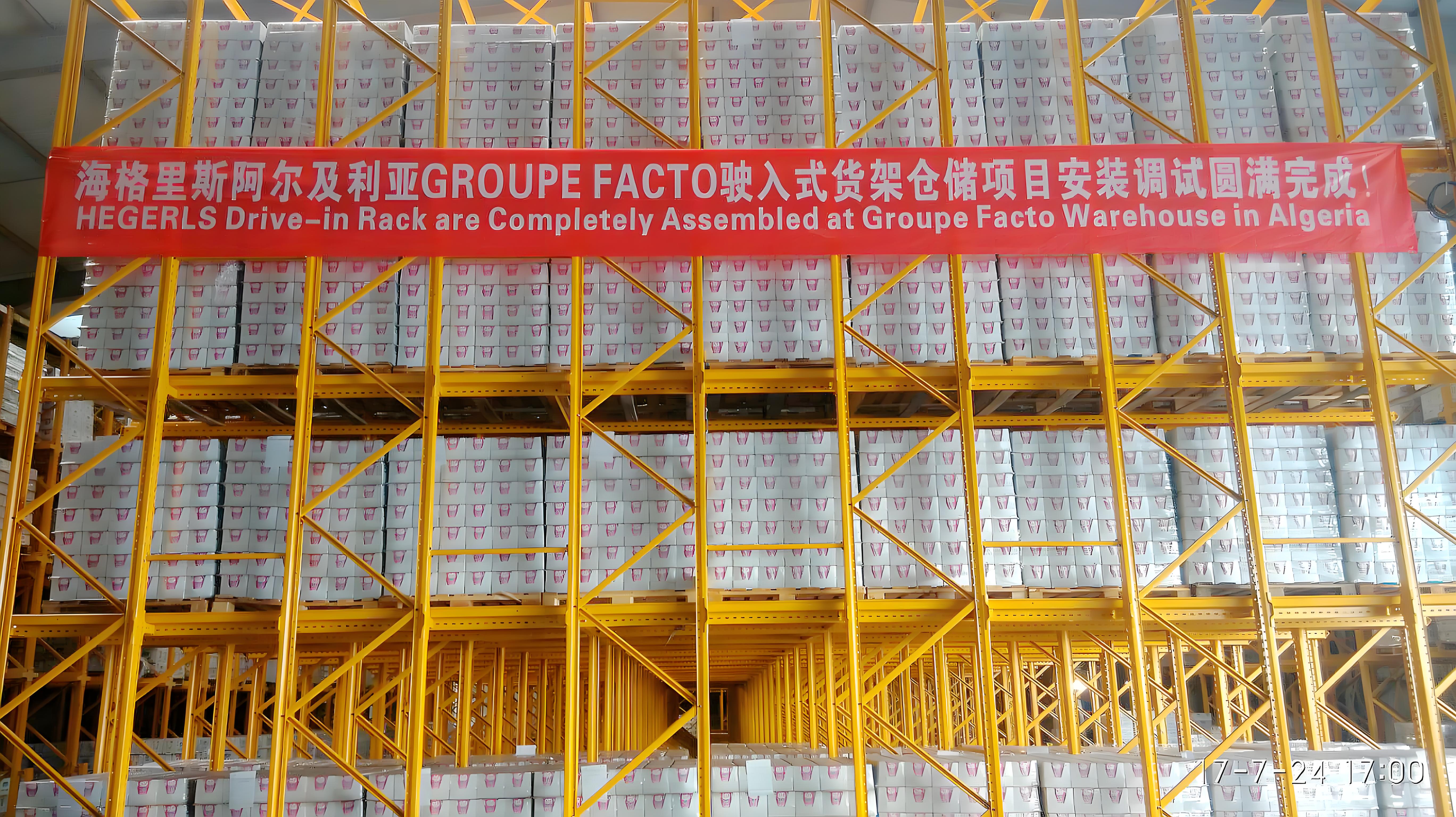
Algeria FACTO Group Storage Project
Related Products

MOBILE: +86 133 1595 3337
E-mails: hgls-wm@hbgysw.com
Office: Room 1118, Building No.6, Tatan Mall, Tatong Street, Shijiazhuang, China
Production base: 68 Shidai Road,Xinhe Industrial Park,Hebei Province
Website: https://www.woke-hercules.com



All rights reserved©2025 Hebei Woke Metal Products Co., ltd.