HEGERLS WMS Software


-
SOLUTIONSIn recent years, “Hegerls" HD shuttle storage system have improved, upgraded, more intelligent, flexible, and more systematic, which can meet the different needs of customers in various industries.
 SERVICE
-
-
R & DObtained more than ten national patents for automated logistics warehousing equipment such as shuttle cars, stackers, and mobile shelves, awarded SGS, BV, and TUV international product quality inspection agency certificates, as well as the "Quality, Environment, Health" ISO three major system certification certificates.
SERVICE
-
PROJECTSAfter Haigelis entered the international market in 2011, it exported supermarket equipment, warehousing equipment, and related supporting products to countries and regions such as North America, South America, Europe, Southeast Asia, and Africa. In recent years, the company has increased its efforts in the research and development of automated warehousing equipment.
SERVICE
-
BlogProfessional articles, guides, and insights on warehouse racking and automated storage systems.
SERVICE
-
HEGERLSIt's developed over 20 years, our company has become a one-stop integrated service provider of warehousing and logistics, integrating warehousing and logistics project design...
SERVICE

APPLICATION
Comprehensive Analysis of the Synergy Mechanism Between WMS, WCS, and Four-Way Shuttles
Classification:
Industry Info
Release time:
2025-11-17
In modern intelligent warehousing systems, four-way shuttle vehicles, WMS (Warehouse Management System), and WCS (Warehouse Control System) form an efficient and collaborative "golden triangle." Each component plays its own role while working closely together to advance warehousing and logistics toward intelligent and automated development. Today, let us delve into the working mechanisms and data interconnections of this collaborative system.
Role positioning of the three core systems

● WMS: The 'Smart Brain' of Warehouse Management
WMS, as the decision-making center of the entire warehousing system, is responsible for global planning and strategy optimization. It not only manages core business processes such as inventory data, order processing, and picking path planning, but also undertakes advanced functions such as resource scheduling and data analysis. The WMS system generates the optimal operational strategy based on the actual operational needs of the warehouse, and decomposes and distributes specific tasks.

● WCS: Flexible Hand and Foot System Execution
WCS is a bridge that connects upper level management systems with lower level devices, focusing on precise task execution. As an "executor", WCS receives task instructions issued by WMS, converts them into specific operation commands that can be recognized by the device, and monitors the device's operating status in real time to ensure the accurate execution of each operation step.
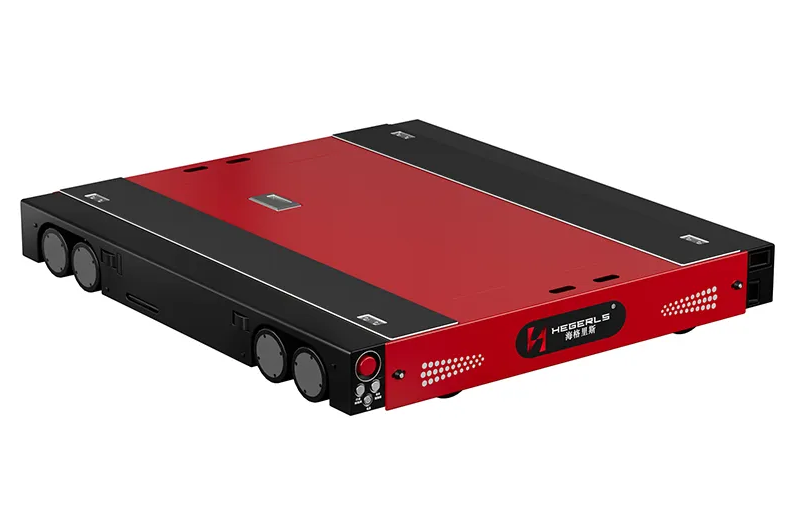
● Four way shuttle: the "all powerful warrior" for warehousing operations
The four-way shuttle car, with its unique four-way mobility, can freely shuttle between narrow shelf tracks, breaking through the motion limitations of traditional storage equipment. It can not only move forward and backward, but also achieve left and right turning, and cooperate with the elevator to complete cross layer operations, truly realizing the omnidirectional coverage of the three-dimensional warehouse
Deep analysis of WMS and WCS collaborative work mechanism
● The complete lifecycle of task flow
When the warehouse receives inbound or outbound instructions, the entire collaborative process is officially initiated. The WMS system first calculates the optimal operation path and resource allocation plan based on factors such as cargo attributes, inventory status, and task priority. Subsequently, these task instructions were accurately issued to the WCS system.
After receiving the task, the WCS system immediately performs task decomposition and device scheduling. For four-way shuttle vehicles, WCS will intelligently allocate the most suitable shuttle vehicle to perform tasks and plan the optimal driving route based on factors such as the current vehicle location, task urgency, and path congestion.
● Accurate execution of four-way shuttle car
Guided by the WMS system, the four-way shuttle maintains real-time data exchange with the upper system through wireless communication technology, accurately receives task instructions, and provides feedback on operating status and location information. When receiving the pickup instruction, the shuttle car will lift the lifting platform face up, accurately lift the pallet unit, and run along the planned route to the destination to complete the storage or retrieval operation of the goods.
● Collaborative cooperation across layers of work
Faced with the complex environment of multi-layer shelves, the four-way shuttle needs to cooperate with the upgrading of confidentiality. When it is necessary to change the operating layer, the shuttle car will automatically travel to the position of the hoist, and the hoist will complete the vertical transportation. The shuttle car is responsible for precise positioning in the horizontal direction. This "vehicle machine collaboration" mode greatly improves the space utilization and operational efficiency of the three-dimensional warehouse.

Data association and information flow
● Bidirectional flow of real-time data
In the entire collaborative system, data flow is the key to efficient system operation. The four-way shuttle uses advanced sensors and control systems to monitor key parameters such as its position, operating status, and load situation in real time, and sends this data back to the WCS system in real-time through wireless networks.
The WCS system aggregates status data from various devices for real-time analysis and anomaly detection, and uploads the aggregated operational data to WMS to provide data support for management decisions. This bidirectional data flow ensures the transparent operation and rapid response capability of the entire system.
● The data foundation of intelligent decision-making
The WMS system is based on real-time data uploaded by WCS, combined with multidimensional information such as historical operational data and business forecasts, to continuously optimize inventory layout, workflow, and resource allocation strategies. For example, when the system detects that the shuttle bus usage frequency in a certain area is too high, WMS will automatically adjust the cargo space allocation strategy to balance the workload of each area and maximize overall operational efficiency.

Collaborative advantages and value creation
● The multiplier effect of efficiency improvement
The deep collaboration of the three has resulted in significant efficiency improvements. The four-way movement capability of the four-way shuttle makes its operating path more flexible, and with the intelligent scheduling of WMS and precise control of WCS, it greatly shortens the time for goods storage and retrieval. Compared to traditional stacker crane systems, this collaborative mode exhibits higher operational efficiency in specific scenarios.
● The architectural advantages of flexible expansion
The intelligent warehousing system based on four-way shuttle has a natural advantage of flexible expansion. When the business volume increases, simply increasing the number of shuttle buses can improve the system throughput capacity without the need for large-scale architecture transformation. The modular design of WMS and WCS also supports the gradual upgrade of system functions, providing a technological foundation for sustainable development for enterprises.
● Data driven continuous optimization
With the accumulation of system running time, WMS can continuously optimize inventory strategies, predict equipment maintenance needs, identify operational bottlenecks, and achieve continuous improvement in warehouse management through big data analysis. This data-driven optimization mechanism makes intelligent warehousing systems increasingly intelligent, creating long-term value for enterprises.

Conclusion
The "golden triangle" composed of four-way shuttle, WMS, and WCS is not only the core technology architecture of modern intelligent warehousing, but also the key support for enterprises to achieve digital transformation of logistics. Through precise collaboration mechanisms, efficient data flow, and intelligent decision optimization, the three have jointly created an efficient, flexible, and intelligent warehousing operation system.
In today's global trend of logistics intelligence, a deep understanding and full utilization of the value of this collaborative system will become an important weight for enterprises to enhance their supply chain competitiveness. We believe that with the continuous advancement of technology and the deepening of application scenarios, this "golden triangle" will bring more significant operational benefits and strategic value to enterprises.
Contact HEGERLS today for a tailored warehouse automation solution and discover how WMS + WCS + four-way shuttle systems can transform your operations.
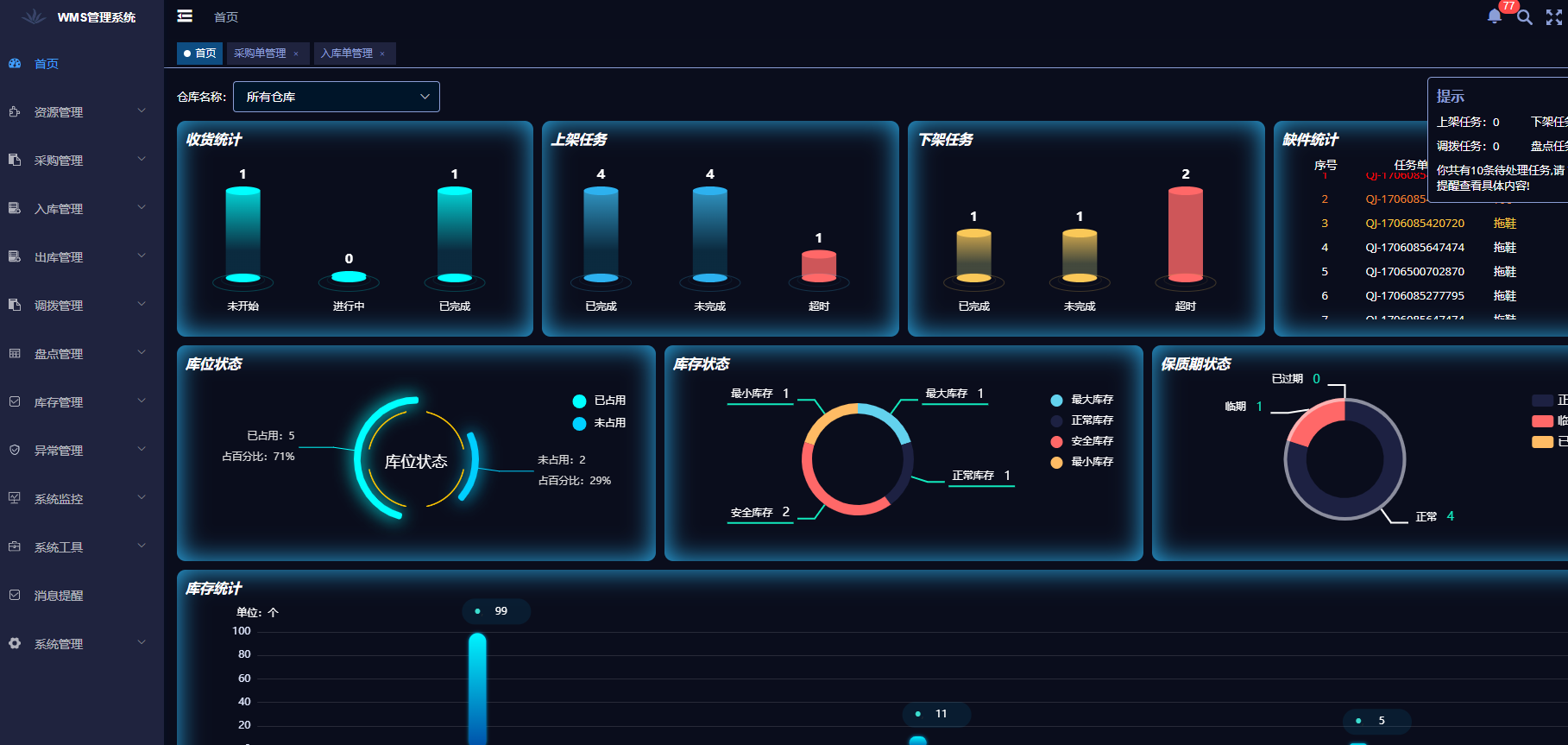
HEGERLS WCS Software

HEGERLS Four-way Shuttle System

FAQ
What is the difference between WMS and WCS?
WMS manages inventory and warehouse operations at a macro level, while WCS controls the real-time execution of automated equipment.
Why are four-way shuttles preferred for high-density storage?
They allow multi-directional movement and dense pallet storage, reducing aisle space and increasing throughput.
Can WMS and WCS be integrated with existing shuttle systems?
Yes, most modern four-way shuttle systems are compatible with WMS/WCS integration and can be customized for specific warehouse needs.
What industries benefit the most from this integration?
E-commerce, cold storage, pharmaceuticals, manufacturing, and automotive industries gain the most from WMS + WCS + four-way shuttle systems.
Key words:
Related Cases

undefined
Related Products

MOBILE: +86 133 1595 3337
E-mails: hgls-wm@hbgysw.com
Office: Room 1118, Building No.6, Tatan Mall, Tatong Street, Shijiazhuang, China
Production base: 68 Shidai Road,Xinhe Industrial Park,Hebei Province
Website: https://www.woke-hercules.com



All rights reserved©2025 Hebei Woke Metal Products Co., ltd.