
-
SOLUTIONSIn recent years, “Hegerls" HD shuttle storage system have improved, upgraded, more intelligent, flexible, and more systematic, which can meet the different needs of customers in various industries.
SERVICE -
-
R & DObtained more than ten national patents for automated logistics warehousing equipment such as shuttle cars, stackers, and mobile shelves, awarded SGS, BV, and TUV international product quality inspection agency certificates, as well as the "Quality, Environment, Health" ISO three major system certification certificates.
SERVICE -
PROJECTSAfter Haigelis entered the international market in 2011, it exported supermarket equipment, warehousing equipment, and related supporting products to countries and regions such as North America, South America, Europe, Southeast Asia, and Africa. In recent years, the company has increased its efforts in the research and development of automated warehousing equipment.
SERVICE -
BlogProfessional articles, guides, and insights on warehouse racking and automated storage systems.
SERVICE -
HEGERLSIt's developed over 20 years, our company has become a one-stop integrated service provider of warehousing and logistics, integrating warehousing and logistics project design...
SERVICE
Warehouse Automation Technology Trends in 2026: The Future of Smart Warehousing and Logistics
Classification:
Industry Info
Release time:
2026-06-03
Introduction: Why Warehouse Automation Is Accelerating Worldwide
The warehouse industry is undergoing one of the most significant transformations in its history. Rising labor costs, growing e-commerce demand, supply chain disruptions, and increasing customer expectations are pushing businesses to rethink traditional warehouse operations.
A decade ago, warehouse automation was considered a competitive advantage. Today, it is becoming a necessity.
Companies are under pressure to:
- Process more orders with fewer workers
- Improve inventory accuracy
- Maximize warehouse space utilization
- Reduce operational costs
- Meet same-day and next-day delivery expectations
- Build resilient supply chains capable of responding to disruptions
As a result, investment in warehouse automation technologies continues to grow across industries such as e-commerce, manufacturing, retail, food and beverage, pharmaceuticals, automotive, and third-party logistics (3PL).
Modern warehouses are evolving from simple storage facilities into intelligent logistics centers powered by automation, robotics, artificial intelligence (AI), and advanced warehouse management systems.
This article explores the most important warehouse automation technology trends shaping the future of warehousing and explains how businesses can prepare for the next generation of smart warehouse operations.

What Is Warehouse Automation?
Warehouse automation refers to the use of technology to automate warehouse processes that were traditionally performed manually.
The goal is to improve efficiency, accuracy, safety, and scalability while reducing labor dependency and operating costs.
Warehouse automation can include:
Storage Automation
Technologies that automate inventory storage and retrieval:
- Automated Storage and Retrieval Systems (ASRS)
- Four-way shuttle systems
- Vertical lift modules
- Automated shelving systems
- Automated bin storage systems
Picking Automation
Technologies that automate order fulfillment:
- Robotic picking systems
- Goods-to-person systems
- Pick-to-light systems
- Vision picking technology
- Automated pick-and-pack systems
Transportation Automation
Systems that automate inventory movement:
- Automated Guided Vehicles (AGVs)
- Autonomous Mobile Robots (AMRs)
- Conveyor systems
- Automated sortation systems
Software Automation
Digital platforms that coordinate warehouse operations:
- Warehouse Management Systems (WMS)
- Warehouse Control Systems (WCS)
- Warehouse Execution Systems (WES)
- AI-driven optimization platforms
Warehouse automation is no longer limited to large enterprises. Increasingly, small and medium-sized warehouses are adopting automation to remain competitive.

Why Warehouse Automation Matters More Than Ever
Labor Shortages Continue to Challenge Warehouse Operations
One of the biggest drivers of automation is the ongoing shortage of warehouse labor.
Many warehouse operators struggle to recruit and retain workers for physically demanding tasks such as:
- Pallet handling
- Order picking
- Inventory counting
- Forklift operation
Automation reduces dependency on manual labor while improving productivity and workplace safety.
E-Commerce Fulfillment Expectations Keep Rising
Consumers increasingly expect:
- Same-day shipping
- Next-day delivery
- Real-time inventory visibility
- Accurate order fulfillment
Meeting these expectations requires faster and more intelligent warehouse operations.
Traditional warehouses often struggle to handle the order volumes generated by modern e-commerce platforms.
Automation provides the speed and scalability required for today's fulfillment environment.
Warehouses Need Higher Storage Density
Warehouse construction costs and industrial real estate prices continue to rise globally.
Businesses must maximize every square meter of warehouse space.
Automation technologies such as:
- ASRS
- Four-way shuttle systems
- High-bay warehouses
- Integrated racking systems
allow companies to significantly increase storage density without expanding facilities.

Supply Chain Resilience Has Become a Strategic Priority
Recent global events have highlighted the importance of resilient supply chains.
Disruptions caused by:
- Pandemics
- Port congestion
- Labor shortages
- Geopolitical conflicts
- Transportation delays
have forced companies to seek greater visibility and flexibility.
Warehouse automation helps businesses maintain operational continuity during periods of uncertainty.
Top 10 Warehouse Automation Technology Trends in 2026
Trend #1: AI-Powered Warehouse Management Systems
Artificial intelligence is transforming warehouse management.
Traditional WMS platforms primarily execute predefined workflows.
Modern AI-powered systems can:
- Predict inventory demand
- Optimize slotting strategies
- Forecast labor requirements
- Detect operational bottlenecks
- Improve order prioritization
Future of Warehouse Management
The future warehouse will increasingly rely on self-optimizing systems capable of making decisions without constant human intervention.
AI will enable warehouses to continuously improve performance based on real-time data.

Benefits of AI-Driven WMS
| Function | Benefit |
|---|---|
| Demand Forecasting | Better inventory planning |
| Dynamic Slotting | Faster picking |
| Predictive Maintenance | Reduced downtime |
| Workforce Planning | Improved labor efficiency |
| Route Optimization | Higher throughput |
Trend #2: Four-Way Shuttle Systems Becoming Mainstream
Among all warehouse automation technologies, four-way shuttle systems are experiencing some of the fastest adoption rates worldwide.
Unlike traditional shuttle systems that move only in one direction, four-way shuttles can move:
- Forward
- Backward
- Left
- Right
This flexibility enables highly efficient storage and retrieval operations.
Why Four-Way Shuttles Are Growing So Quickly
Flexible Expansion: Additional shuttles can be added as business needs grow.
Higher Storage Density: Four-way shuttle systems significantly reduce aisle requirements.
Faster Deployment: Compared with large crane-based ASRS systems, shuttle systems typically require shorter installation times.
Lower Initial Investment: Many companies can implement shuttle systems incrementally rather than making a large one-time investment.
HEGERLS Solution
HEGERLS four-way shuttle systems provide:
- Multi-vehicle collaboration
- Intelligent scheduling
- High-density storage
- Flexible scalability
- Seamless CC-WMS integration

Trend #3: Robotics and Automated Picking Expansion
Warehouse picking often accounts for more than half of warehouse labor costs.
As a result, robotic picking technologies continue to attract significant investment.
Popular Automated Picking Technologies
- Robotic arms
- Vision picking systems
- Goods-to-person systems
- Automated pick-and-pack solutions
- AI-powered picking robots
Benefits
- Faster fulfillment
- Improved accuracy
- Reduced labor dependency
- 24/7 operation capability
Future warehouses will increasingly combine robotic picking with ASRS and shuttle systems to create fully integrated fulfillment workflows.

Trend #4: Autonomous Mobile Robots (AMRs) Replacing Traditional AGVs
Traditional AGVs follow fixed routes.
AMRs use advanced sensors and AI to navigate dynamically.
Advantages of AMRs
- Flexible routing
- Faster deployment
- Reduced infrastructure requirements
- Better adaptability
Common Applications
- Tote transportation
- Pallet movement
- Inventory replenishment
- Order consolidation
AMRs are becoming a key component of modern warehouse automation strategies.

Trend #5: Micro-Fulfillment Centers (MFCs)
The growth of urban e-commerce is driving demand for micro-fulfillment centers.
MFCs are compact automated warehouses located closer to customers.
Benefits
- Faster delivery
- Reduced transportation costs
- Improved inventory availability
- Better customer experience
Technologies Used
- Mini-load ASRS
- Shuttle systems
- Automated picking
- Robotics
MFCs are expected to play a major role in future retail logistics.
Trend #6: Digital Twin Warehouses
Digital twin technology creates a virtual replica of warehouse operations.
This allows businesses to simulate:
- Inventory flow
- Equipment movement
- Picking operations
- Throughput performance
- Energy consumption
Benefits
Real-Time Visibility: Warehouse managers gain complete operational transparency.
Process Optimization: Potential bottlenecks can be identified before they affect performance.
Scenario Testing: Companies can evaluate layout changes and automation investments virtually.
Digital twins are becoming a standard tool for advanced warehouse planning.
Trend #7: Sustainable and Low-Carbon Warehouses
Sustainability is now a major consideration in warehouse design and operation.
Many companies have established carbon reduction targets and are investing in greener logistics infrastructure.
Key Sustainability Trends
Energy-Efficient Equipment
Modern automation systems consume significantly less energy than older technologies.
Smart Lighting
LED systems combined with motion sensors reduce electricity usage.
Renewable Energy
Warehouses increasingly deploy:
- Solar panels
- Battery storage systems
- Smart energy management platforms
High-Density Storage
Automated storage systems reduce building footprints and land requirements.
Benefits
- Lower operating costs
- Reduced emissions
- Improved ESG performance
Trend #8: Cloud-Based Warehouse Platforms
Cloud technology is transforming warehouse software.
Instead of maintaining on-premise systems, companies are adopting:
- Cloud WMS
- Cloud WCS
- SaaS warehouse platforms
Advantages
- Faster implementation
- Lower IT costs
- Automatic updates
- Multi-site visibility
- Enhanced cybersecurity
Cloud-based systems are becoming the preferred deployment model for many organizations.
Trend #9: Human-Robot Collaboration
The future warehouse will not be completely unmanned.
Instead, warehouses will combine human expertise with automation technologies.
Human Roles
Workers will increasingly focus on:
- Exception handling
- Quality control
- Maintenance
- Process improvement
- System supervision
Automation Roles
Automation will handle:
- Transportation
- Storage
- Retrieval
- Repetitive picking
This collaborative approach maximizes productivity while maintaining operational flexibility.
Trend #10: Fully Integrated Smart Warehouses
The ultimate goal of warehouse automation is creating a fully integrated smart warehouse.
These facilities combine:
- ASRS
- Four-way shuttle systems
- Robotics
- AMRs
- Automated picking
- AI-driven WMS
- Real-time analytics

Characteristics of Smart Warehouses
- End-to-end automation
- Real-time inventory visibility
- Predictive decision-making
- Continuous optimization
- Minimal manual intervention
Smart warehouses represent the future of logistics operations.
Future of Warehouse Automation: What Will Warehouses Look Like by 2030?
The future of warehouse automation will be defined by intelligence, connectivity, and flexibility.
By 2030, many warehouses are expected to feature:
Autonomous Operations
AI systems will coordinate inventory movement with minimal human involvement.
Predictive Supply Chains
Warehouses will anticipate demand and automatically adjust inventory levels.
Lights-Out Warehousing
Certain facilities may operate continuously without on-site personnel during specific shifts.
Real-Time Visibility
Every inventory movement will be tracked and analyzed instantly.
Sustainable Infrastructure
Energy-efficient automation and renewable power systems will become standard.
The warehouse of the future will function as an intelligent logistics ecosystem rather than a traditional storage facility.
Small Scale Warehouse Automation: Opportunities for SMEs
Automation is not only for large enterprises.
Small and medium-sized businesses can also benefit from warehouse automation.
Common Challenges
- Limited budgets
- Space constraints
- Lack of technical expertise
Cost-Effective Automation Ideas
Cloud-Based WMS
Provides visibility without major infrastructure investment.
Automated Storage Systems
Compact solutions improve storage density.
Pick-to-Light Systems
Increase picking efficiency at relatively low cost.
Modular Shuttle Systems
Allow gradual automation expansion.
Inventory Tracking Technologies
Barcode and RFID systems improve inventory accuracy.
The modular nature of modern automation technologies makes them increasingly accessible to SMEs.
Warehouse Automation Examples Across Industries
E-Commerce
Challenges:
- High order volumes
- SKU diversity
- Fast fulfillment requirements
Solutions:
- ASRS
- Robotic picking
- Shuttle systems
Manufacturing
Challenges:
- Raw material storage
- Production synchronization
- Parts management
Solutions:
- Unit-load ASRS
- Automated bin storage
- Integrated WMS/MES systems
Cold Storage
Challenges:
- Labor safety
- Energy consumption
- Space optimization
Solutions:
- High-bay ASRS
- Four-way shuttles
- Automated retrieval systems
Automotive
Challenges:
- Heavy inventory
- Just-in-time production
Solutions:
- Automated pallet storage
- Robotic transportation
- Smart inventory management

Pharmaceutical
Challenges:
- Traceability
- Regulatory compliance
- Inventory accuracy
Solutions:
- Mini-load ASRS
- Automated picking
- Real-time tracking systems
How to Prepare Your Warehouse for Future Automation
Step 1: Evaluate Current Operations
Analyze:
- Throughput
- Labor utilization
- Inventory accuracy
- Space utilization
Step 2: Analyze SKU Profiles
Understand:
- SKU quantity
- Turnover rates
- Product dimensions
Step 3: Define Business Objectives
Determine whether your primary goal is:
- Higher storage density
- Faster fulfillment
- Labor reduction
- Improved accuracy
Step 4: Select Scalable Technologies
Invest in solutions that can grow with your business.
Examples include:
- Four-way shuttle systems
- ASRS
- Modular robotics
- Cloud WMS platforms
Step 5: Build a Long-Term Automation Roadmap
Warehouse automation should be viewed as a strategic journey rather than a one-time project.
Why HEGERLS Is Ready for the Future of Warehouse Automation
About HEGERLS
HEGERLS has nearly 30 years of experience in warehouse storage and automation technologies.
The company provides comprehensive intelligent warehousing solutions including:
- Four-way shuttle systems
- ASRS warehouse systems
- Integrated racking systems
- Automated picking solutions
- CC-WMS warehouse software

Key Advantages
- Storage density improvements of up to 300%
- Labor reduction of up to 70%
- Inventory accuracy exceeding 99%
- Seamless ERP, WMS, and MES integration
- Flexible expansion capabilities
By combining advanced hardware and intelligent software, HEGERLS helps businesses build future-ready warehouses that are efficient, scalable, and resilient. Contact HEGERLS now to get the newest warehouse automation technology trends.
FAQ: Warehouse Automation Technology Trends
What is the future of warehouse automation?
The future of warehouse automation will be driven by AI, robotics, AMRs, digital twins, and intelligent warehouse software. HEGERLS supports this transformation through scalable four-way shuttle and ASRS solutions that improve efficiency and flexibility.
What are the latest trends in warehouse management?
Key trends include AI-powered WMS, predictive analytics, cloud-based platforms, robotic picking, and digital twins. HEGERLS CC-WMS helps companies gain real-time visibility and optimize warehouse performance.
What is the fastest-growing warehouse automation technology?
Four-way shuttle systems are among the fastest-growing technologies because they offer high storage density, flexibility, and scalability compared to many traditional storage systems.
Can small warehouses benefit from automation?
Yes. Small-scale warehouse automation solutions such as cloud WMS, pick-to-light systems, and modular shuttle systems can significantly improve productivity without requiring large investments. HEGERLS provides scalable solutions suitable for growing businesses.
Will warehouses become fully automated?
Some highly automated facilities may achieve near-autonomous operation, but most future warehouses will use a combination of human expertise and automation technologies. HEGERLS focuses on creating balanced, efficient, and practical automation environments.
What technologies will dominate warehouses by 2030?
AI, ASRS, four-way shuttles, AMRs, robotic picking, digital twins, and cloud-based warehouse management platforms are expected to dominate future warehouse operations. HEGERLS continues to invest in these technologies to support long-term customer success.
Key words:
future of warehouse automation,warehouse automation examples,warehouse automation trends,warehouse trends,warehouse automation technology trends
Related Cases
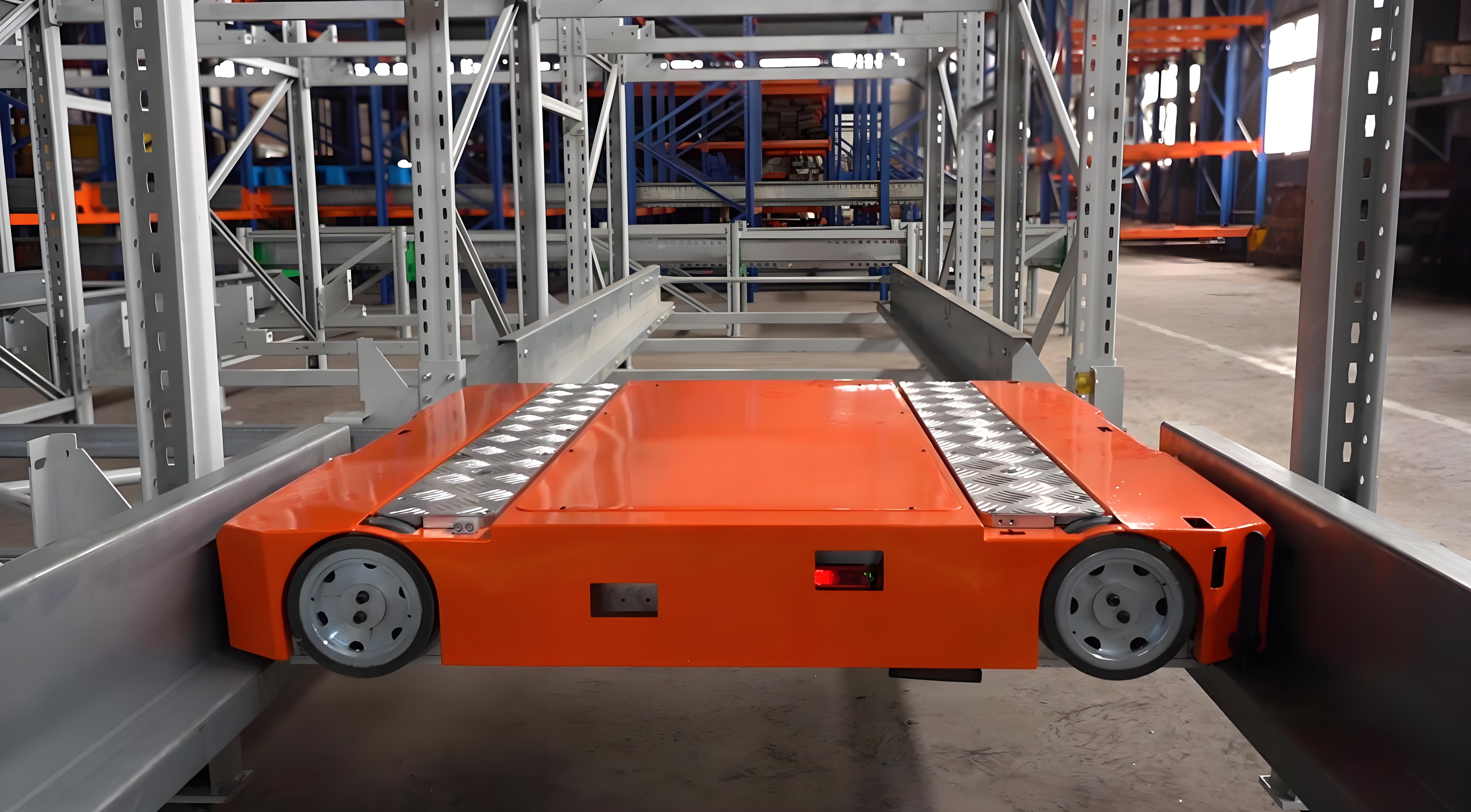
Integrated Warehouse Rack Project in Morocco | Rack Supported Warehouse
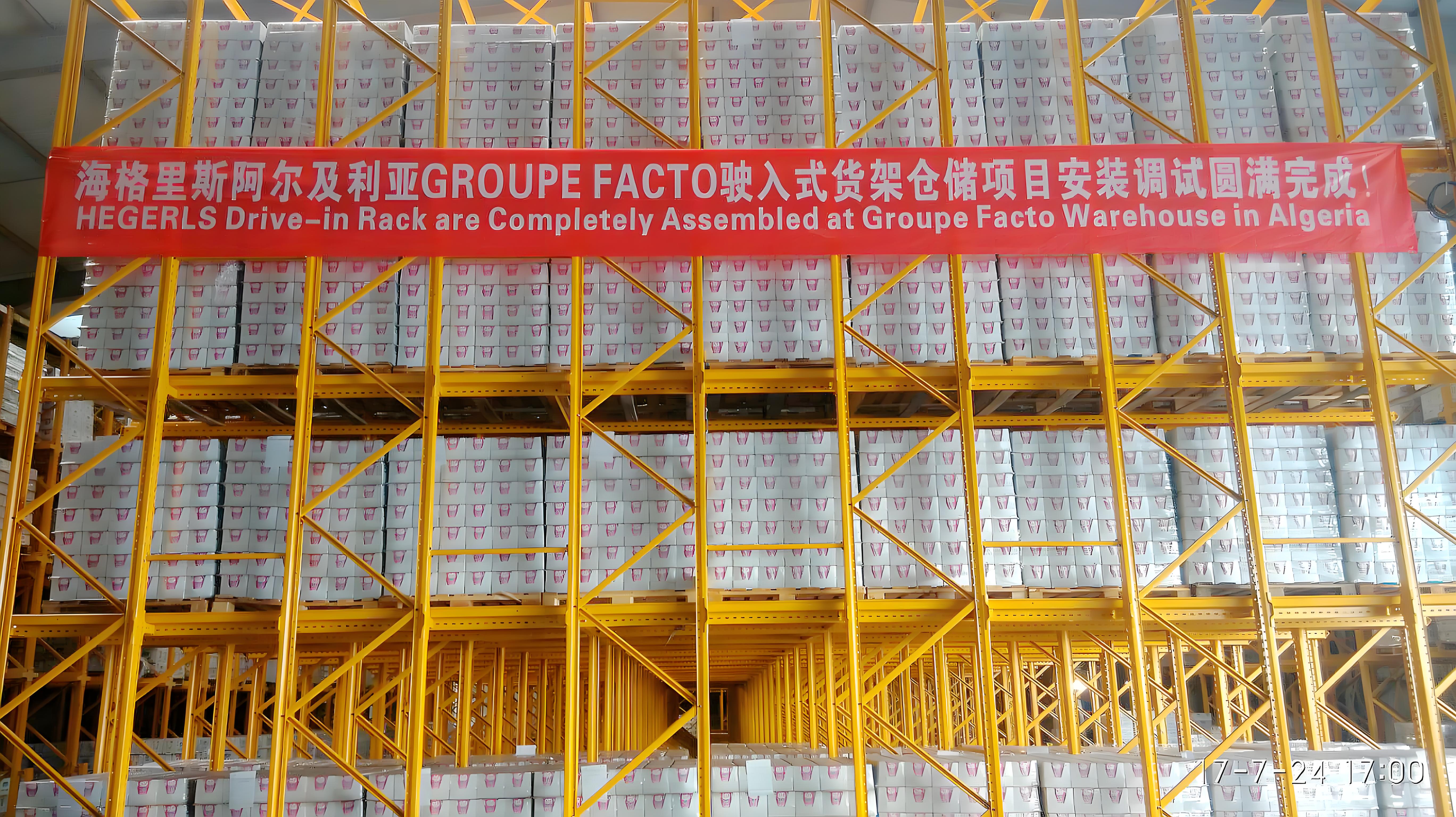
Algeria FACTO Group Storage Project
Related Products

MOBILE: +86 133 1595 3337
E-mails: hgls-wm@hbgysw.com
Office: Room 1118, Building No.6, Tatan Mall, Tatong Street, Shijiazhuang, China
Production base: 68 Shidai Road,Xinhe Industrial Park,Hebei Province
Website: https://www.woke-hercules.com

All rights reserved©2025 Hebei Woke Metal Products Co., ltd.
COOKIES
Our website uses cookies and similar technologies to personalize the advertising shown to you and to help you get the best experience on our website. For more information, see our Privacy & Cookie Policy
COOKIES
Our website uses cookies and similar technologies to personalize the advertising shown to you and to help you get the best experience on our website. For more information, see our Privacy & Cookie Policy
These cookies are necessary for basic functions such as payment. Standard cookies cannot be turned off and do not store any of your information.
These cookies collect information, such as how many people are using our site or which pages are popular, to help us improve the customer experience. Turning these cookies off will mean we can't collect information to improve your experience.
These cookies enable the website to provide enhanced functionality and personalization. They may be set by us or by third-party providers whose services we have added to our pages. If you do not allow these cookies, some or all of these services may not function properly.
These cookies help us understand what you are interested in so that we can show you relevant advertising on other websites. Turning these cookies off will mean we are unable to show you any personalized advertising.
Sorry,当前栏目暂无内容!
您可以查看其他栏目或返回 首页
Sorry,The current column has no content!
You can view other columns or return Home


