

-
SOLUTIONSIn recent years, “Hegerls" HD shuttle storage system have improved, upgraded, more intelligent, flexible, and more systematic, which can meet the different needs of customers in various industries.
 SERVICE
 -
-
R & DObtained more than ten national patents for automated logistics warehousing equipment such as shuttle cars, stackers, and mobile shelves, awarded SGS, BV, and TUV international product quality inspection agency certificates, as well as the "Quality, Environment, Health" ISO three major system certification certificates.
SERVICE
-
PROJECTSAfter Haigelis entered the international market in 2011, it exported supermarket equipment, warehousing equipment, and related supporting products to countries and regions such as North America, South America, Europe, Southeast Asia, and Africa. In recent years, the company has increased its efforts in the research and development of automated warehousing equipment.
SERVICE
-
BlogProfessional articles, guides, and insights on warehouse racking and automated storage systems.
SERVICE
-
HEGERLSIt's developed over 20 years, our company has become a one-stop integrated service provider of warehousing and logistics, integrating warehousing and logistics project design...
SERVICE

APPLICATION
Supply Chain Resilience: Using Automated Warehousing to Respond to Market Fluctuations
Classification:
Industry Info
Release time:
2026-05-20
In today’s volatile global market, supply chains face unprecedented demand swings, labor shortages, and shipping delays. Automated warehousing has emerged as a critical solution to enhance supply chain resilience, enabling companies to adapt quickly to market fluctuations while maintaining efficiency, safety, and cost-effectiveness.
With HEGERLS automated warehousing solutions, businesses can respond dynamically to demand changes, optimize storage space, and maintain uninterrupted operations.

The Importance of Supply Chain Resilience
Supply chain resilience refers to a company’s ability to anticipate, adapt, and respond to disruptions or sudden changes in supply and demand. Traditional warehouses often struggle with:
- Inventory shortages or overstocking
- Slow order fulfillment during peak demand
- High labor dependency and inefficiencies
Automated warehousing systems, including ASRS, shuttle cars, racking systems and robotics, provide the flexibility needed to maintain operations during market fluctuations.
Key Automated Technologies Enhancing Supply Chain Resilience
1. Automated Storage and Retrieval Systems (ASRS)
ASRS provides high-density storage and fast retrieval, allowing warehouses to adjust inventory dynamically.
- Rapid response: Automated cranes retrieve or store items in seconds
- Accurate inventory tracking: Reduces errors and ensures stock availability
- Scalable design: Modules can be added to meet fluctuating demand
HEGERLS Advantage: HEGERLS ASRS solutions integrate seamlessly with shuttle systems and robotics, ensuring continuous, flexible operations under fluctuating demand.

2. Four-Way Shuttle Systems
Four-way shuttle systems are at the heart of HEGERLS’ automated warehouses:
- High-density storage: Shuttles operate within narrow aisles, increasing storage capacity by up to 150%
- Dynamic picking: Real-time intelligent dispatch ensures priority orders are retrieved quickly
- Multi-level integration: Shuttles operate across multiple floors or mezzanine levels
HEGERLS Advantage: Seamless integration with CC-WMS allows real-time control, optimized picking, and minimal human intervention.

3. Robotics and Autonomous Vehicles
Robotics reduce reliance on human labor during supply chain disruptions:
- Automated guided vehicles (AGVs): Transport goods efficiently
- Robotic picking systems: Handle high-volume orders
- Collaborative robots: Work alongside operators during peak demand
HEGERLS Advantage: Robots can operate 24/7, adapting to fluctuating workloads without compromising speed or safety.
4. Warehouse Management Systems (WMS) and Real-Time Analytics
WMS software is critical for inventory visibility, demand forecasting, and resource optimization:
- Track real-time stock levels
- Adjust picking routes and storage assignments dynamically
- Predict stock shortages or overstock using AI
HEGERLS Advantage: The HEGERLS CC-WMS integrates with ASRS, shuttle systems, and robotics, providing end-to-end visibility and adaptability.

HEGERLS Automated Warehousing: Mitigating Global Disruptions
Global supply chains are increasingly vulnerable to unforeseen events such as pandemics, transportation bottlenecks, and geopolitical tensions. Companies that rely solely on manual operations often experience:
- Inventory shortages or overstocking due to sudden demand shifts
- Delays in order fulfillment caused by transportation disruptions
- Difficulty in adjusting warehouse capacity quickly
HEGERLS automated warehousing solutions provide resilience against these challenges by combining shuttle systems, ASRS, mobile racking, robotics, and smart WMS.
1. Responding to Pandemics
During the COVID-19 pandemic, many warehouses faced labor shortages and disrupted supply chains. HEGERLS automation helped businesses:
- Maintain continuous operation with minimal human intervention
- Enable remote monitoring of inventory through CC-WMS
- Reduce human-to-human contact, improving worker safety
Pandemic Impact Example:
| Metric | Pre-Automation | HEGERLS Automation | Improvement |
|---|---|---|---|
| Labor Dependency | 100% | 40% | -60% |
| Order Fulfillment | 150/day | 600/day | +300% |
| Inventory Accuracy | 92% | 99.8% | +7.8% |
2. Coping with Transportation Delays
Global transportation delays, such as port congestions or carrier shortages, can disrupt delivery schedules. HEGERLS systems mitigate these risks by:
- Dynamic inventory allocation: Automated shuttles and ASRS ensure fast retrieval of priority items
- Buffer stock optimization: Vertical storage and mobile racks maximize available space for safety stock
- Real-time tracking: CC-WMS monitors stock levels and triggers automated restocking or order reprioritization
HEGERLS Advantage: Businesses can maintain customer service levels even when external transport is delayed.
3. Adapting to Geopolitical Shocks
Tariffs, sanctions, or regional conflicts can suddenly impact supply chains. HEGERLS automated solutions support resilience by:
- Flexible warehouse layouts: Mobile racking and shuttle systems allow rapid reconfiguration of storage to accommodate alternative supply sources
- Scalable automation: Extra shuttles or ASRS modules can be deployed quickly to handle sudden changes in import/export volumes
- Advanced analytics: CC-WMS uses AI to forecast inventory needs under different geopolitical scenarios
Resilience Metrics
| Scenario | Traditional Warehouse | HEGERLS Automated Warehouse | Benefit |
|---|---|---|---|
| Sudden demand spike | Unable to meet orders | 4× order throughput | +400% |
| Port delay | Stockouts within 3 days | 2-week buffer via vertical storage | +11 days coverage |
| Supply route disruption | Manual reallocation | Automated SKU reallocation & picking optimization | +50% efficiency |
HEGERLS Summary: By integrating automation, robotics, and smart warehouse software, HEGERLS enables companies to:
- Maintain operational continuity during crises
- Reduce dependency on human labor
- Improve supply chain agility and response time
- Ensure inventory visibility for strategic decision-making
Benefits of Automated Warehousing for Supply Chain Resilience
- Faster Response to Market Fluctuations
Automation allows quick scaling up or down of storage and picking capacity based on demand. - Improved Inventory Accuracy
Automated systems reduce errors to <0.5%, ensuring correct stock levels even during peak demand. - Reduced Labor Dependency
Automation minimizes the impact of workforce shortages or disruptions. - Optimized Space Usage
High-density storage reduces warehouse footprint while increasing capacity. - Energy Efficiency
Electric shuttles, regenerative drives, and optimized workflow reduce operational energy use.

Case Studies
Case 1: Four-way Shuttle Project in the chemical industry
Warehouse area: 7,455 square meters
storage locations: 16,965
Equipment: 12 four-way shuttles + 9 lifts
Result:
- Storage density increased by 150%, with 8 times more storage locations compared to conventional warehouses, significantly reducing warehousing rental costs.
- Picking and replenishment efficiency improved by 120%.
- Multiple vehicles work collaboratively for high-efficiency operations, allowing flexible allocation during peak and off-peak seasons.
- Single-unit equipment can operate at speeds of up to 1.5 m/s.
- Inventory counting efficiency increased by 80%.
- Seamless integration with WMS, ERP, and MES systems.
Case 2: Cold Storage Warehouse
- Challenge: Limited floor space
- Solution: HEGERLS ASRS + vertical storage
- Result: 2.5× storage capacity, picking speed +200%
How to Plan Automated Warehousing for Supply Chain Resilience
- Analyze Market Volatility: Understand peak demand and seasonal trends
- Select Appropriate Technologies: ASRS, shuttle systems, mobile racks, robotics
- Integrate WMS & WCS: Coordinate inventory, picking, and movement efficiently
- Implement Safety Protocols: Sensors, interlocks, and emergency systems
- Phase Implementation: Start with critical zones, scale across the warehouse
Future Trends in Resilient Automated Warehousing
- AI-Driven Demand Forecasting: Predict inventory needs before market spikes
- IoT Sensor Networks: Real-time monitoring of equipment and stock
- Collaborative Human-Robot Operations: Flexible workflows during fluctuating demand
- Sustainable Automation: Energy-efficient motors and optimized layout
- Cloud-Based WMS: Remote monitoring and predictive analytics
Projected Market Adoption
| Technology | 2025 | 2030 | CAGR |
|---|---|---|---|
| Four-way Shuttles | 35% | 55% | 8% |
| Integrated Racking | 20% | 40% | 9% |
| ASRS | 18% | 35% | 12% |
| AMR/AGV | 15% | 40% | 18% |
| AI & WMS | 10% | 30% | 15% |
Why Choose HEGERLS
HEGERLS offers a complete suite of automated warehouse solutions for resilient supply chains:
- ASRS, shuttle cars, and mobile racks for high-density storage
- Robotics and AGVs for flexible order fulfillment
- CC-WMS software for real-time control and inventory visibility
- Modular systems for future expansion
- Advanced safety and energy-efficient designs
Advantages:
- Adaptable to market fluctuations
- Reduce labor dependency and errors
- Maximize storage density and operational efficiency
FAQ: Supply Chain Resilience & Automated Warehousing
1. How does automated warehousing improve supply chain resilience?
Automation ensures rapid adaptation to demand changes. HEGERLS systems maintain operations with high accuracy and minimal labor even during market spikes.
2. Which industries benefit most from automation?
E-commerce, pharmaceuticals, cold storage, and manufacturing. HEGERLS customizes solutions for each sector, optimizing both space and throughput.
3. Can automation handle seasonal demand fluctuations?
Yes. HEGERLS shuttle and ASRS systems scale dynamically, allowing temporary capacity increases without downtime.
4. How does WMS help during market volatility?
WMS tracks inventory in real-time and forecasts demand, enabling automated allocation. HEGERLS CC-WMS integrates with all hardware for coordinated response.
5. Is automated warehousing cost-effective?
Initial investment is offset by reduced labor, higher throughput, and space optimization. HEGERLS designs achieve ROI typically within 3–5 years.
6. Can robotics work alongside human staff?
Yes, collaborative robots operate safely alongside humans. HEGERLS integrates cobots to enhance flexibility during peak operations.
7. How scalable are HEGERLS automated warehouses?
Highly scalable: add shuttles, ASRS modules, or mobile racks without disrupting operations.
8. How can HEGERLS help during crises like pandemics or transport delays?
HEGERLS systems enable continuous operations, buffer stock optimization, and smart inventory reallocation, ensuring supply chain resilience and service continuity.
Ensure your supply chain is resilient and future-ready. Upgrade to HEGERLS automated warehousing solutions today to respond efficiently to market fluctuations, optimize inventory, and increase throughput. Contact us for a customized warehouse automation plan.
Key words:
utomated warehouse solutions,supply chain resilience,automated warehousing,ASRS,warehouse automation solutions
Related Solutions
Related Cases
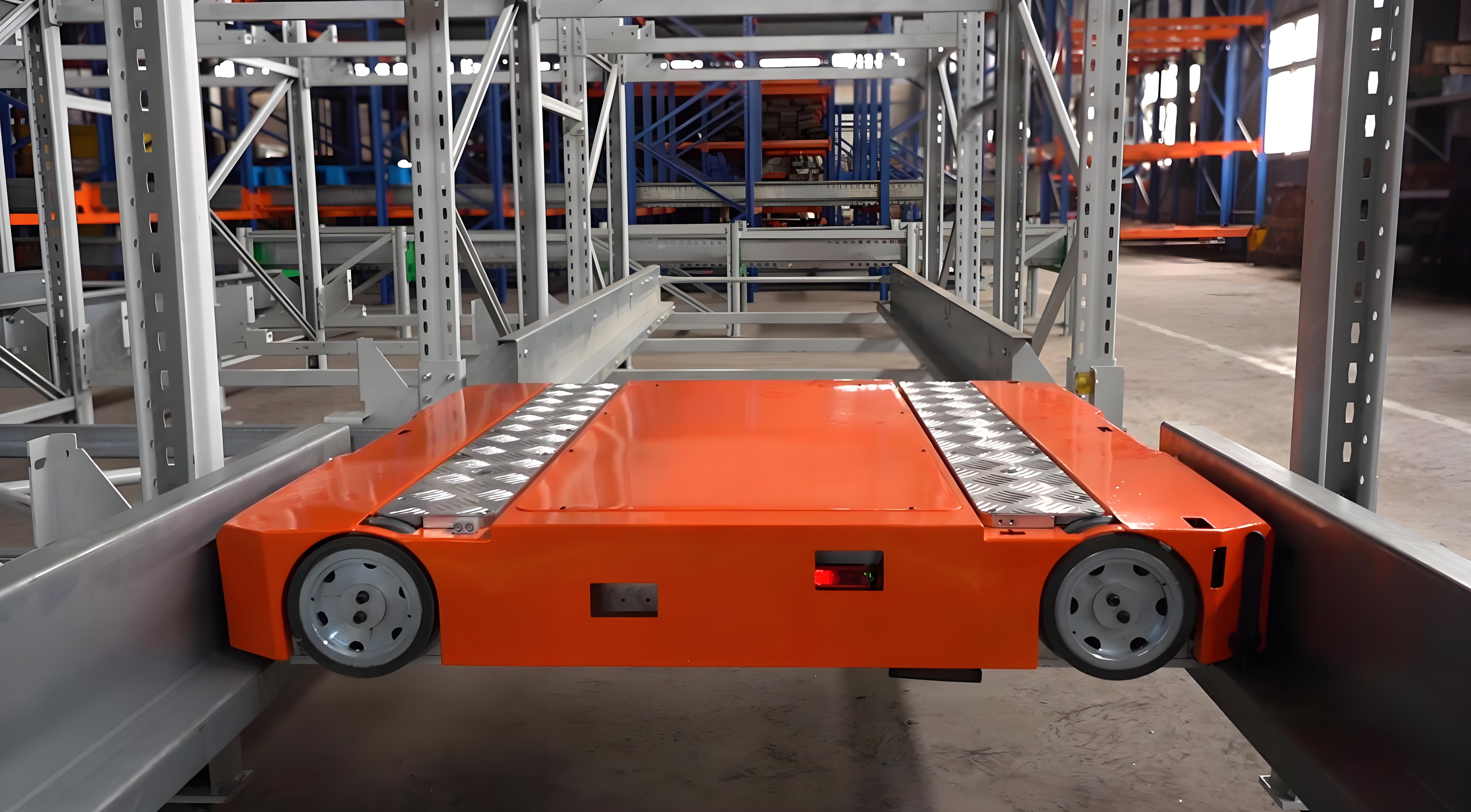

Integrated Warehouse Rack Project in Morocco | Rack Supported Warehouse
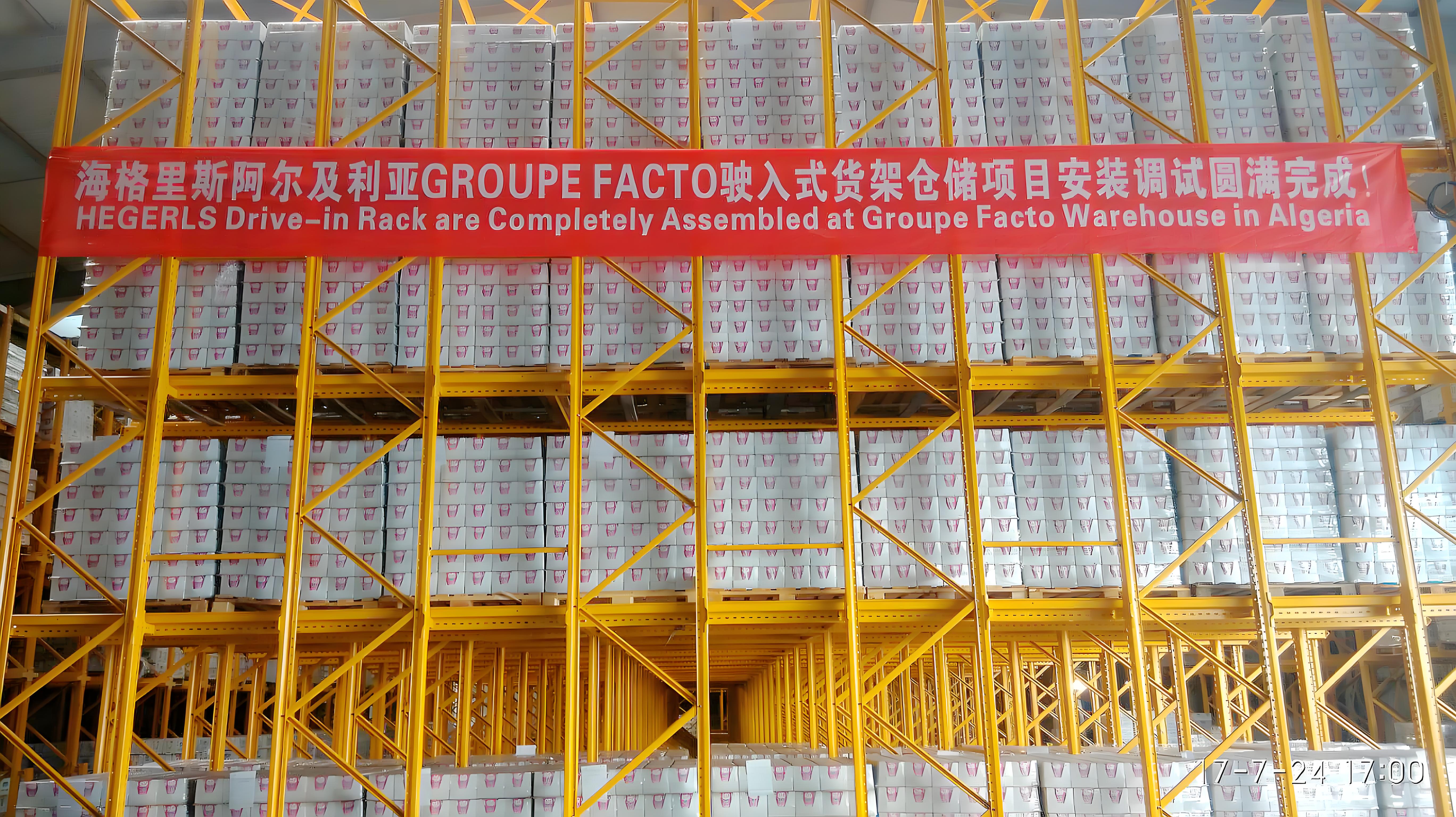
Algeria FACTO Group Storage Project
Related Products

MOBILE: +86 133 1595 3337
E-mails: hgls-wm@hbgysw.com
Office: Room 1118, Building No.6, Tatan Mall, Tatong Street, Shijiazhuang, China
Production base: 68 Shidai Road,Xinhe Industrial Park,Hebei Province
Website: https://www.woke-hercules.com



All rights reserved©2025 Hebei Woke Metal Products Co., ltd.