

-
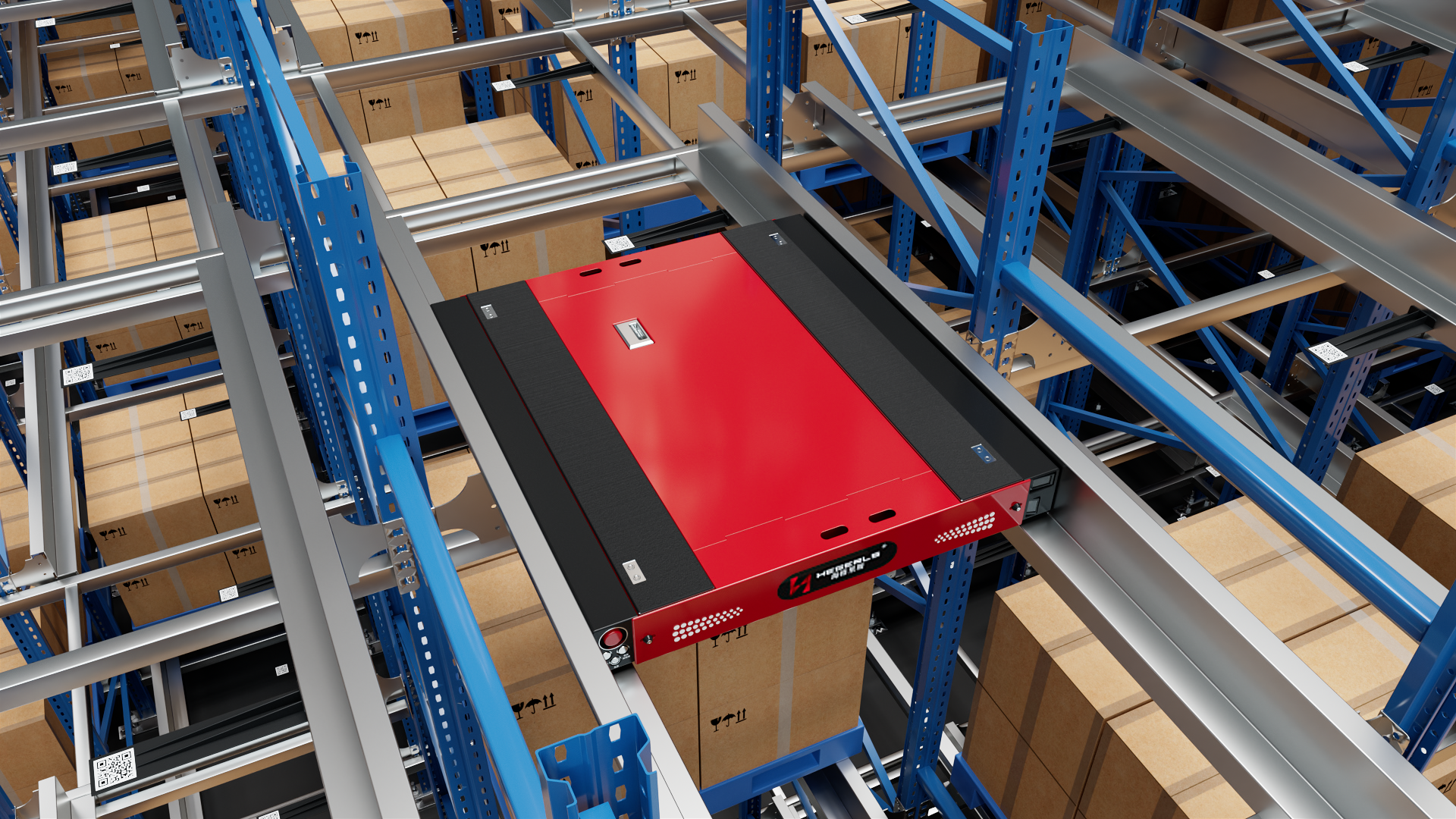
SOLUTIONSIn recent years, “Hegerls" HD shuttle storage system have improved, upgraded, more intelligent, flexible, and more systematic, which can meet the different needs of customers in various industries.
 SERVICE
-
-
R & DObtained more than ten national patents for automated logistics warehousing equipment such as shuttle cars, stackers, and mobile shelves, awarded SGS, BV, and TUV international product quality inspection agency certificates, as well as the "Quality, Environment, Health" ISO three major system certification certificates.
SERVICE
-
PROJECTSAfter Haigelis entered the international market in 2011, it exported supermarket equipment, warehousing equipment, and related supporting products to countries and regions such as North America, South America, Europe, Southeast Asia, and Africa. In recent years, the company has increased its efforts in the research and development of automated warehousing equipment.
SERVICE
-
BlogProfessional articles, guides, and insights on warehouse racking and automated storage systems.
SERVICE
-
HEGERLSIt's developed over 20 years, our company has become a one-stop integrated service provider of warehousing and logistics, integrating warehousing and logistics project design...
SERVICE

APPLICATION
Rising Industry Momentum: Autonomous Mobile Robots (AMRs) Gain Global Traction Across Warehousing and Manufacturing
Classification:
Industry Info
Release time:
2025-11-26
Demand for autonomous mobile robots (AMRs) is accelerating worldwide as warehouses, factories, and distribution centers shift toward more flexible, software-driven automation. Over the past year, AMRs have moved from “future projects” to core elements of modernization strategies, driven by labor shortages, rising e-commerce throughput, and the global push toward Industry 4.0.
Manufacturers like HEGERLS, known for intelligent warehousing systems, confirm that customers are increasingly exploring AMRs as an essential tool to boost material-handling efficiency and operational resilience.

AMRs Shift From Niche Tool to Mainstream Investment
Several market indicators show that AMRs are now one of the fastest-growing segments in warehouse automation:
- Post-pandemic labor gaps continue to push companies toward unmanned operations.
- Third-party logistics (3PL) providers are ramping up multi-site deployments as SKUs grow and order cycles shrink.
- Cold chain, pharmaceuticals, and electronics are adopting AMRs for high-precision, contamination-free handling.
- Software interoperability, especially with WMS, WCS, and ERP systems, has improved to the point where AMRs can be deployed faster and with lower integration costs.
Where AGVs rely on fixed paths, AMRs navigate environments dynamically. Advanced sensors, SLAM navigation, and real-time mapping allow these robots to reroute instantly if obstacles appear — a key advantage in high-traffic facilities.
HEGERLS Insights: Customers Want Flexibility and Real-Time Scalability
Based on customer discussions at recent exhibitions and project consultations, HEGERLS reports three dominant motivations behind the rising interest in AMRs:
1. Scalable Labor Replacement
Distribution centers want automation that can be scaled up during peak months and reduced when order volumes fall. AMRs offer this elasticity without requiring fixed infrastructure.
2. Ability to Integrate with Existing Systems
Many warehouses already operate shuttle systems, pallet stackers, or AS/RS units. AMRs add mobility to these systems by handling cross-aisle transport, replenishment, and picking support.
3. Higher Safety Requirements
With more countries tightening workplace safety regulations, AMRs’ sensor-based collision avoidance and compliance with ISO standards provide strong incentives for adoption.
New Application Scenarios Driving AMR Adoption
While AMRs were initially used for simple point-to-point transport, their use cases are rapidly expanding:
- Goods-to-Person Fulfillment: AMRs bring racks or totes to picking stations, reducing walking time and increasing overall throughput.
- Cross-Docking and Pallet Transfer: In fast-moving FMCG and retail centers, AMRs move pallets between inbound staging areas and outbound lanes.
- Component Delivery in Manufacturing Plants: Electronics and automotive factories use AMRs for precise, just-in-time material feeding to production lines.
- Cold Storage and Deep-Freezing Operations: AMRs maintain stable performance in environments unsuitable for human labor, improving efficiency and reducing exposure risk.

Why AMRs Are Increasingly Outperforming Traditional Automation
- No Fixed Pathways or Magnetic Strips: AMRs navigate independently using LiDAR, sensors, and 3D mapping. This eliminates installation work and allows continuous route optimization.
- Lower Overall Cost of Ownership: Because AMRs require less fixed guidance infrastructure and can be reprogrammed quickly, they reduce both CAPEX and ongoing maintenance costs.
- Rapid Deployment: AMR systems can often be operational within weeks, making them ideal for time-sensitive expansions or pilot projects.
- Strong Synergy With Digital Twins: AMRs’ real-time data feeds support simulation, predictive maintenance, and 24/7 facility monitoring.
- Energy Efficiency: AMRs consume significantly less power than conveyor systems and can auto-charge without manual intervention.
HEGERLS Perspective: AMRs Will Complement, Not Replace, Existing Systems
Although AMRs are gaining momentum, HEGERLS notes that customers still value the stability and high-density capabilities of four-way shuttles, stacker cranes, pallet runners, and AS/RS systems.
The emerging trend is hybrid automation, where AMRs play supporting roles:
- Moving replenishment pallets to shuttle racking.
- Transferring totes between robotic picking stations.
- Handling last-meter delivery to sorting lines.
- Linking isolated automation islands into a connected workflow.
This “automation ecosystem” approach is becoming the new industry standard.

Challenges That the Industry Must Still Face
Despite strong momentum, several challenges remain:
- Software Complexity: AMRs rely heavily on fleet management software. In multi-vendor environments, interoperability can be a concern.
- Charging Infrastructure: Facilities must plan charging points strategically to avoid traffic bottlenecks.
- Navigation Interference: High-reflectivity surfaces or heavy forklift traffic can affect AMR sensing systems.
- Workforce Training: Operators need to understand robot-human collaboration zones and safety settings.
Looking Ahead: AMRs as a Strategic Foundation for Future Warehouses
Industry experts predict that AMRs will evolve toward:
- Higher payload capacities (pallet-level AMRs increasing adoption)
- More advanced vision-based navigation
- Closer integration with AI-driven WMS and WCS
- Fully autonomous cluster operation, with hundreds of AMRs running simultaneously
- Broader adoption in cold chain and pharma logistics
For HEGERLS, AMRs represent a core component of the company’s roadmap toward hyper-connected, data-driven, and energy-efficient intralogistics.
About HEGERLS
HEGERLS specializes in intelligent warehouse solutions including shuttle systems, AS/RS, rack manufacturing, elevator systems, and integrated WMS/WCS software. The company continues to explore AMR partnerships and in-house development to support customers’ evolving automation needs.
Contact us now to get your customized smart solution.
FAQ
1. What are Autonomous Mobile Robots (AMRs) in warehouse automation?
Autonomous Mobile Robots (AMRs) are intelligent robots that navigate warehouse environments without fixed paths or human intervention. They use sensors, AI, and real-time data to transport goods, optimize workflows, and improve operational efficiency.
2. How do AMRs improve warehouse efficiency?
AMRs significantly enhance efficiency by automating repetitive tasks such as picking, sorting, and material transport. They can operate 24/7 without fatigue, increasing throughput and reducing delays in order fulfillment.
3. What are the main benefits of using AMRs in warehouses?
Key benefits include:
- Increased productivity and throughput
- Reduced labor costs (up to 30–40%)
- Improved workplace safety (accidents reduced by up to 70%)
- Higher picking accuracy and inventory visibility
- Scalability for peak demand
4. Are AMRs better than AGVs in warehouse operations?
Yes, AMRs are more flexible than traditional AGVs (Automated Guided Vehicles). Unlike AGVs that follow fixed routes, AMRs dynamically adjust paths using AI, making them ideal for complex and changing warehouse environments.
5. How much can AMRs reduce warehouse labor costs?
AMRs can reduce labor costs by approximately 30% to 40% over time by automating manual and repetitive tasks, while also lowering costs related to errors, injuries, and workforce turnover.
6. Do AMRs improve warehouse safety?
Yes. AMRs handle heavy lifting and hazardous tasks, reducing human exposure to risks. Many warehouses report up to a 70% decrease in workplace accidents after AMR implementation.
7. Can AMRs integrate with warehouse management systems (WMS)?
AMRs can seamlessly integrate with WMS and ERP systems to enable real-time inventory tracking, automated task allocation, and optimized workflows, improving overall operational visibility and control.
8. Are AMRs suitable for small and medium-sized warehouses?
Yes. AMRs are highly scalable and can be deployed in phases, making them suitable for small, medium, and large warehouses. Businesses can start with a few robots and expand as demand grows.
9. How do AMRs improve order accuracy?
AMRs use barcode scanning, RFID, and AI vision systems to verify items during picking and transport, significantly reducing human error and improving order accuracy—often reaching over 99% accuracy rates.
10. What industries benefit most from AMRs?
AMRs are widely used in:
- E-commerce fulfillment
- 3PL logistics
- Manufacturing
- Retail distribution
- Pharmaceutical warehouses
These industries benefit from faster order processing, higher accuracy, and reduced operational costs.
11. What is the ROI of implementing AMRs?
Most companies see ROI through:
- Labor cost savings
- Increased productivity (up to 50%)
- Reduced errors and returns
- Faster order fulfillment
ROI timelines typically range from 1 to 3 years depending on scale and implementation.
12. Are AMRs the future of warehouse automation?
Yes. With the rise of AI, labor shortages, and e-commerce demand, AMRs are becoming a core component of modern warehouse automation strategies due to their flexibility, scalability, and cost-effectiveness.
Key words:
Autonomous Mobile Robots,AMR in Warehousing,Smart Manufacturing,Warehouse Automation,Robotics in Industry
Related Cases

Warehouse Control Systems (WCS): A Complete Guide
Related Products

MOBILE: +86 133 1595 3337
E-mails: hgls-wm@hbgysw.com
Office: Room 1118, Building No.6, Tatan Mall, Tatong Street, Shijiazhuang, China
Production base: 68 Shidai Road,Xinhe Industrial Park,Hebei Province
Website: https://www.woke-hercules.com



All rights reserved©2025 Hebei Woke Metal Products Co., ltd.