

-
SOLUTIONSIn recent years, “Hegerls" HD shuttle storage system have improved, upgraded, more intelligent, flexible, and more systematic, which can meet the different needs of customers in various industries.
 SERVICE
-
-
R & DObtained more than ten national patents for automated logistics warehousing equipment such as shuttle cars, stackers, and mobile shelves, awarded SGS, BV, and TUV international product quality inspection agency certificates, as well as the "Quality, Environment, Health" ISO three major system certification certificates.
SERVICE
-
PROJECTSAfter Haigelis entered the international market in 2011, it exported supermarket equipment, warehousing equipment, and related supporting products to countries and regions such as North America, South America, Europe, Southeast Asia, and Africa. In recent years, the company has increased its efforts in the research and development of automated warehousing equipment.
SERVICE
-
BlogProfessional articles, guides, and insights on warehouse racking and automated storage systems.
SERVICE
-
HEGERLSIt's developed over 20 years, our company has become a one-stop integrated service provider of warehousing and logistics, integrating warehousing and logistics project design...
SERVICE

APPLICATION
Automated Warehouse Equipment Selection Guide: AS/RS Stackers vs. Shuttle Systems vs. AMR/AGV Solutions
Classification:
Industry Info
Release time:
2026-01-06
Why Choosing the Wrong Automation Equipment Is Riskier Than Not Automating at All
In automated warehouse projects, one of the most common—and costly—mistakes is treating equipment selection as a simple purchasing decision rather than a system engineering challenge.
Many warehouses invest heavily in automation, only to discover after commissioning that:
- Throughput does not meet operational demand
- Bottlenecks appear between subsystems
- Flexibility is insufficient for future growth
In practice, poor equipment selection can result in a semi-automated warehouse that underperforms manual operations.
At HEGERLS, we believe that automation success begins with system-level thinking, not with choosing individual machines.
Key Factors in Automated Warehouse Equipment Selection
Selecting the right automation solution requires balancing four core engineering dimensions:
- Throughput Capacity – inbound and outbound handling efficiency
- Storage Density – cubic space utilization
- System Flexibility – adaptability to SKU growth and order fluctuation
- Total Cost of Ownership (TCO) – long-term operation and maintenance costs
These parameters often conflict with one another, making it critical to align equipment selection with real operational priorities, not assumptions.

Overview of Main Automated Warehouse Systems
Modern automated warehouses typically rely on one of the following three system architectures:
- AS/RS Stacker Crane Systems
- Shuttle-Based Dense Storage Systems (especially Four-Way Shuttle Systems)
- AMR / AGV Mobile Robot Systems
Each solution offers distinct advantages and limitations depending on the application.
AS/RS Stacker Crane Systems: Mature and Stable, with Limited Flexibility
Key Characteristics
- Single-aisle, single-crane architecture
- Highly standardized and proven technology
- Commonly used for pallet-level automated storage
Advantages
- High technical maturity and reliability
- Suitable for very tall warehouses (40m+)
- Excellent long-term operational stability
Limitations
- Throughput constrained by single-machine performance
- Limited scalability—adding aisles requires major investment
- High requirements for building and installation precision
Best suited for:
Warehouses with stable SKU profiles, predictable throughput, and long-term fixed layouts.

Shuttle Systems: Balancing High Density and High Throughput
Shuttle systems are multi-device collaborative solutions, typically consisting of:
- Horizontal shuttle vehicles
- High-speed vertical lifts
- High-density racking systems
- Integrated WMS and WCS control software
Among them, the Four-Way Shuttle System has become a mainstream solution for modern automated warehouses due to its flexibility and scalability.
Core Advantages
- Parallel multi-vehicle operation improves throughput
- Excellent balance between storage density and efficiency
- Local equipment failure does not disrupt the entire system
- Modular expansion capability
Engineering Challenges
- Complex scheduling and control logic
- Higher precision requirements for racking structures
- Planning-stage errors can significantly impact performance
Best suited for:
Warehouses with large SKU volumes, fluctuating order profiles, and phased expansion needs.

AMR / AGV Systems: Maximum Flexibility, but Not a Universal Solution
System Characteristics
- No fixed tracks or rails required
- Rapid deployment and reconfiguration
- Ideal for production line integration and mixed operations
Advantages
- Exceptional flexibility and scalability
- Supports human–robot collaboration
- Suitable for pilot automation and fast iteration
Limitations
- Limited storage density compared to AS/RS and shuttle systems
- Increased scheduling complexity at large scale
- Sensitive to floor conditions and environmental factors
Not recommended for:
- Ultra-high-density pallet storage
- Extremely high daily throughput distribution centers

Comparative Summary of Automated Warehouse Systems
| Evaluation Criteria | AS/RS Stacker | Shuttle System | AMR / AGV |
|---|---|---|---|
| Storage Density | ★★★★☆ | ★★★★★ | ★★☆☆☆ |
| Throughput | ★★★☆☆ | ★★★★★ | ★★★☆☆ |
| Scalability | ★★☆☆☆ | ★★★★★ | ★★★★☆ |
| System Complexity | ★★☆☆☆ | ★★★★☆ | ★★★☆☆ |
| Maintenance Friendliness | ★★★★☆ | ★★★☆☆ | ★★★☆☆ |
Key Takeaway:
There is no “best” automation equipment—only the most suitable system architecture for a specific warehouse scenario.
HEGERLS Recommendation: Start with System Design, Not Equipment
From HEGERLS project experience, successful automated warehouses share one common principle:
System architecture should be defined before equipment selection.
We recommend evaluating:
- SKU structure and growth trends
- Peak and average throughput requirements
- Building constraints and future expansion plans
- Integration with WMS, WCS, and ERP systems
Only after these factors are clearly defined should specific automation technologies be selected.
About HEGERLS Automated Warehouse Solutions
HEGERLS provides end-to-end intelligent warehouse solutions, including:
- AS/RS stacker crane systems
- Four-way and multi-directional shuttle systems
- Automated vertical storage systems
- Integrated racking, WMS, and WCS software
Our solutions are designed to support scalable automation, long-term operational stability, and global industrial standards.
👉 Contact HEGERLS to discuss the optimal automation strategy for your warehouse project.
Key words:
Automated warehouse equipment,AS/RS system,shuttle system warehouse,four-way shuttle,AMR warehouse robots
Related Solutions
Related Cases
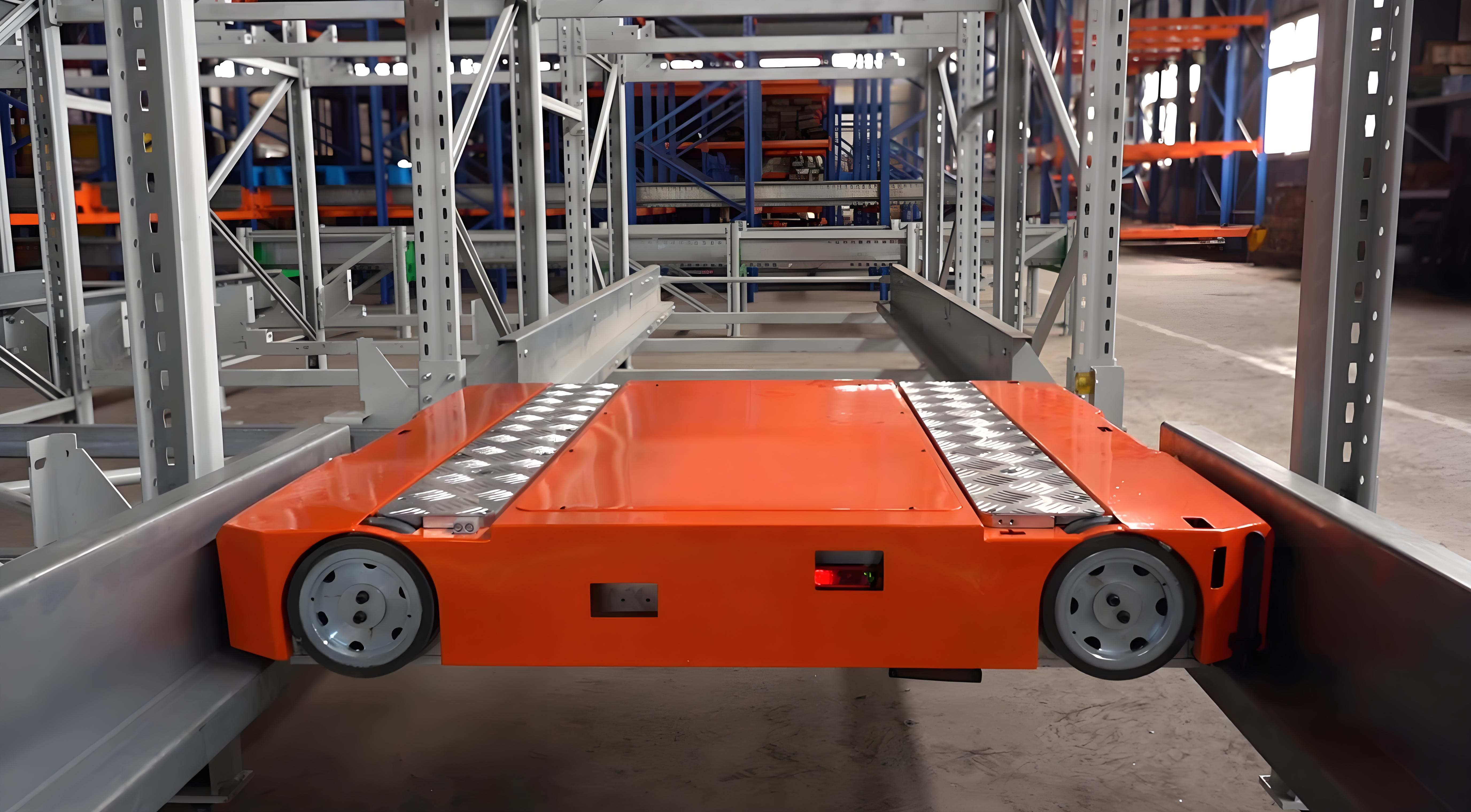

Integrated Warehouse Rack Project in Morocco | Rack Supported Warehouse
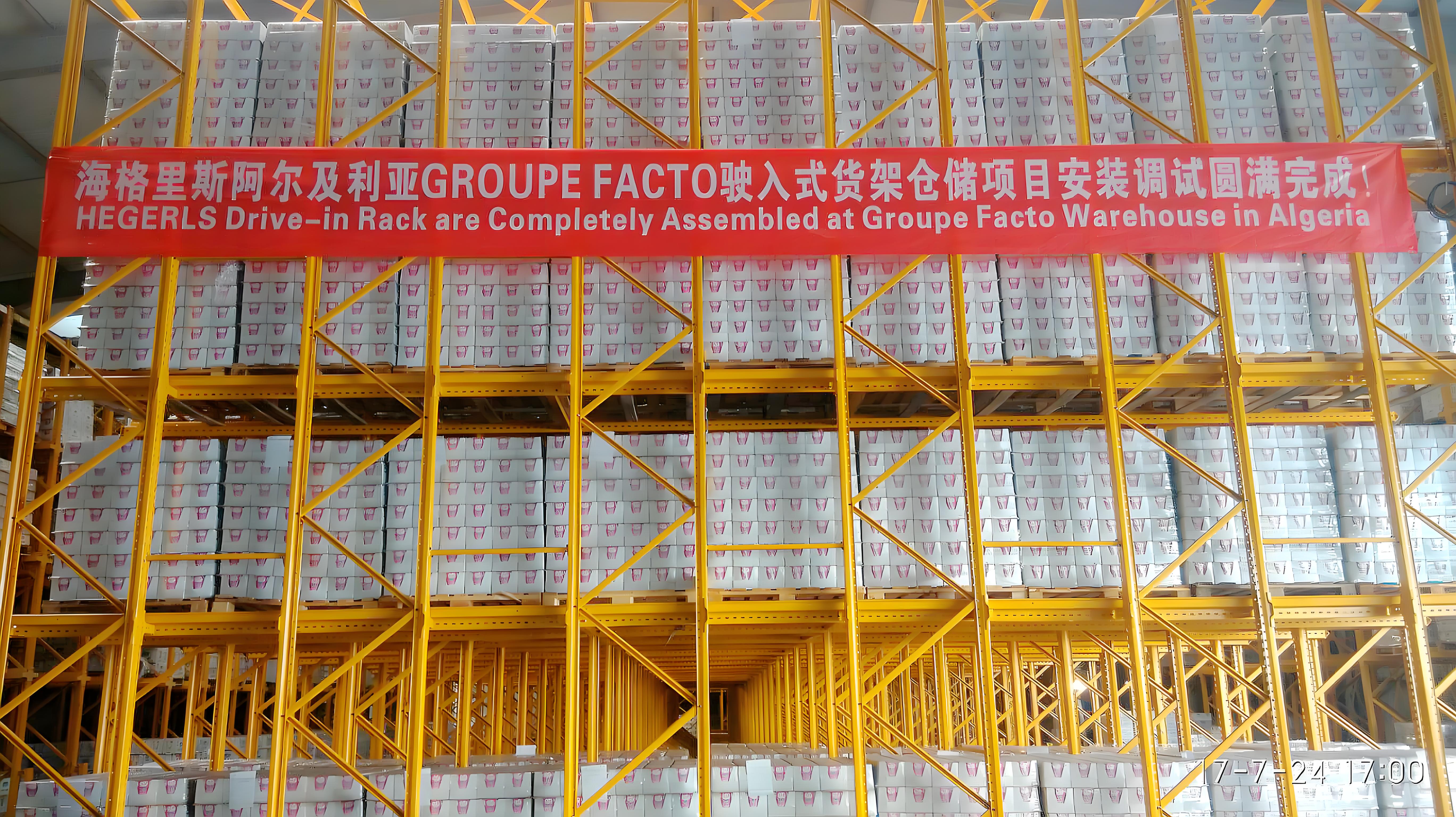
Algeria FACTO Group Storage Project
Related Products

MOBILE: +86 133 1595 3337
E-mails: hgls-wm@hbgysw.com
Office: Room 1118, Building No.6, Tatan Mall, Tatong Street, Shijiazhuang, China
Production base: 68 Shidai Road,Xinhe Industrial Park,Hebei Province
Website: https://www.woke-hercules.com



All rights reserved©2025 Hebei Woke Metal Products Co., ltd.