

-
SOLUTIONSIn recent years, “Hegerls" HD shuttle storage system have improved, upgraded, more intelligent, flexible, and more systematic, which can meet the different needs of customers in various industries.
 SERVICE
 -
-
R & DObtained more than ten national patents for automated logistics warehousing equipment such as shuttle cars, stackers, and mobile shelves, awarded SGS, BV, and TUV international product quality inspection agency certificates, as well as the "Quality, Environment, Health" ISO three major system certification certificates.
SERVICE
-
PROJECTSAfter Haigelis entered the international market in 2011, it exported supermarket equipment, warehousing equipment, and related supporting products to countries and regions such as North America, South America, Europe, Southeast Asia, and Africa. In recent years, the company has increased its efforts in the research and development of automated warehousing equipment.
SERVICE
-
BlogProfessional articles, guides, and insights on warehouse racking and automated storage systems.
SERVICE
-
HEGERLSIt's developed over 20 years, our company has become a one-stop integrated service provider of warehousing and logistics, integrating warehousing and logistics project design...
SERVICE

APPLICATION
2025–2030 Smart Warehouse Development Trends: From Automation to Intelligent Systems
Classification:
Industry Info
Release time:
2026-01-14
Why 2025–2030 Will Be a Turning Point in Smart Warehousing
Over the past decade, automated warehousing has progressed through distinct phases:
- 2010–2018: Replacement of manual labor with basic automation
- 2018–2023: Emphasis on productivity improvement and cost control
- After 2024: Focus shifts to system-wide intelligence and holistic optimization
Industry projects increasingly prove that merely stacking more equipment is no longer effective. Instead, the future of smart warehousing lies in system engineering capabilities—not just hardware performance.
According to combined logistics and manufacturing statistics:
- 70%+ of new automated warehouses undergo redesign within 3 years
- 60%+ of project bottlenecks are due to system coordination, not hardware
- 50%+ of companies upgrade or replace their WMS/WCS in later project phases
This means: The future of intelligent warehousing is not about “what equipment to install,” but “how to architect the system.”

Trend 1: Equipment Automation Is Maturing — No Longer a Competitive Barrier
By 2025–2030, core automation technologies like four-direction shuttles, stacker cranes, AMRs/AGVs, conveyors, and lifts will become standardized. Performance gaps in speed, accuracy, and payload will shrink, making basic automation table stakes rather than a differentiator.
Instead:
- Device performance becomes uniform across suppliers
- True competitive advantage depends on system architecture
- Equipment serves execution — not strategic decision making
Trend 2: System Architecture Becomes the Core Competitive Strength
Smart warehousing is transitioning from device-centric to system-centric design.
| Era | Dominant Factor |
|---|---|
| Past | Device capability |
| Present | Device + software |
| Future | Architecture + algorithm + data |
WMS and WCS roles are also evolving:
- WMS → inventory strategy engine
- WCS → real-time execution platform
Both now operate as dual cores with shared boundaries rather than in sequence

Trend 3: Multi-Device Collaboration Will Be the Norm
Systems relying on a single type of automation equipment are declining. Future smart warehouses will commonly combine:
- Four-direction shuttles + lifts
- Shuttle + stacker crane systems
- AMRs + conveyor systems
- Human-machine collaborative zones
However, the real challenge lies in coordinated management of different throughput rates, exception handling, and reducing bottlenecks.
Trend 4: Scheduling Algorithms Shift From “Rules” to “Strategies”
Legacy scheduling methods such as FIFO or fixed priorities struggle under today’s complex SKU structures and order variability.
The future of real-time orchestration will include:
- Dynamic priority allocation
- Multi-objective optimization (efficiency, energy, congestion)
- Forecasting and predictive task scheduling
This advanced scheduling cannot be achieved through hardware alone — it requires intelligent system design.
Trend 5: System Scalability Becomes a Key Decision Metric
Static one-time designs are no longer viable as business needs evolve faster than warehouse lifecycles.
Future systems must be:
- Modular
- Upgradeable
- Algorithm-driven
- Easy to expand
Scalable architecture allows warehouses to adapt to SKU shifts and changing operational demands.
Planning a Smart Warehouse Project for the Next 5–10 Years?
Talk to HEGERLS engineers to design a scalable, system-driven automation solution.

Trend 6: Focus Moves From Project Delivery to Long-Term Operations
Delivery success is no longer an indicator of real-world performance. Companies now measure:
- Long-term throughput stability
- System self-recovery from faults
- Operational cost over years
This demands continuous optimization — not one-time delivery.
Trend 7: Chinese Smart Warehouse Solutions Expand Globally
In 2025–2030, Chinese smart warehousing systems will increasingly serve markets in:
- North America
- Europe
- Southeast Asia
- Middle East
Global customers now prioritize system stability, software capability, and engineering excellence over basic equipment costs.
Practical Guidance for Warehouse Stakeholders
For Decision Makers:
- Don’t ask only “which device?”
- Focus on system architecture and long-term strategy
For Technical Leads:
- Engage early in solution design
- Clarify roles of WMS/WCS
For Operations Managers:
- Plan for exceptions and scaling
- Design for evolvability, not just delivery
Conclusion: Intelligent Warehousing Is a System Engineering Discipline
The next five years will prove that smart warehousing success is not built on:
❌ Equipment stacking
❌ Parameter competition
❌ Price advantage
But on:
✅ Integrated system architecture
✅ Adaptive algorithms
✅ Engineering implementation capability
HEGERLS provides end-to-end smart warehouse solutions including shuttle systems, AS/RS, racking integration, and self-developed WMS & WCS software.
Get a Customized Smart Warehouse Solution
Key words:
Smart Warehouse Development Trends,Automated Warehouse Systems,Intelligent Warehousing Solutions,WMS WCS Integration,Shuttle System Automation
Related Solutions
Related Cases
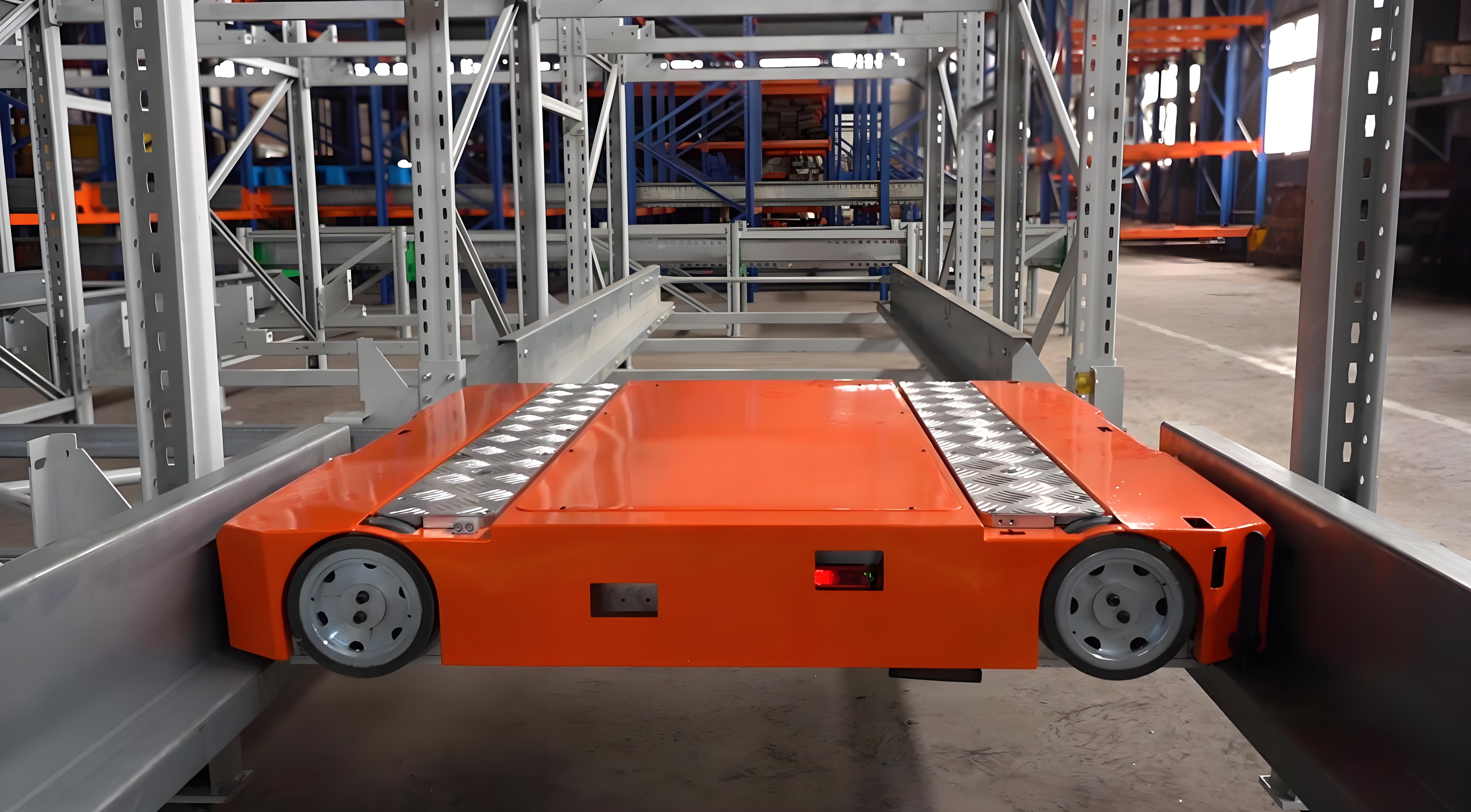

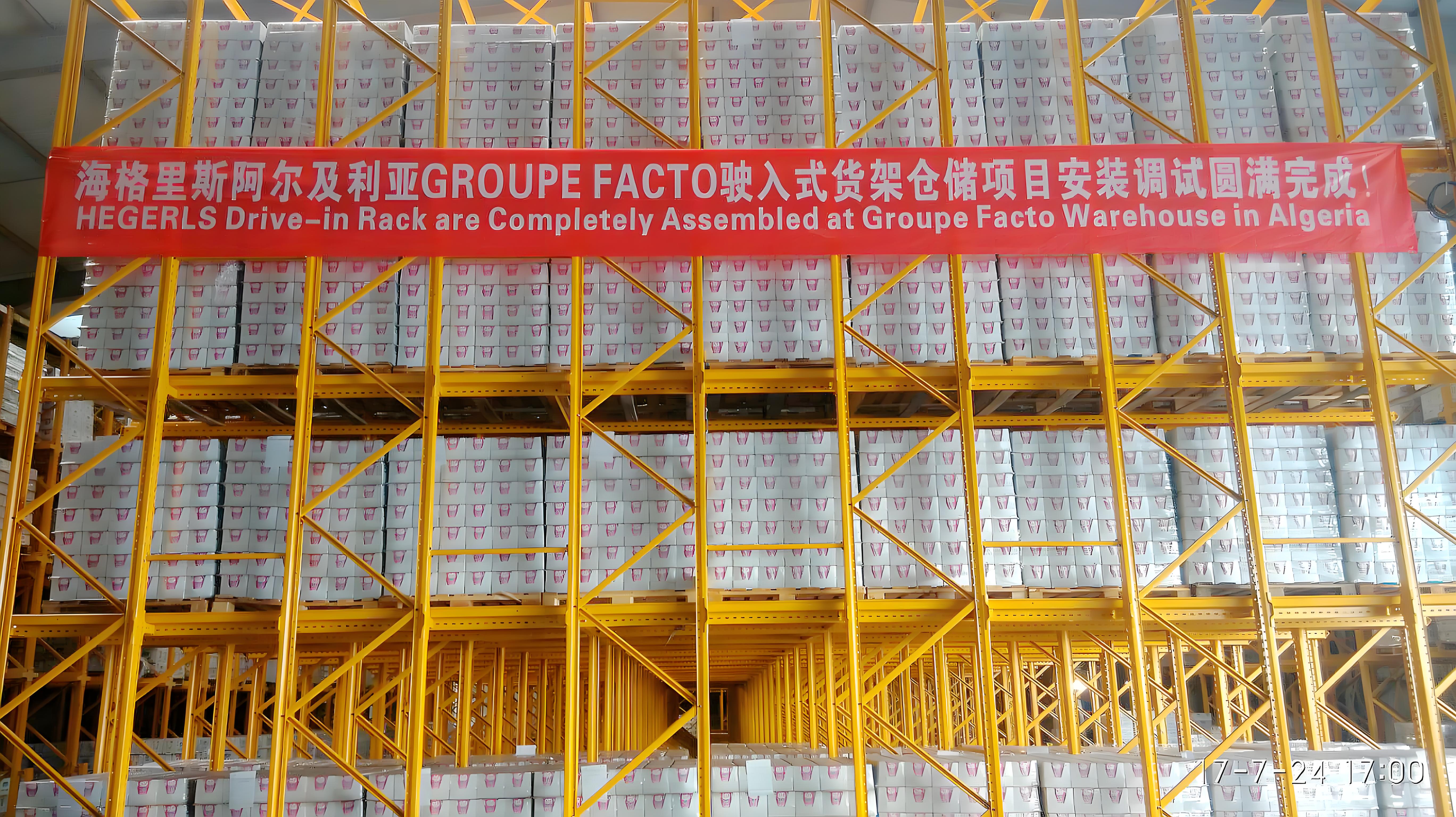
Algeria FACTO Group Storage Project
Related Products

MOBILE: +86 133 1595 3337
E-mails: hgls-wm@hbgysw.com
Office: Room 1118, Building No.6, Tatan Mall, Tatong Street, Shijiazhuang, China
Production base: 68 Shidai Road,Xinhe Industrial Park,Hebei Province
Website: https://www.woke-hercules.com



All rights reserved©2025 Hebei Woke Metal Products Co., ltd.