

-
SOLUTIONSIn recent years, “Hegerls" HD shuttle storage system have improved, upgraded, more intelligent, flexible, and more systematic, which can meet the different needs of customers in various industries.
 SERVICE
 -
-
R & DObtained more than ten national patents for automated logistics warehousing equipment such as shuttle cars, stackers, and mobile shelves, awarded SGS, BV, and TUV international product quality inspection agency certificates, as well as the "Quality, Environment, Health" ISO three major system certification certificates.
SERVICE
-
PROJECTSAfter Haigelis entered the international market in 2011, it exported supermarket equipment, warehousing equipment, and related supporting products to countries and regions such as North America, South America, Europe, Southeast Asia, and Africa. In recent years, the company has increased its efforts in the research and development of automated warehousing equipment.
SERVICE
-
BlogProfessional articles, guides, and insights on warehouse racking and automated storage systems.
SERVICE
-
HEGERLSIt's developed over 20 years, our company has become a one-stop integrated service provider of warehousing and logistics, integrating warehousing and logistics project design...
SERVICE

APPLICATION
Four-Directional Shuttle System Explained: High-Density Warehouse Architecture & Applications
Classification:
Industry Info
Release time:
2026-01-17
The Strategic Value of Four-Directional Shuttle Systems
In the era of automated warehousing, the four-directional shuttle system has become synonymous with high-density and flexible storage solutions. However, real-world project outcomes vary significantly — some systems operate smoothly with stable throughput, while others suffer from scheduling congestion, throughput limits, and rising service costs. The key differentiator is not simply the equipment itself, but whether the engineering and application logic behind the system is well understood and correctly implemented.
Why Four-Way Shuttles Are Central to High-Density Storage
Traditional pallet storage faces structural bottlenecks:
- Fixed aisles limit space utilization.
- Single-channel operations reduce flexibility.
- Adjustments to changing business needs often require costly reconstruction.
In contrast, a four-directional shuttle system isn’t just a new type of machine — it’s a new systemic architecture that enables:
- higher space utilization,
- enhanced flexibility,
- scalable performance tailored to demand changes.

What Is a Four-Directional Shuttle System? Beyond the Vehicle
From the HEGERLS engineering perspective, a complete four-directional shuttle solution includes the following interconnected components:
- High-density rack structure – multi-tiers and multi-aisles designed for maximum capacity.
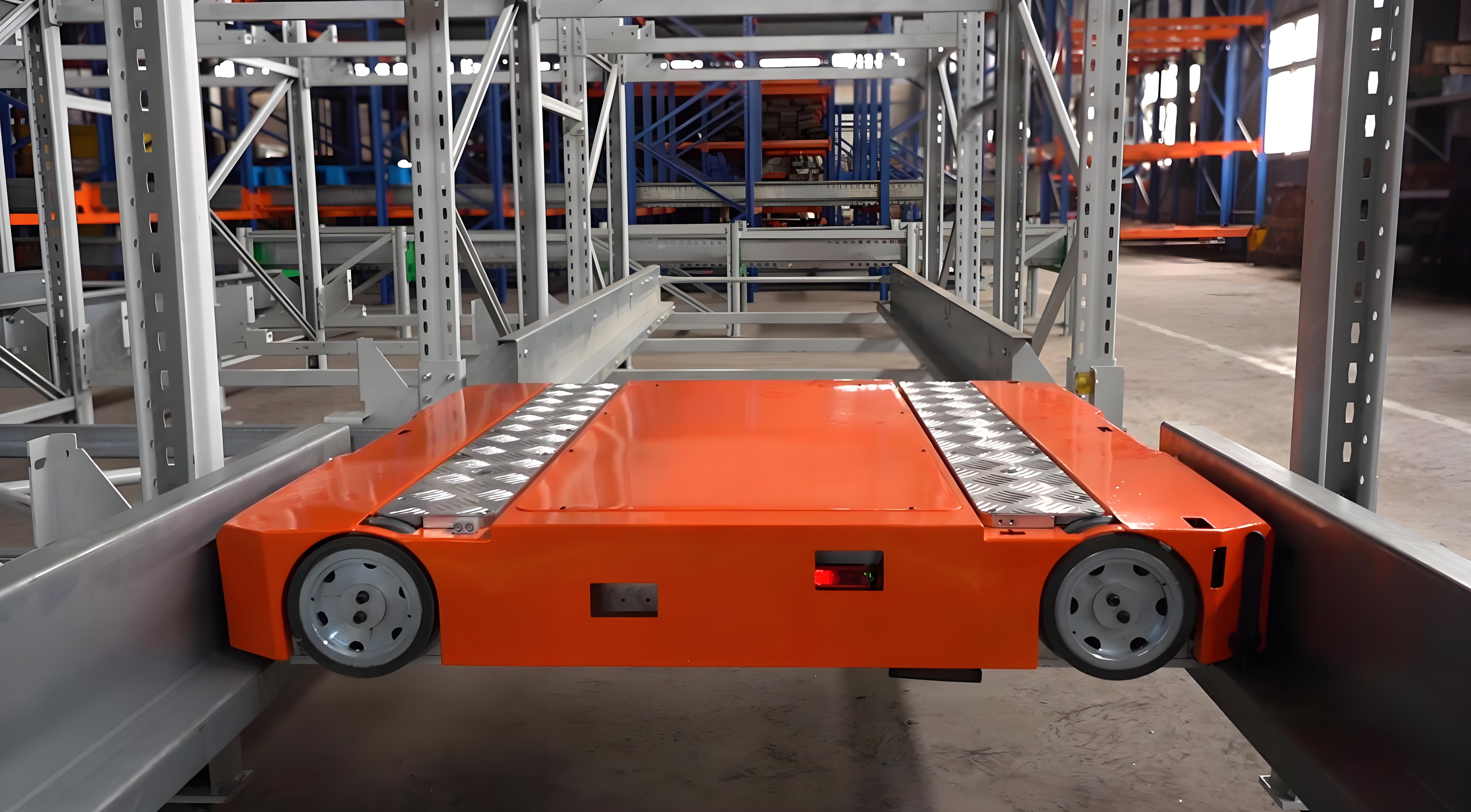
- Shuttle vehicles – autonomous robots capable of multi-axis travel.
- Vertical lift equipment – for efficient layer transitions.
- WCS (Warehouse Control System) – real-time scheduling and conflict avoidance.
- WMS (Warehouse Management System) – business rule configuration, inventory strategy, and wave management.
The core engineering focus is systemic flow rather than individual machine speed.

Ideal Use-Cases for Four-Way Shuttle Warehouses
Four-directional shuttle systems excel where:
📌 High-Density Storage Is Critical
- Land costs are high.
- Warehouse height is constrained.
- Minimizing the number of aisles is a priority.
📌 Variable Inbound/Outbound Cycles
- Systems with fluctuating activity benefit from built-in storage buffers.
📌 Complex SKU Mix
- Multiple pallet sizes and mixed inventory require flexible handling.
However, for extremely low throughput environments or scenarios with minor SKU variability, simpler solutions such as two-directional shuttle systems may be more cost-effective.
Every warehouse has different throughput, SKU structure, and space constraints.
A four-directional shuttle system delivers value only when engineered correctly.
Core Engineering Value: It’s About Stability, Not Peak Speed
Many suppliers emphasize peak speed and theoretical throughput, but:
✔ Sustained operational stability
✔ Flexible dispatch logic
✔ Handling exceptions reliably
…are the true performance benchmarks for any advanced shuttle system. These are precisely the engineering priorities at HEGERLS.
Typical System Architecture Breakdown
A robust four-directional shuttle system operates on a layered architecture:
🧱 Physical Layer
- High-density racks
- Standardized pallets
- Strategic aisle planning
🤖 Equipment Layer
- Multiple shuttles working in parallel
- Lift modules for vertical movement
- Conveyors interfacing with docks
⚙️ Control Layer
- Task decomposition
- Path optimization
- Collision avoidance
- Priority scheduling

📊 Management Layer
- Inventory strategies
- Wave planning
- WMS configuration
- Each layer must collaborate for overall system efficiency.

Engineering Challenges in Shuttle Scheduling
The true complexity lies in dynamic shuttle coordination:
- Congested task queues
- Route conflicts
- Resource contention
- Inefficient empty-vehicle dispatching
At HEGERLS, our systems emphasize:
- granular task planning
- real-time path recalculation
- workload balancing
- automated fallback mechanisms
Without mature scheduling logic, shuttle robots are just “moving machines” — not a cohesive logistics engine.
Comparison: Traditional vs. Four-Directional Systems
| Feature | Traditional Stacker | Two-Directional Shuttle | Four-Directional Shuttle |
|---|---|---|---|
| Storage Density | Medium | High | Very High |
| System Flexibility | Low | Medium | High |
| Expandability | Aisle-based | Tier-based | Modular |
| Dispatch Complexity | Low | Medium | High |
| Engineering Demand | Low | Medium | High |
This underscores why four-directional systems are best suited for complex, high-density, and evolving storage environments.
When Not to Choose a Four-Way Shuttle System
While powerful, this architecture is not universal. Scenarios requiring caution include:
❌ Very low throughput with unclear ROI
❌ Extremely diverse pallet dimensions
❌ Unstandardized upstream/downstream processes
❌ Insufficient operations & maintenance capabilities
Here, alternative strategies may offer better cost-performance balance.
Conclusion: System-Level Success Drives Long-Term Value
The true value of a four-directional shuttle system lies not in flashy tech or instantaneous throughput, but in:
✔ maximizing usable warehouse space
✔ delivering operational flexibility
✔ minimizing total cost of ownership
✔ ensuring long-term stable performance
With the right engineering methodology and experienced partner, four-directional shuttle systems become the central engine of modern high-density warehouses — ready for future logistics challenges.
Looking to design or upgrade a high-density automated warehouse?
Talk to the HEGERLS team for tailored consultation and engineering support.
Key words:
four directional shuttle system,four way pallet shuttle,four way shuttle ASRS,high density warehouse storage,high density pallet storage system
Related Solutions
Related Cases

Integrated Warehouse Rack Project in Morocco | Rack Supported Warehouse
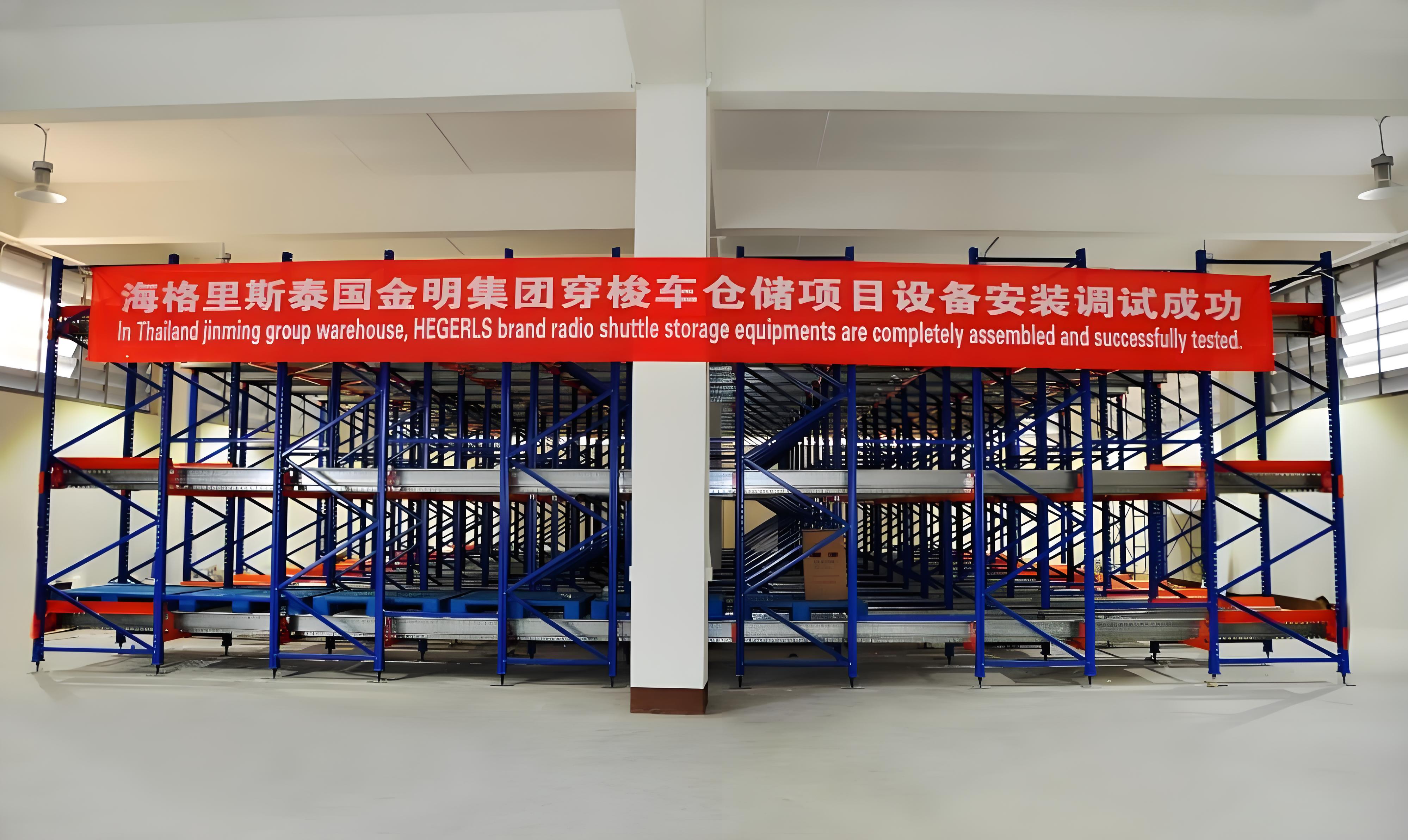
Thailand Jinming Group Shuttle Vehicle Storage Project
Related Products

MOBILE: +86 133 1595 3337
E-mails: hgls-wm@hbgysw.com
Office: Room 1118, Building No.6, Tatan Mall, Tatong Street, Shijiazhuang, China
Production base: 68 Shidai Road,Xinhe Industrial Park,Hebei Province
Website: https://www.woke-hercules.com



All rights reserved©2025 Hebei Woke Metal Products Co., ltd.