

-
SOLUTIONSIn recent years, “Hegerls" HD shuttle storage system have improved, upgraded, more intelligent, flexible, and more systematic, which can meet the different needs of customers in various industries.
 SERVICE
 -
-
R & DObtained more than ten national patents for automated logistics warehousing equipment such as shuttle cars, stackers, and mobile shelves, awarded SGS, BV, and TUV international product quality inspection agency certificates, as well as the "Quality, Environment, Health" ISO three major system certification certificates.
SERVICE
-
PROJECTSAfter Haigelis entered the international market in 2011, it exported supermarket equipment, warehousing equipment, and related supporting products to countries and regions such as North America, South America, Europe, Southeast Asia, and Africa. In recent years, the company has increased its efforts in the research and development of automated warehousing equipment.
SERVICE
-
BlogProfessional articles, guides, and insights on warehouse racking and automated storage systems.
SERVICE
-
HEGERLSIt's developed over 20 years, our company has become a one-stop integrated service provider of warehousing and logistics, integrating warehousing and logistics project design...
SERVICE

APPLICATION
Shuttle Racking System: The Ultimate 2026 Guide to High-Density Warehouse Storage
Classification:
Industry Info
Release time:
2026-03-23
In today’s fast-evolving logistics and manufacturing landscape, companies are under constant pressure to store more, move faster, and reduce costs. Traditional storage systems are no longer sufficient to meet these demands.
This is where the shuttle racking system becomes a game-changing solution.
A shuttle racking system is a highly efficient, scalable, and automated storage solution designed to maximize warehouse space while improving operational efficiency. It is widely used across industries such as manufacturing, food & beverage, cold storage, and e-commerce logistics.
In this comprehensive guide, we will explore everything you need to know about shuttle racking systems—including types, benefits, cost analysis, design considerations, and real-world applications.

What Is a Shuttle Racking System?
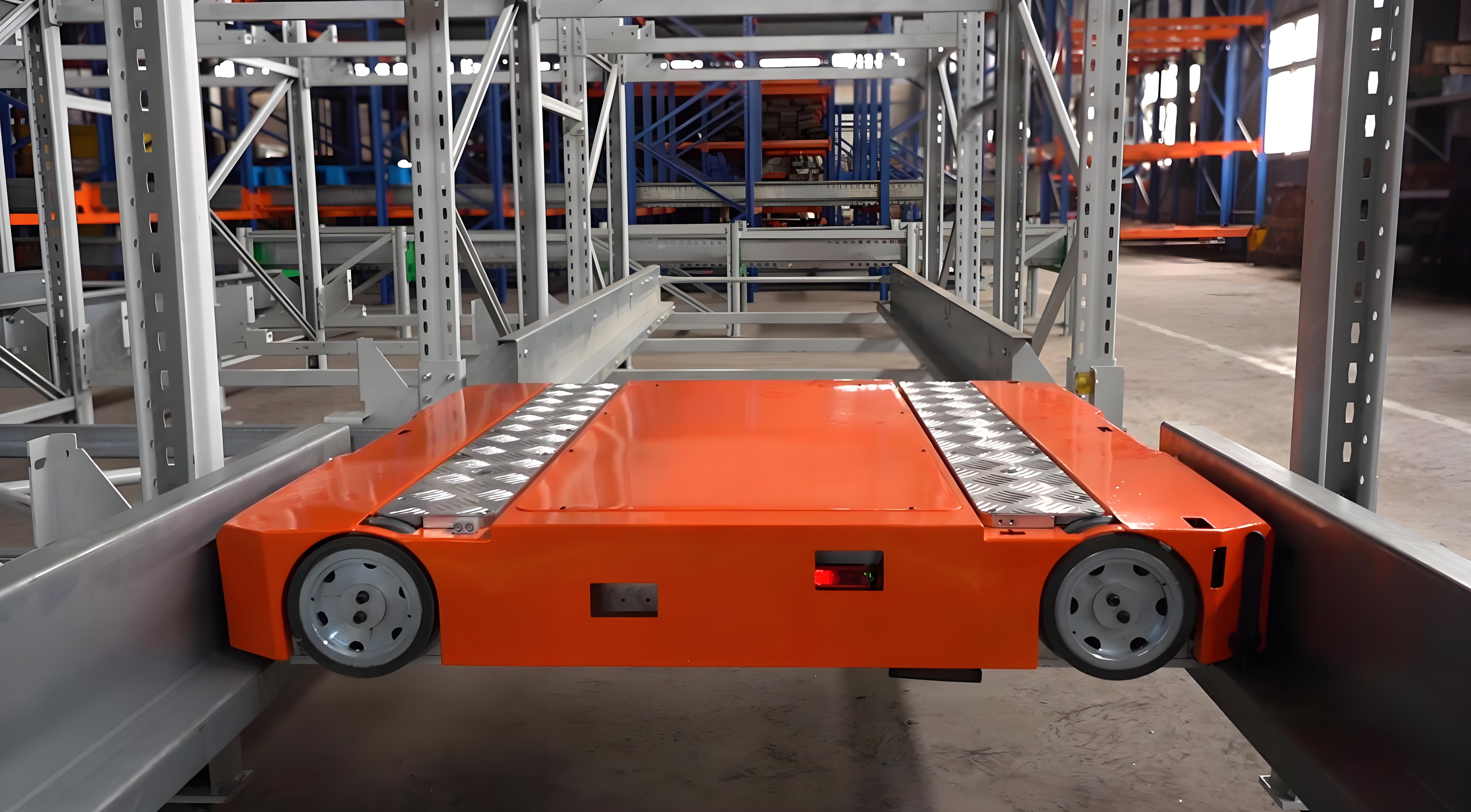
A shuttle racking system is a high-density storage system that uses an automated shuttle cart to move pallets within storage lanes.
Unlike traditional racking systems, where forklifts must enter aisles to store or retrieve goods, shuttle systems allow automated movement inside racks, significantly improving efficiency and safety.
Core Working Principle
The system operates through a combination of:
- shuttle carts
- racking structures
- control systems
- optional conveyors and lifts
Step-by-Step Workflow
- Pallets are delivered to the rack entrance
- Shuttle receives command via remote or WMS
- Shuttle transports pallets deep into storage lanes
- System organizes storage automatically
- Retrieval follows reverse process
Key Components of a Shuttle Racking System
1. Shuttle Cart
The shuttle is the core of the system.
Features:
- battery-powered
- autonomous movement
- high-speed transport
- intelligent control

2. Racking Structure
- high-density design
- deep-lane storage
- heavy-duty steel construction
3. Control System
- remote control (basic systems)
- WMS/WCS integration (advanced systems)
4. Power & Charging System
- lithium battery
- automatic charging stations
5. Conveyor and Lift (Optional)
- fully automated material handling
- integration with upstream/downstream processes

Types of Shuttle Racking Systems
1. Radio Shuttle Racking System
Description:
A semi-automated system where forklifts work together with shuttle carts.
Key Benefits:
- cost-effective
- simple operation
- suitable for SMEs
2. Multi-Shuttle System
Description:
Multiple shuttles operate simultaneously across different levels.
Benefits:
- higher throughput
- increased efficiency
- scalable
3. Four-Way Shuttle System (Advanced Automation)
Description:
Shuttles move in four directions (front/back/left/right).
Advantages:
- maximum flexibility
- no fixed aisles
- full automation capability
Comparison Table
| Feature | Radio Shuttle | Multi Shuttle | Four-Way Shuttle |
|---|---|---|---|
| Automation Level | Medium | High | Very High |
| Throughput | Medium | High | Very High |
| Flexibility | Medium | High | Maximum |
| Cost | Low | Medium | High |
Key Advantages of Shuttle Racking Systems
1. Maximum Storage Density
Shuttle systems can increase storage capacity by 80% to 200% compared to selective racking.
2. Labor Cost Reduction
- fewer forklift operations
- less manual handling
👉 Typical labor savings: 30%–60%
3. Improved Operational Efficiency
- faster loading/unloading
- reduced travel time
4. Enhanced Warehouse Safety
- minimized forklift movement
- reduced accident risks
5. Scalability
- add more shuttles as needed
- expand system easily
Shuttle Racking vs Other Storage Systems
Shuttle vs Selective Racking
| Feature | Shuttle | Selective |
|---|---|---|
| Density | High | Low |
| Efficiency | High | Medium |
| Cost | Medium | Low |
Shuttle vs Drive-In Racking
| Feature | Shuttle | Drive-In |
|---|---|---|
| Safety | High | Low |
| Efficiency | High | Low |
| Automation | Yes | No |
Shuttle vs ASRS
| Feature | Shuttle | ASRS |
|---|---|---|
| Cost | Medium | High |
| Flexibility | High | Medium |
| Density | High | Maximum |
Shuttle Racking System Design Guide
Key Design Factors
1. Warehouse Layout
- building dimensions
- ceiling height
- column spacing
2. Pallet Specifications
- size
- weight
- load stability
3. Throughput Requirements
- pallets/hour
- inbound/outbound flow
4. Storage Strategy
- FIFO (First-In-First-Out)
- LIFO (Last-In-First-Out)
Design Example
| Parameter | Value |
|---|---|
| Warehouse Size | 10,000 m² |
| Rack Height | 12 m |
| Lanes | 50 |
| Pallet Capacity | 20,000 |
Shuttle Racking System Cost Analysis
Cost Breakdown
| Component | Percentage |
|---|---|
| Racking | 30–40% |
| Shuttle | 20–30% |
| Software | 10–15% |
| Installation | 10–20% |
Total Investment Range
| Project Size | Cost |
|---|---|
| Small | $100K – $500K |
| Medium | $500K – $3M |
| Large | $3M – $8M+ |
ROI Analysis of Shuttle Racking Systems
Key ROI Drivers
- labor savings
- increased storage capacity
- improved efficiency
ROI Example
| Metric | Before | After |
|---|---|---|
| Labor Cost | $800K | $400K |
| Efficiency | 100% | 150% |
| Errors | 2% | 0.2% |
👉 ROI typically achieved within 2–4 years
Industry Applications
Manufacturing
- bulk pallet storage
- production buffer zones
Cold Storage
- maximize space
- reduce human exposure
Food & Beverage
- FIFO compliance
- high turnover
E-commerce
- fast-moving inventory
- scalable storage

Future Trends in Shuttle Racking Systems
As logistics and supply chain demands continue to evolve, shuttle racking systems are rapidly advancing toward higher intelligence, automation, and integration. The next generation of shuttle-based warehouse solutions will be defined by AI, robotics, data-driven optimization, and sustainability.
Understanding these trends is essential for businesses planning long-term investments in warehouse automation technology.
1. AI-Driven Intelligent Shuttle Systems
Artificial intelligence is transforming traditional shuttle systems into self-optimizing smart storage solutions.
Key Capabilities:
- dynamic task scheduling
- intelligent path optimization
- predictive inventory allocation
- real-time decision-making
Example:
Instead of following fixed routes, AI-enabled shuttles can:
- prioritize urgent orders
- reduce idle time
- balance workloads across multiple lanes
👉 Result: 10–30% efficiency improvement
2. Integration with Warehouse Robotics
Future shuttle systems will increasingly integrate with warehouse robotics, including:
- Autonomous Mobile Robots (AMRs)
- robotic picking arms
- automated guided vehicles (AGVs)
Benefits:
- seamless goods movement
- reduced manual handling
- fully automated workflows
👉 This creates a fully connected warehouse ecosystem.
3. Four-Way Shuttle Dominance
The four-way shuttle system is becoming the mainstream solution for high-end warehouses.
Why It’s Trending:
- no fixed aisles required
- flexible movement in all directions
- scalable architecture
- suitable for irregular layouts
👉 Compared to traditional shuttle systems, four-way systems can increase flexibility by 50%+.

4. Digital Twin Technology
Digital twin technology allows warehouses to create virtual replicas of physical systems.
Applications:
- system simulation before deployment
- real-time performance monitoring
- predictive maintenance
Benefits:
- reduced implementation risk
- optimized system performance
- improved ROI
5. IoT and Real-Time Data Connectivity
The integration of Internet of Things (IoT) devices enables:
- real-time tracking of pallets
- equipment performance monitoring
- instant system feedback
Impact:
- improved visibility
- faster decision-making
- reduced downtime
6. Energy Efficiency and Sustainability
Sustainability is becoming a key driver in warehouse automation.
Future Features:
- energy-efficient motors
- smart power management
- regenerative braking systems
- low-energy standby modes
👉 Modern shuttle systems can reduce energy consumption by 10–25%.
7. Modular and Scalable Design
Future systems will prioritize modularity, allowing businesses to:
- start small
- expand gradually
- upgrade without disruption
Advantages:
- lower initial investment
- faster deployment
- flexible scaling
8. AI + WMS Deep Integration
Shuttle systems will increasingly integrate with AI-powered warehouse management systems.
Capabilities:
- predictive demand planning
- intelligent slotting optimization
- automated replenishment

9. Autonomous Maintenance and Diagnostics
Future systems will include:
- self-diagnosing components
- predictive maintenance alerts
- remote monitoring
👉 Result: reduced downtime and maintenance costs
10. Fully Automated Smart Warehouses
The ultimate trend is the development of lights-out warehouses, where operations run with minimal human intervention.
Key Characteristics:
- fully automated storage
- robotic picking
- AI-driven decision-making
Future Trend Summary
| Trend | Impact |
|---|---|
| AI optimization | Higher efficiency |
| Robotics integration | Full automation |
| Four-way shuttle | Maximum flexibility |
| Digital twin | Reduced risk |
| IoT connectivity | Real-time visibility |
| Sustainability | Lower energy cost |
Key Takeaway
The future of shuttle racking systems lies in becoming:
👉 smarter, more flexible, fully connected, and highly automated
Companies investing today should prioritize future-ready systems to remain competitive.
How to Choose the Right Shuttle Racking System
Selecting the right shuttle racking system is a critical decision that impacts warehouse efficiency, cost, and scalability.
This section provides a step-by-step decision framework used by leading warehouse automation solution providers.
Step 1: Define Your Storage Requirements
Start by analyzing your inventory.
Key Questions:
- What type of goods do you store? (pallets, cartons, mixed)
- What are the dimensions and weight?
- How many SKUs do you manage?
Recommendation:
| Storage Type | Suggested System |
|---|---|
| Standard pallets | Radio shuttle |
| High SKU variety | Multi-shuttle |
| Complex operations | Four-way shuttle |
Step 2: Analyze Throughput Requirements
Throughput determines system performance.
Metrics:
- pallets per hour
- inbound/outbound frequency
- peak demand
System Matching:
| Throughput Level | Recommended Solution |
|---|---|
| Low | Radio shuttle |
| Medium | Multi shuttle |
| High | Four-way shuttle |
Step 3: Evaluate Warehouse Layout
Your physical space directly affects system selection.
Key Factors:
- ceiling height
- floor load capacity
- building shape
Recommendations:
- high ceiling → high-density system
- irregular layout → four-way shuttle
- limited space → compact shuttle system
Step 4: Determine Automation Level
Different businesses require different levels of automation.
| Automation Level | System Type |
|---|---|
| Semi-automated | Radio shuttle |
| Automated | Multi shuttle |
| Fully automated | Four-way shuttle |
Step 5: Consider Scalability
A good system should support future growth.
Look for:
- modular design
- ability to add shuttles
- software scalability
Step 6: Budget Planning and ROI
Cost Considerations:
- equipment cost
- installation
- software integration
- maintenance
ROI Expectations:
- labor savings: 30–60%
- efficiency gain: 30–50%
- ROI timeline: 2–4 years
Step 7: Software Integration Capability
Ensure compatibility with:
- WMS
- WCS
- ERP systems
Step 8: Industry-Specific Needs
| Industry | Recommended System |
|---|---|
| Manufacturing | Shuttle + automation |
| E-commerce | Shuttle + robotics |
| Cold storage | High-density shuttle |
| 3PL | Flexible shuttle systems |
Step 9: Choose the Right Supplier
Evaluate:
- project experience
- technical capability
- after-sales support
- system integration ability
Step 10: Plan Phased Implementation
Instead of full deployment:
Suggested Approach:
- Phase 1: Basic shuttle system
- Phase 2: Add automation
- Phase 3: Full smart warehouse
Quick Decision Flow
👉 If you want a simple answer:
- Need low cost → Radio shuttle system
- Need higher efficiency → Multi-shuttle system
- Need full automation → Four-way shuttle system
Common Mistakes to Avoid
❌ choosing based only on price
❌ ignoring future expansion
❌ underestimating throughput
❌ selecting inexperienced vendors
Expert Checklist
Before making a decision, confirm:
✔ warehouse layout analyzed
✔ throughput calculated
✔ budget defined
✔ scalability ensured
✔ supplier evaluated
Final Insight
The best shuttle racking system is not the most expensive one—it is the one that:
- matches your operational needs
- supports future growth
- delivers the highest ROI
Need Help Choosing the Right Shuttle Racking System?
HEGERLS provides customized shuttle racking solutions tailored to your warehouse.
📩 Get:
- free layout design
- system recommendation
- ROI analysis
👉 Request Your Free Shuttle System Consultation Now
FAQ
What is a shuttle racking system?
A high-density storage system using automated shuttles.
How efficient is shuttle racking?
Up to 50% more efficient than traditional systems.
Is shuttle racking suitable for cold storage?
Yes, it is ideal for cold environments.
How much does a shuttle racking system cost?
The cost depends on system type and scale:
- Radio shuttle → $100K – $500K
- Multi-shuttle → $500K – $3M
- Four-way shuttle → $1M – $5M+
Is a shuttle racking system scalable?
Yes, shuttle systems are highly scalable:
- additional shuttles can be added
- racking can be expanded
- software can be upgraded
Conclusion
A shuttle racking system is one of the most effective solutions for modern warehouses seeking:
- higher storage density
- improved efficiency
- reduced labor costs
It offers a perfect balance between cost, performance, and scalability, making it a preferred choice for many industries.
Upgrade Your Warehouse with Shuttle Racking System
Looking to maximize your warehouse efficiency?
HEGERLS provides:
- radio shuttle systems
- four-way shuttle systems
- fully automated warehouse solutions
Contact HEGERLS now!
Key words:
shuttle racking system,pallet shuttle system,radio shuttle racking,automated shuttle system,high density warehouse storage system
Related Solutions
Related Cases

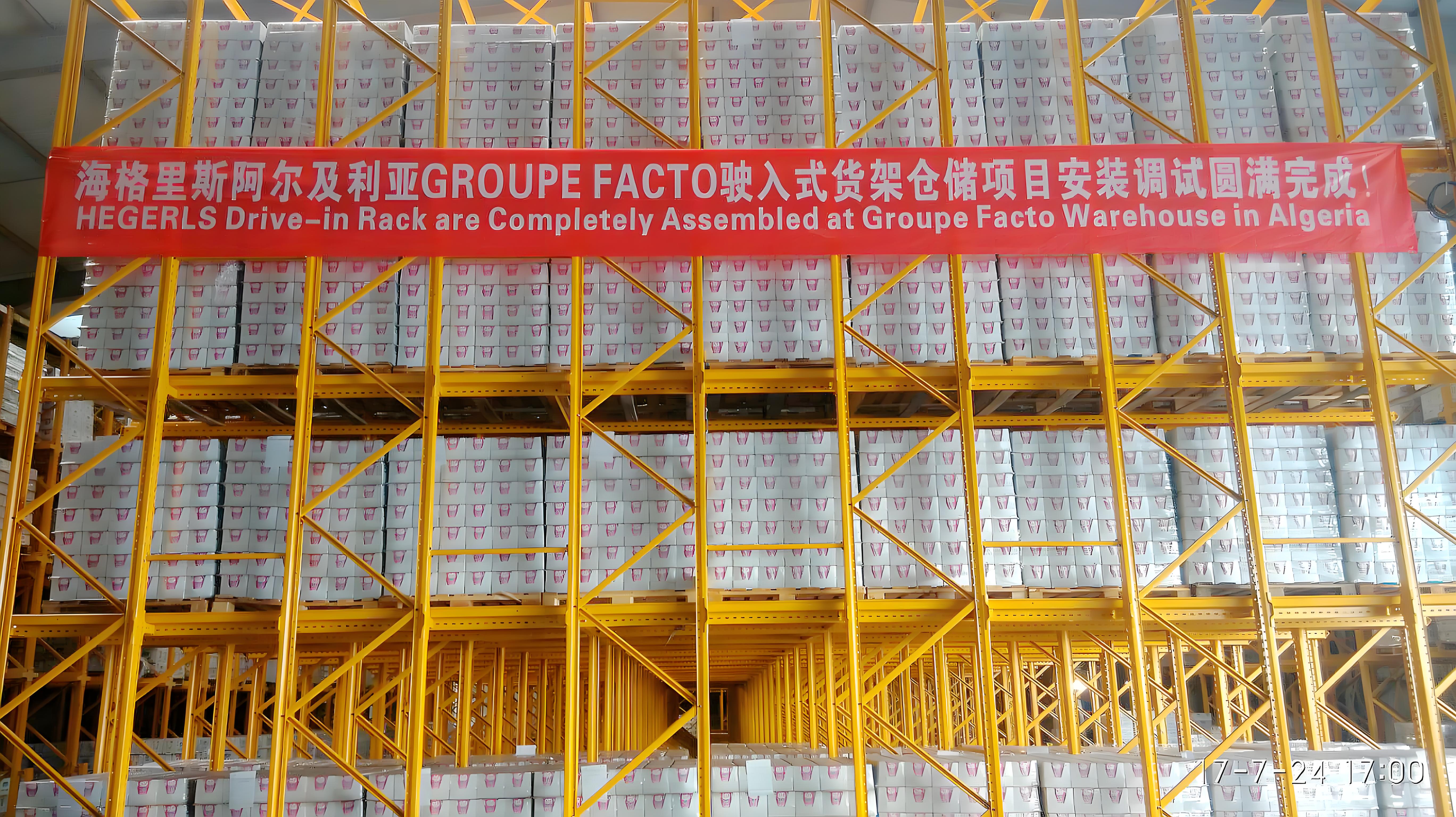
Algeria FACTO Group Storage Project
Related Products

MOBILE: +86 133 1595 3337
E-mails: hgls-wm@hbgysw.com
Office: Room 1118, Building No.6, Tatan Mall, Tatong Street, Shijiazhuang, China
Production base: 68 Shidai Road,Xinhe Industrial Park,Hebei Province
Website: https://www.woke-hercules.com



All rights reserved©2025 Hebei Woke Metal Products Co., ltd.