

-
SOLUTIONSIn recent years, “Hegerls" HD shuttle storage system have improved, upgraded, more intelligent, flexible, and more systematic, which can meet the different needs of customers in various industries.
 SERVICE
 -
-
R & DObtained more than ten national patents for automated logistics warehousing equipment such as shuttle cars, stackers, and mobile shelves, awarded SGS, BV, and TUV international product quality inspection agency certificates, as well as the "Quality, Environment, Health" ISO three major system certification certificates.
SERVICE
-
PROJECTSAfter Haigelis entered the international market in 2011, it exported supermarket equipment, warehousing equipment, and related supporting products to countries and regions such as North America, South America, Europe, Southeast Asia, and Africa. In recent years, the company has increased its efforts in the research and development of automated warehousing equipment.
SERVICE
-
BlogProfessional articles, guides, and insights on warehouse racking and automated storage systems.
SERVICE
-
HEGERLSIt's developed over 20 years, our company has become a one-stop integrated service provider of warehousing and logistics, integrating warehousing and logistics project design...
SERVICE

APPLICATION
Warehouse Storage Density: How to Increase Pallet Capacity Without Expanding Your Warehouse
Classification:
FAQ
Release time:
2026-09-12
Warehouse space is becoming increasingly expensive. As inventory volumes grow, many companies face the same problem: how can they store more pallets without building a larger warehouse?
Expanding a warehouse is not always the most practical solution. Land, construction, refrigeration, labor, and material handling costs can make expansion expensive and time-consuming.
A more effective approach is often to improve warehouse storage density.
Warehouse storage density refers to how efficiently a warehouse uses its available floor area and vertical volume to store inventory. By optimizing racking layouts, aisle space, building height, storage depth, and material handling systems, companies can significantly increase storage capacity without necessarily expanding the warehouse footprint.
Modern solutions range from conventional pallet racking to high-density shuttle systems, automated storage and retrieval systems (AS/RS), and rack-supported warehouses.
The right solution depends on the warehouse's products, pallet profile, inventory turnover, throughput, building structure, and budget.

What Is Warehouse Storage Density?
Warehouse storage density measures how much inventory can be stored within a given warehouse area or volume.
For pallet warehouses, it is commonly evaluated through:
- Pallet positions per square meter
- Pallet positions per cubic meter
- Storage capacity per floor area
- Utilization of available building height
- Storage depth
- Aisle-to-storage-area ratio
A warehouse with a large floor area does not necessarily have high storage density.
For example, a conventional pallet warehouse with wide forklift aisles may have a large amount of floor space but relatively fewer pallet positions. A high-density warehouse can use narrower aisles, deeper storage lanes, greater vertical height, or automated equipment to increase the number of storage positions.
The objective is not simply to eliminate space. It is to use warehouse space more effectively while maintaining the required accessibility, throughput, safety, and operational flexibility.
Why Is Warehouse Storage Density Important?
Increasing storage density can provide several benefits without requiring additional land.
1. More Inventory in the Existing Warehouse
Higher-density storage can increase pallet capacity within the current building footprint.
This is especially important for companies experiencing inventory growth but limited expansion space.
2. Better Use of Vertical Space
Many warehouses have unused space above conventional rack levels.
High-bay racking and automated storage systems can make better use of available building height.
3. Lower Expansion Pressure
If storage capacity can be increased within the existing building, companies may be able to postpone or avoid warehouse expansion.
4. Better Use of Expensive Locations
Storage space is particularly valuable in:
- Urban logistics centers
- Cold storage facilities
- Distribution hubs
- Manufacturing plants
- High-rent industrial areas
Increasing storage density can improve the return on existing warehouse infrastructure.
5. More Efficient Warehouse Layouts
Storage density optimization often leads to a better relationship between:
Storage Area + Aisles + Staging + Receiving + Shipping + Material Flow
A high-density warehouse should therefore be designed as an operating system rather than simply adding more racks.
What Factors Determine Warehouse Storage Density?
Storage density is influenced by several factors, not just the type of rack selected.
Warehouse Dimensions
The length, width, and clear height of the building determine how much storage space can potentially be developed.
Column positions, doors, loading docks, fire systems, and other building elements can also affect rack layout.
Pallet Dimensions and Weight
Rack design must match the actual pallet dimensions and load weight.
Typical considerations include:
- Pallet length
- Pallet width
- Pallet height
- Pallet weight
- Load stability
- Product characteristics
Larger or irregular loads may require different rack configurations.
Inventory Characteristics
The number of SKUs and inventory turnover rate have a major impact on storage density.
A warehouse storing a small number of SKUs in large quantities can often use deeper storage systems.
A warehouse with thousands of SKUs may need greater selectivity and direct access.
Forklift and Equipment Requirements
Forklift dimensions determine aisle width.
Narrower aisles can increase storage density, but they may require specialized equipment.
Automated systems can reduce some aisle requirements while providing precise storage and retrieval.
Required Throughput
Storage density should never be considered separately from throughput.
A system with extremely high density may not be suitable if goods need to be accessed continuously and rapidly.
The warehouse should balance:
Storage Capacity + Accessibility + Throughput
How Can You Increase Warehouse Storage Density?
There are several ways to increase storage capacity without expanding the warehouse footprint.
1. Optimize the Warehouse Layout
Before replacing the racking system, analyze the current warehouse layout.
Look for:
- Oversized aisles
- Underused corners
- Low rack heights
- Excessive staging areas
- Poorly positioned receiving and shipping zones
- Unused vertical space
- Inefficient product zoning
A layout redesign can sometimes increase capacity without major equipment investment.
2. Increase Rack Height
If the building has sufficient clear height, increasing rack height is one of the simplest ways to create additional pallet positions.
However, the design must consider:
- Building height
- Fire protection
- Rack load
- Forklift reach
- Structural requirements
- Local regulations
For taller warehouses, stacker cranes or shuttle systems may become more practical than conventional forklifts.
3. Reduce Aisle Width
Traditional forklifts require relatively wide operating aisles.
Narrow-aisle and very-narrow-aisle configurations can reduce aisle space and create more room for storage racks.
However, aisle reduction should be based on the actual handling equipment.
Reducing aisle width without considering equipment requirements can negatively affect productivity and safety.
4. Increase Storage Depth
Deep-lane storage systems can increase pallet density by storing multiple pallets behind one another.
This approach is particularly suitable for warehouses with:
- Fewer SKUs
- Large quantities per SKU
- Stable inventory
- Bulk storage requirements
Examples include shuttle racking and drive-in racking.
5. Use High-Density Shuttle Racking
Shuttle systems use powered vehicles to move pallets inside storage lanes.
Compared with conventional forklift-based storage, shuttle racking can reduce forklift travel inside the rack structure and support deeper storage.
Two-way pallet shuttle systems are commonly used for high-density pallet storage where storage lanes are clearly defined.

6. Use Four-Way Shuttle Automation
Four-way shuttle systems provide a higher level of flexibility.
Unlike conventional fixed-direction shuttle systems, four-way shuttles can move in multiple directions and can be coordinated across different storage lanes.
This makes them suitable for warehouses that require:
- High storage density
- Flexible storage allocation
- Multiple storage lanes
- Multi-vehicle operation
- Automated storage and retrieval
- Better adaptability to changing workloads
Four-way shuttle systems can be particularly useful where the warehouse needs both density and flexibility.
What Is the Difference Between High-Density Racking and Automated Storage?
High-density racking and automated storage are related but not identical.
High-density racking primarily focuses on increasing storage capacity by reducing wasted space and increasing storage depth.
Automated storage combines storage equipment with automated material handling and software to perform storage and retrieval operations.
| Solution | Main Objective | Storage Density | Automation | Best For |
|---|---|---|---|---|
| Selective Pallet Racking | Direct pallet access | Medium | Low | High SKU variety |
| Drive-In Racking | Deep storage | High | Low | Low SKU variety |
| Shuttle Racking | Dense pallet storage | High | Medium/High | Bulk pallet storage |
| Four-Way Shuttle | Flexible high-density automation | High | High | Flexible automated storage |
| AS/RS | Automated high-bay storage | High | High | Large-scale automated warehouses |
| Rack-Supported Warehouse | Maximize building volume | Very High | Optional | Large/high-bay facilities |
The best choice depends on how the warehouse operates.
Selective Racking vs. High-Density Storage
Selective pallet racking remains one of the most widely used warehouse storage systems because it provides direct access to individual pallets.
It is particularly suitable for warehouses with:
- Many SKUs
- Frequent product changes
- High selectivity requirements
- Mixed inventory
- FIFO requirements
However, selective racking requires more aisles and generally provides lower storage density than deep-lane systems.
High-density systems trade some accessibility for greater storage capacity.
Therefore:
If selectivity is the priority, consider selective racking. If storage capacity is the priority, consider high-density storage.
For many warehouses, a combination of both may provide the best result.
When Should You Use Shuttle Racking?
Shuttle racking is suitable when a warehouse needs higher density than conventional pallet racking while maintaining more flexibility than traditional drive-in storage.
It can be particularly effective for:
- Food and beverage
- Cold storage
- Manufacturing
- Chemical products
- Beverage distribution
- Bulk pallet storage
- Seasonal inventory
A pallet shuttle moves pallets inside storage lanes, reducing the need for forklifts to enter the rack structure.
This can improve storage density and reduce forklift travel.
For semi-automated operations, the shuttle can work together with forklifts.
For more automated configurations, shuttle systems can be integrated with lifts, conveyors, stacker cranes, and warehouse control software.
When Should You Use a Four-Way Shuttle System?
Four-way shuttle systems are appropriate when storage density alone is not enough and the warehouse also needs operational flexibility.
They can move in multiple directions, allowing vehicles to change lanes and access different storage areas.
A four-way shuttle system may be suitable when:
- Warehouse space is limited
- Storage density is a major priority
- Multiple shuttles need to operate together
- The warehouse has a complex layout
- Storage locations need dynamic allocation
- Throughput requirements are relatively high
- The project requires automated pallet handling
Four-way shuttle systems can also work with lifts and conveyors to create a complete automated storage solution.

How Does AS/RS Increase Warehouse Storage Density?
Automated Storage and Retrieval Systems (AS/RS) use automated equipment such as stacker cranes to store and retrieve goods from high-bay racking.
A pallet AS/RS can make extensive use of vertical warehouse space.
This is particularly valuable when:
- Land is expensive
- Warehouse height is available
- Pallet volumes are high
- Throughput requirements are clearly defined
- Automated inventory control is required
A typical pallet AS/RS system may include:
Pallet Racking + Stacker Crane + Conveyors + Lifts + WMS + WCS
The result is an integrated automated storage and retrieval process rather than simply a higher rack.
Can a Rack-Supported Warehouse Increase Storage Density?
Yes.
A rack-supported warehouse integrates the storage rack with the building structure. The rack structure can support stored goods as well as elements such as the roof and walls.
Unlike a conventional warehouse where the building is constructed first and racks are installed afterward, a rack-supported warehouse integrates these functions during the engineering and construction process.
This approach can enable:
- Higher storage heights
- Better land utilization
- Fewer conventional building structures
- High-density pallet storage
- Integration with AS/RS and shuttle systems
Rack-supported warehouses are particularly relevant for large-scale distribution centers and cold storage facilities where land and building volume are expensive.
HEGERLS currently presents rack-supported warehouse solutions reaching approximately 30–45 m or more, depending on engineering and project requirements.

How Do You Calculate Warehouse Storage Capacity?
A basic storage-capacity calculation can begin with the number of available pallet positions.
For example:
Storage Capacity = Number of Rack Bays × Pallet Positions per Bay × Number of Storage Levels
However, real warehouse capacity calculations are more complex.
They should also consider:
- Aisle space
- Columns
- Fire protection clearances
- Staging areas
- Loading and unloading areas
- Product dimensions
- Pallet overhang
- Rack configuration
- Equipment clearances
Therefore, the maximum theoretical pallet count is not always the practical operating capacity.
A professional warehouse layout should optimize usable capacity, not simply maximize the number of rack locations.
How Do You Choose the Right Warehouse Storage System?
Use the following checklist before selecting a storage system.
1. Define the Product
Determine:
- Product dimensions
- Pallet type
- Unit weight
- Load height
- Packaging
- Stability
2. Analyze SKU Structure
Ask:
- How many SKUs are stored?
- How many pallets are stored per SKU?
- Which products move fastest?
- Which products require direct access?
3. Calculate Throughput
Measure:
- Inbound pallets per hour
- Outbound pallets per hour
- Peak demand
- Average demand
- Required response time
4. Measure the Building
Record:
- Length
- Width
- Clear height
- Column locations
- Door locations
- Loading docks
- Fire protection systems
5. Determine the Priority
Is the main objective:
- Maximum storage density?
- Maximum pallet accessibility?
- High throughput?
- Low initial investment?
- High automation?
- Future scalability?
6. Compare Total Cost
Do not compare systems based only on rack price.
Consider:
- Racking
- Handling equipment
- Automation
- Software
- Installation
- Maintenance
- Labor
- Energy
- Future expansion
How Can WMS and WCS Improve Warehouse Space Utilization?
Warehouse storage density is not only a physical design issue.
Software also plays an important role.
A Warehouse Management System can track:
- Inventory
- Locations
- SKUs
- Batches
- Orders
- Storage status
- Replenishment
A Warehouse Control System can coordinate automated equipment such as:
- Four-way shuttles
- Stacker cranes
- Conveyors
- Lifts
- AGVs
When integrated, WMS and WCS can support dynamic storage allocation and equipment coordination.
For example, available storage locations can be assigned according to product characteristics, inventory rules, and operational priorities rather than relying entirely on fixed locations.
This can improve the effective utilization of warehouse space.

Warehouse Storage Density Should Not Be the Only KPI
A common mistake is to optimize warehouse design around pallet positions alone.
A warehouse with maximum density may still perform poorly if:
- Retrieval is too slow
- Fast-moving products are difficult to access
- Staging areas are insufficient
- Equipment causes bottlenecks
- Inventory is difficult to manage
- Future expansion is impossible
A better approach is to evaluate multiple KPIs:
| KPI | What It Measures |
|---|---|
| Storage Density | Pallet capacity per area/volume |
| Throughput | Inbound/outbound performance |
| Accessibility | Ease of retrieving inventory |
| Inventory Accuracy | Correct location and quantity |
| Labor Efficiency | Output per employee |
| Space Utilization | Effective use of warehouse volume |
| Scalability | Ability to expand |
| Total Cost | Investment + operating costs |
The best warehouse is not necessarily the warehouse with the highest pallet density. It is the warehouse that provides the right combination of capacity, throughput, accessibility, and cost.
Future Trends in High-Density Warehouse Storage
Warehouse storage is moving from simple racking toward integrated storage and automation systems.
More Automated High-Density Storage
Four-way shuttles, AS/RS, pallet shuttles, and automated conveyors will continue to expand in applications where space and labor efficiency are important.
More Flexible Automation
Warehouses increasingly need to handle seasonal demand and changing product mixes.
Flexible automation can help companies adapt capacity and equipment utilization.
Integrated Rack and Building Design
Rack-supported warehouses can provide an efficient solution for large-scale, high-bay storage where land and building volume are major cost factors.
Greater Software Integration
WMS and WCS will increasingly connect inventory decisions with physical equipment, providing more accurate and responsive warehouse control.
Data-Driven Storage Optimization
Warehouse operators will increasingly use operational data to analyze:
- Storage utilization
- Equipment utilization
- Throughput
- Inventory turnover
- Bottlenecks
- Expansion requirements
FAQ: Warehouse Storage Density
What is warehouse storage density?
Warehouse storage density measures how efficiently a warehouse uses its available floor area and vertical volume to store inventory.
How can I increase warehouse storage capacity?
Common methods include optimizing the layout, increasing rack height, reducing unnecessary aisle space, using deeper storage, adopting shuttle racking, implementing four-way shuttle systems, or using AS/RS.
What is the most space-efficient warehouse racking system?
There is no universal answer. Shuttle racking, four-way shuttle systems, AS/RS, and rack-supported warehouses can provide very high density, but the best solution depends on SKU variety, accessibility, throughput, building height, and budget.
Is high-density storage better than selective pallet racking?
Not always. High-density systems maximize capacity, while selective pallet racking provides direct access to individual pallets. Warehouses with many SKUs may prioritize selectivity over maximum density.
Can automation increase warehouse storage density?
Yes. Automation can reduce manual aisle requirements, improve vertical utilization, support deeper storage, and optimize storage locations.
Is a four-way shuttle suitable for every warehouse?
No. Four-way shuttle systems are most useful where high density, flexible routing, and automated pallet handling justify the investment.
How high can a warehouse rack be?
Rack height depends on building structure, equipment, local regulations, fire protection, load requirements, and the selected storage technology. High-bay automated warehouses can significantly exceed conventional rack heights.
Optimize Your Warehouse Storage Capacity
Increasing warehouse storage density is not simply a matter of installing taller racks.
It requires a coordinated analysis of products, pallets, SKUs, building dimensions, storage requirements, material flow, equipment, automation, and warehouse software.
Depending on the operation, the right solution may be selective pallet racking, shuttle racking, four-way shuttle automation, AS/RS, rack-supported construction, or a combination of systems.
HEGERLS provides warehouse storage and automation solutions ranging from conventional pallet racking and high-density shuttle systems to four-way shuttle, AS/RS, and rack-supported warehouses. The company's current solution portfolio covers both traditional storage equipment and automated storage systems.
Want to increase pallet capacity without expanding your warehouse? Send us your warehouse dimensions, pallet specifications, current storage capacity, SKU profile, and throughput requirements. HEGERLS can help evaluate the appropriate racking or automated storage solution for your operation.
Key words:
Previous:
Related Solutions
Related Cases
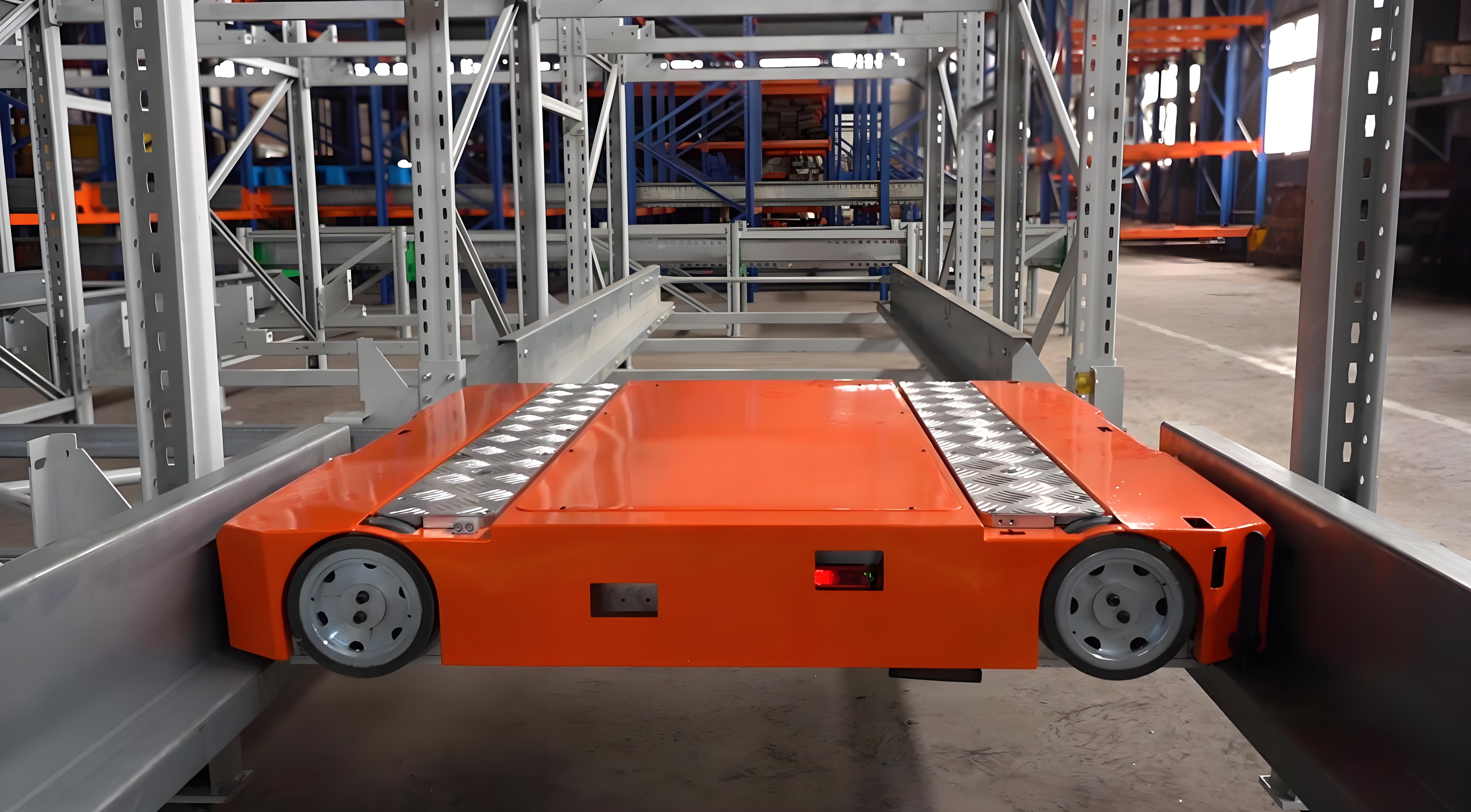

Integrated Warehouse Rack Project in Morocco | Rack Supported Warehouse
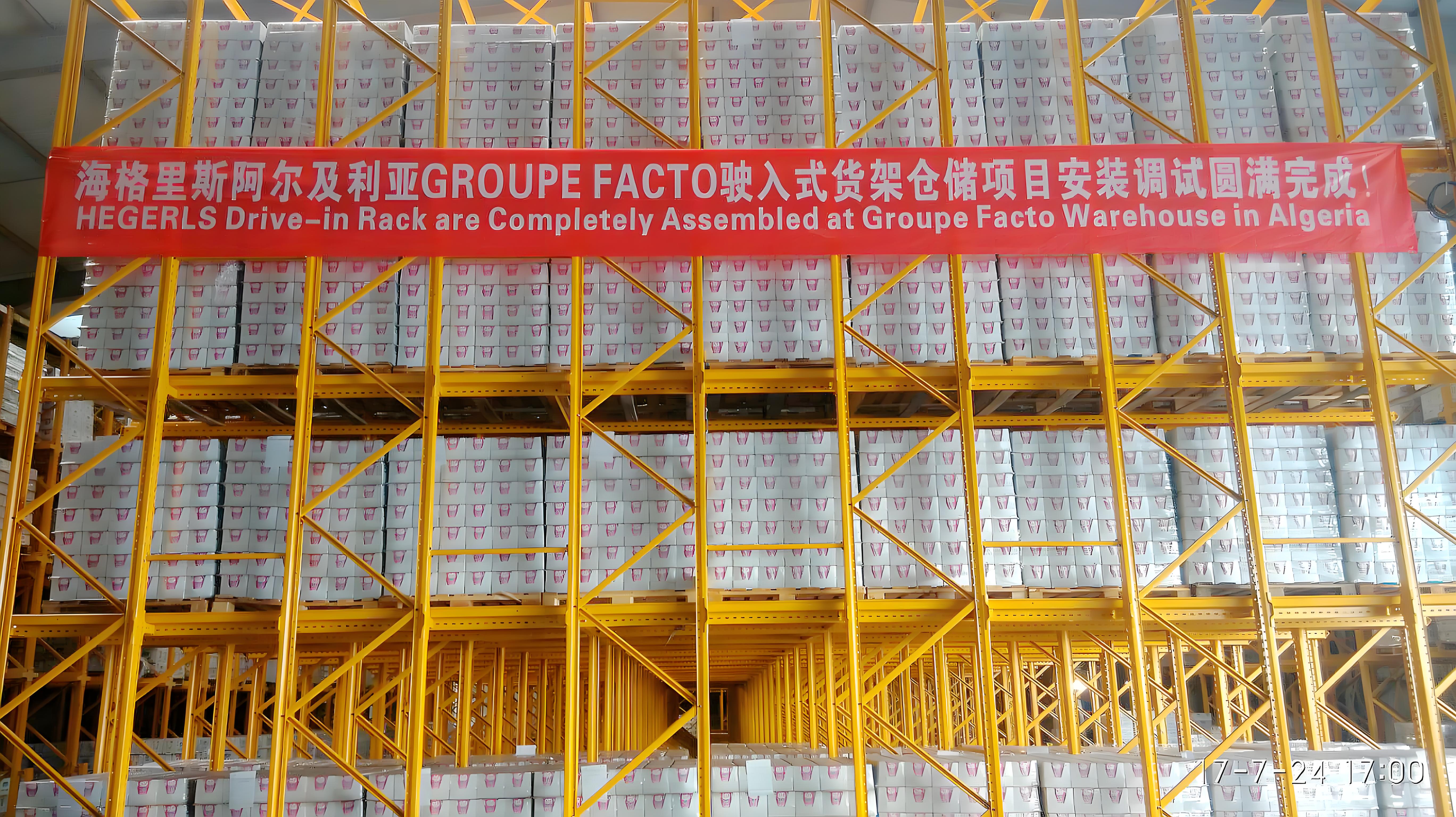
Algeria FACTO Group Storage Project
Related Products

MOBILE: +86 133 1595 3337
E-mails: hgls-wm@hbgysw.com
Office: Room 1118, Building No.6, Tatan Mall, Tatong Street, Shijiazhuang, China
Production base: 68 Shidai Road,Xinhe Industrial Park,Hebei Province
Website: https://www.woke-hercules.com



All rights reserved©2025 Hebei Woke Metal Products Co., ltd.