

-
SOLUTIONSIn recent years, “Hegerls" HD shuttle storage system have improved, upgraded, more intelligent, flexible, and more systematic, which can meet the different needs of customers in various industries.
 SERVICE
-
-
R & DObtained more than ten national patents for automated logistics warehousing equipment such as shuttle cars, stackers, and mobile shelves, awarded SGS, BV, and TUV international product quality inspection agency certificates, as well as the "Quality, Environment, Health" ISO three major system certification certificates.
SERVICE
-
PROJECTSAfter Haigelis entered the international market in 2011, it exported supermarket equipment, warehousing equipment, and related supporting products to countries and regions such as North America, South America, Europe, Southeast Asia, and Africa. In recent years, the company has increased its efforts in the research and development of automated warehousing equipment.
SERVICE
-
BlogProfessional articles, guides, and insights on warehouse racking and automated storage systems.
SERVICE
-
HEGERLSIt's developed over 20 years, our company has become a one-stop integrated service provider of warehousing and logistics, integrating warehousing and logistics project design...
SERVICE

APPLICATION
Smart Warehouse Planning and Construction Guide for Smart Factories
Classification:
Industry Info
Release time:
2025-12-25
Amid the new wave of manufacturing digitalization and intelligent transformation, the competitive focus of smart factories is shifting from single-equipment automation to system-level collaboration and data-driven capabilities.
As the critical hub connecting production, supply chains, and delivery, smart warehousing has become one of the most valuable infrastructures within smart factories.
A smart factory is not a simple accumulation of automated equipment, but a complete operational system with automated warehousing as its backbone, software systems as its neural network, and data as its driving force.
With rack-supported structures, four-way shuttle systems, automated storage and retrieval systems (AS/RS), and WMS/WCS software at its core, HEGERLS deeply integrates advanced digital technologies into warehousing and intralogistics scenarios, helping manufacturing enterprises build a truly deployable, replicable, and scalable smart factory foundation.

I. Strategic Anchor: Top-Level Smart Factory Design Centered on Smart Warehousing
1. From “Equipment Automation” to “System Intelligence”
Traditional smart factory construction often focuses on isolated equipment upgrades while overlooking the systemic role of logistics and warehousing.
In HEGERLS’ practice, smart factory planning starts with a fundamental question:
Can the warehousing system support future intelligent expansion?
Therefore, top-level design should focus on:
- Automated high-bay warehouses as the logistics core
- Software systems as the data hub
- Reserved interfaces and data foundations for AI, digital twins, and future technologies
2. Phased Evolution Path for Smart Warehouse Upgrades
Aligned with the national smart factory framework of Basic – Advanced – Excellent – Leading, HEGERLS defines the warehouse evolution path as:
Basic Level: Structural & Data Foundation
- Introduction of high-bay racks, heavy-duty racks, or rack-supported warehouse structures
- Vertical and structured utilization of warehouse space
- Capability to collect equipment status data
Advanced Level: Automation & System Integration
- Deployment of stacker cranes, two-way shuttle systems, or four-way shuttle systems
- Construction of automated high-density, low-labor AS/RS
- Integrated WMS + WCS systems
- Unified scheduling of warehousing, production, and conveying equipment
Excellent Level: Data-Driven & Intelligent Decision-Making
- Development of rack-supported smart factories
- Warehousing systems serving as both load-bearing structures and logistics cores, maximizing space efficiency
- Introduction of big data analytics and AI algorithms
- Warehouse scheduling upgraded from rule-based to algorithm-optimized
Leading Level: Digital Twin & Global Collaboration
- Real-time mapping between virtual and physical warehouses
- Warehousing becomes a critical input for smart factory decision-making

3. Quantifiable Smart Warehouse KPI System
An evaluation system should be established during the planning phase to ensure technology investments deliver real value:
- Warehouse space utilization rate
- Order picking efficiency
- Inventory turnover rate
- Reduction in labor costs
- System mean time between failures (MTBF)
- Safety and corrosion-resistance lifespan in cold storage and chemical environments
- System stability and safety
- Energy consumption and carbon intensity
II. Technical Foundation: Deep Integration of Advanced Technologies in HEGERLS Smart Warehousing
1. Rack-Supported Structures + Automation: The “Physical Skeleton” of Smart Factories
HEGERLS rack-supported automated warehouses are not merely storage systems, but load-bearing structures and logistics backbones of smart factories.
By integrating high-strength steel structures with automated equipment, they achieve:
- Higher building space utilization
- Lower unit storage costs
- Enhanced system stability
- Shorter construction cycles
This model is particularly suitable for raw material warehouses, finished goods warehouses, cold storage, and chemical environments, laying a solid physical foundation for digital twins and predictive maintenance.
2. Coordinated Operation of Diverse Intelligent Handling Systems
HEGERLS provides flexible system combinations tailored to different scenarios:
Four-Way Shuttle Systems
- Ideal for ultra-high-density storage
- Support multi-channel and cross-aisle operations
- Significantly improve throughput
- Cost-effective and technologically mature
- Suitable for medium-to-high-density storage
- Stacker Cranes, Lifts & Conveying Systems
- Enable multi-floor and multi-zone coordination
- Seamlessly connect warehousing with production lines
3. Software Systems: The “Neural Center” of Smart Factories
HEGERLS’ proprietary or integrated WMS/WCS systems enable:
- Unified equipment scheduling
- Dynamic task allocation
- Seamless integration with ERP/MES systems
Warehousing systems evolve from passive storage units into active participants in production planning.

4. Digital Twin Technology: Building a “Virtual Warehouse”
By introducing digital twin technology into warehousing, HEGERLS constructs:
- Shuttle operation models
- Storage location status models
- Throughput simulation models
This enables:
- Simulation verification before system commissioning
- Performance prediction under peak conditions
- Continuous optimization of layouts and routing
Real-time interaction between virtual and physical warehouses upgrades decision-making from experience-based to data-driven simulation.
5. AI + Big Data: Making Warehouses “Think”
Within HEGERLS smart warehousing systems, AI is applied to:
- Intelligent scheduling algorithms: dynamically optimize four-way shuttle task allocation based on order profiles and inventory distribution
- Predictive maintenance: identify potential failures in advance through operational data analysis
- Inventory strategy optimization: improve slotting and replenishment strategies using historical outbound data
Warehousing systems shift from passive execution to proactive optimization.
6. “End–Network–Edge–Cloud” Architecture in Warehousing
Advanced information infrastructure ensures stable smart warehouse operations:
- End: shuttles, stacker cranes, picking robots, lifts, racks, sensors
- Network: industrial Ethernet / private 5G networks
- Edge: edge computing units for real-time control
- Cloud: cloud platforms for data analytics and system optimization
This architecture ensures stable performance even under high-throughput and high-concurrency conditions.
7. Integration of Intelligent Safety & Green Technologies
HEGERLS incorporates safety and sustainability into warehouse systems through:
- Real-time equipment condition monitoring
- Anti-collision, anti-fall, and error-prevention mechanisms
- Corrosion-resistant and low-temperature designs for cold storage and chemical environments
- Energy monitoring and efficiency optimization
This drives warehouse systems toward safer, more reliable, and lower-energy operations.

III. Implementation Path: From Pilot Warehouse to Smart Factory Core
1. Early Stage: Start with Warehouse Diagnostics
Through warehouse data analysis, identify:
- Peak throughput bottlenecks
- Degree of labor dependency
- Space utilization inefficiencies
These insights provide clear direction for automation design.
2. Mid-Term: Pilot with a Single Warehouse or Production Line
HEGERLS project experience shows that:
- Starting with finished goods or raw material warehouses
- Building standardized demonstration AS/RS projects
- Gradually replicating across the entire plant
can significantly reduce transformation risks.
3. Long-Term: Build a Warehouse-Centered Smart Factory Ecosystem
As systems mature, enterprises can achieve:
- Warehousing systems driving production rhythms
- Data-driven inventory and production planning
- Evolution toward low-labor and flexible manufacturing
IV. Conclusion: The True Value of Advanced Technology Lies in Implementation
For HEGERLS, advanced technologies are not conceptual showcases, but practical tools for improving space efficiency, logistics efficiency, and system stability.
A truly successful smart factory must be:
- Centered on smart warehousing
- Driven by data
- Oriented toward system-level collaboration
HEGERLS will continue integrating AI, digital twins, and big data technologies, advancing automated warehousing from “usable” to efficient, durable, and sustainable, and helping manufacturing enterprises build long-term competitive advantages. Contact us now!
Key words:
smart factory planning,intelligent warehouse solutions,automated warehouse system,smart factory logistics,warehouse automation
Related Solutions
Related Cases
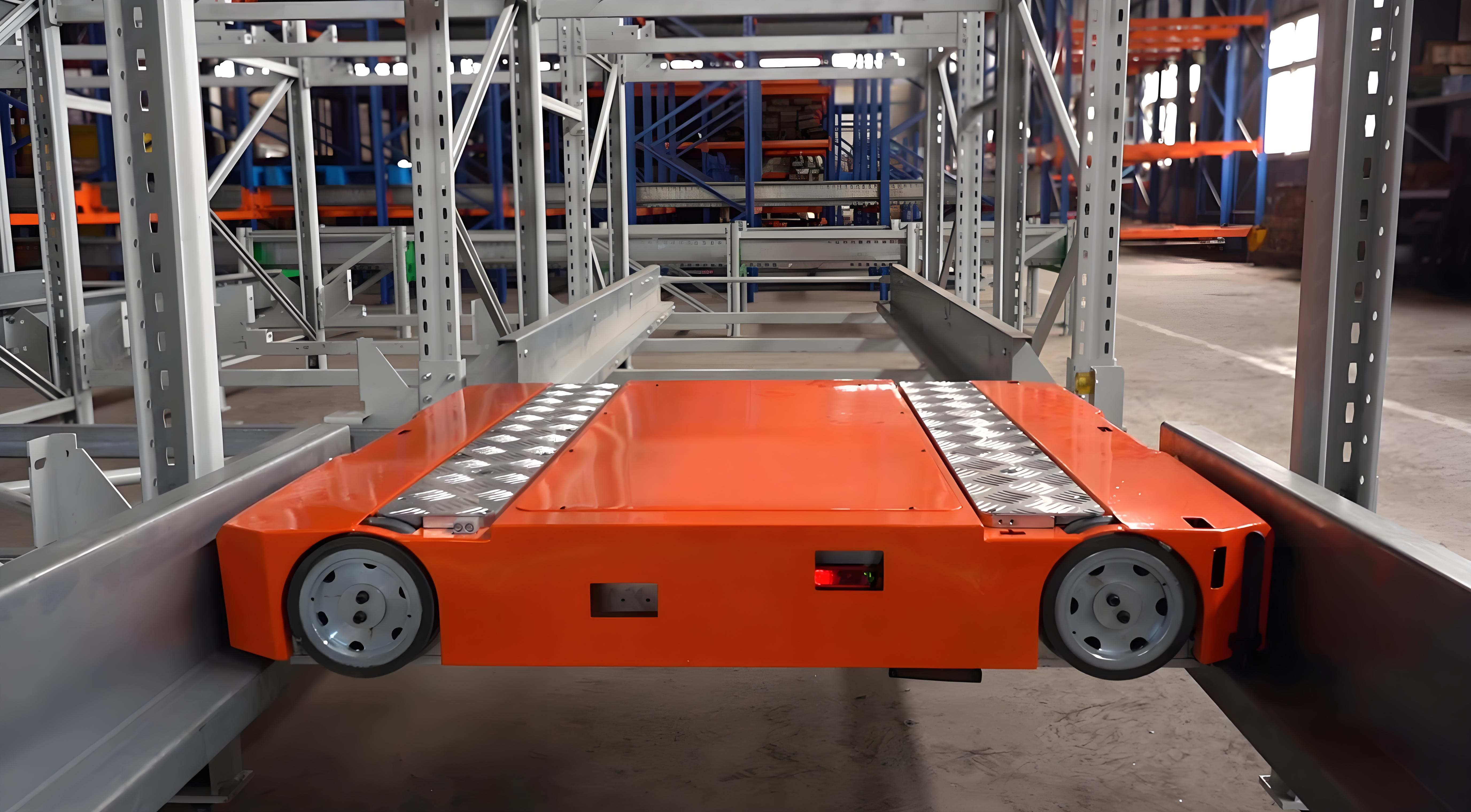

Integrated Warehouse Rack Project in Morocco | Rack Supported Warehouse
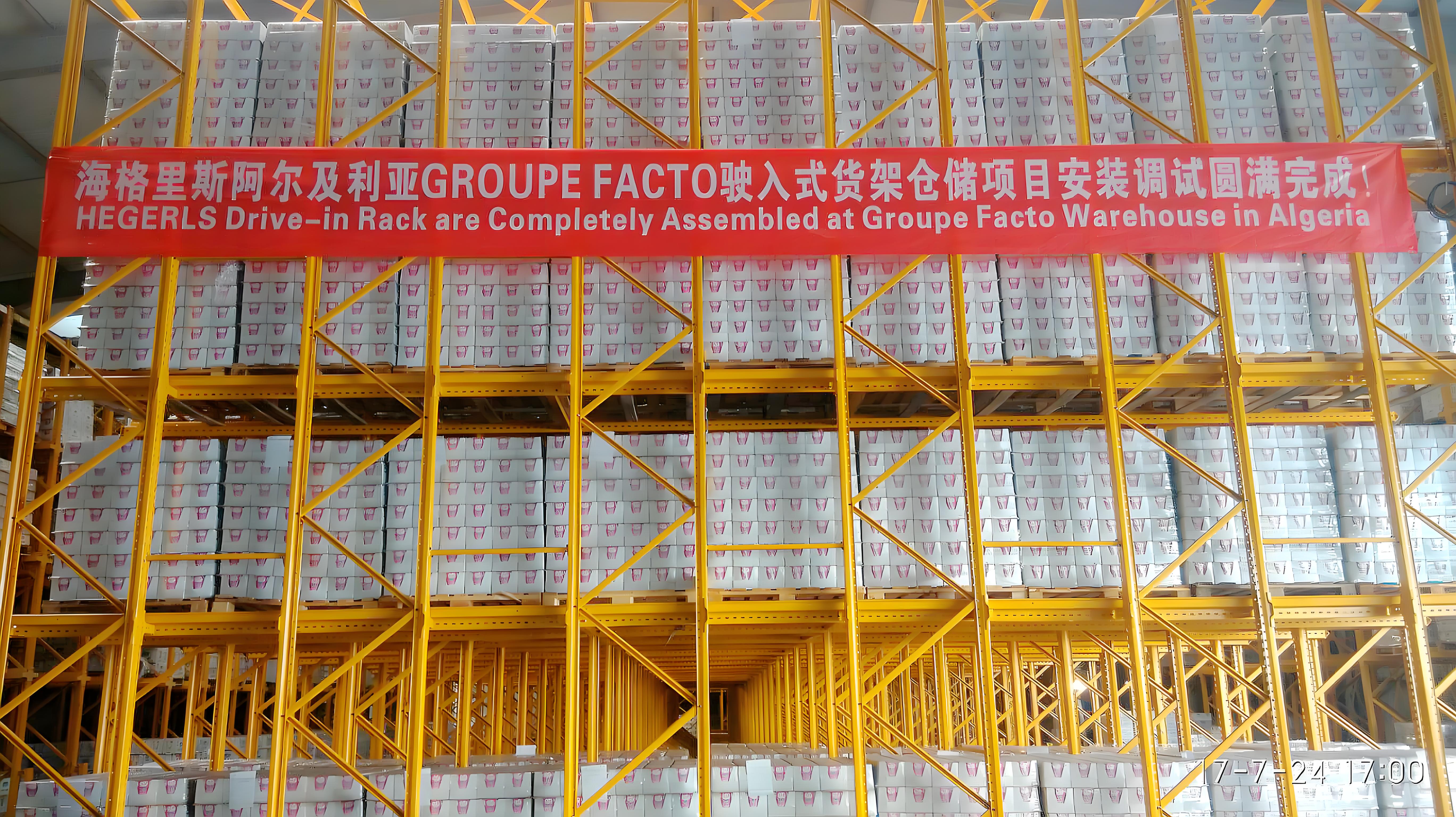
Algeria FACTO Group Storage Project
Related Products

MOBILE: +86 133 1595 3337
E-mails: hgls-wm@hbgysw.com
Office: Room 1118, Building No.6, Tatan Mall, Tatong Street, Shijiazhuang, China
Production base: 68 Shidai Road,Xinhe Industrial Park,Hebei Province
Website: https://www.woke-hercules.com



All rights reserved©2025 Hebei Woke Metal Products Co., ltd.