

-
SOLUTIONSIn recent years, “Hegerls" HD shuttle storage system have improved, upgraded, more intelligent, flexible, and more systematic, which can meet the different needs of customers in various industries.
 SERVICE
 -
-
R & DObtained more than ten national patents for automated logistics warehousing equipment such as shuttle cars, stackers, and mobile shelves, awarded SGS, BV, and TUV international product quality inspection agency certificates, as well as the "Quality, Environment, Health" ISO three major system certification certificates.
SERVICE
-
PROJECTSAfter Haigelis entered the international market in 2011, it exported supermarket equipment, warehousing equipment, and related supporting products to countries and regions such as North America, South America, Europe, Southeast Asia, and Africa. In recent years, the company has increased its efforts in the research and development of automated warehousing equipment.
SERVICE
-
BlogProfessional articles, guides, and insights on warehouse racking and automated storage systems.
SERVICE
-
HEGERLSIt's developed over 20 years, our company has become a one-stop integrated service provider of warehousing and logistics, integrating warehousing and logistics project design...
SERVICE

APPLICATION
HEGERLS Intelligent Warehousing Solutions Across Industries: How Customized Design Enables Flexible Deployment and Faster ROI
Classification:
Enterprise News
Release time:
2026-02-04
As intelligent warehousing becomes more common, many companies are facing a hard reality:
The more “advanced” the system looks, the harder it is to adapt when the business changes.
SKUs keep increasing.
Order profiles evolve.
Lead times get shorter.
Yet many warehouse automation systems are built on assumptions that become outdated the moment operations scale. Once installed, they are expensive—and sometimes impossible—to adjust.
This is why more companies are rethinking what intelligent warehousing should really mean.
True high-ROI warehousing is not about maximum automation from day one.
It is about customized design and flexible deployment that can grow with the business.
That is the core philosophy behind HEGERLS intelligent warehousing solutions across industries.

Why High-Density Automation Does Not Always Deliver High ROI
A common misconception in warehouse automation projects is:
- High density equals high efficiency
- Full automation equals better performance
- One-time “ultimate design” equals long-term optimization
In reality, these assumptions often break down in complex operating environments.
When SKU counts rise, demand becomes volatile, or FIFO requirements tighten, overly rigid systems begin to show their limits:
- Throughput declines during peak periods
- Scheduling becomes increasingly complex
- Retrofit costs exceed expectations
- Storage looks full, but outbound flow slows down
The problem is not automation itself—it is poor alignment between the system and the business.
ROI is determined by adaptability, not by how automated a system appears on paper.
What Does “Customized Intelligent Warehousing” Really Mean?
Many solutions claim to be “customized,” but in practice, customization often stops at parameter tuning.
At HEGERLS, customization starts much earlier—and much deeper.
Before selecting any equipment, we focus on understanding:
- Current and future SKU volume and variability
- Order profiles: full pallet, case picking, or mixed flows
- FIFO, batch control, and traceability requirements
- Peak throughput versus average daily volume
- Expansion plans over the next 3–5 years
These factors define whether a system can remain efficient as operations evolve.
We don’t customize equipment—we customize the relationship between the system and your business.

How HEGERLS Enables True Flexible Deployment
Flexibility is not a feature.
It is a result of system-level design.
Modular Hardware Architecture Built for Change
HEGERLS intelligent warehousing solutions are based on modular principles:
- Four-way shuttle systems can be expanded by aisle, level, or zone
- Racking structures allow phased densification
- Final system scale does not need to be fixed at the initial stage
This approach allows investment to follow business growth—not the other way around.
Your warehouse evolves instead of being locked into a single configuration.
Phased Automation Strategy for Controlled Investment
In many projects, HEGERLS applies a multi-phase automation roadmap:
- Phase 1: Semi-automated or low-entry deployment for fast go-live
- Phase 2: Introduction of four-way shuttle systems to increase density and throughput
- Phase 3: Full automation with intelligent scheduling and system orchestration
This strategy offers clear advantages:
- Lower initial capital pressure
- Faster validation of system-business fit
- Reduced risk in long-term automation planning
Automation becomes a journey—not a one-time gamble.

Software and Scheduling: Where Flexibility Truly Takes Effect
Hardware defines the baseline.
Software defines the ceiling.
HEGERLS solutions emphasize intelligent control at the system level:
- Multi-device coordination and task orchestration
- Dynamic load balancing during peak and off-peak periods
- Seamless integration with WMS and ERP platforms
- Fast rule adjustment as operational logic changes
This ensures that flexibility is not just structural—but operational.
Industries That Benefit Most from Flexible, Customized Warehousing
Manufacturing
- Multiple production batches
- Coexistence of WIP and finished goods
- Line-driven logistics rhythms
Flexible storage buffers stabilize production and reduce downstream disruption.

E-commerce and 3PL
- High SKU diversity
- Unpredictable order patterns
- Strong seasonality and promotional peaks
Scalable architecture is essential for maintaining service levels under volatility.
Cold Storage and Special Environments
- High construction and modification costs
- Limited tolerance for downtime
- Strict reliability requirements
Flexible deployment significantly reduces long-term operational risk.

Automated Production Line Interfaces
- Fixed takt times
- High-frequency inbound and outbound movements
- System bottlenecks directly affect production output
Expandable buffering and intelligent scheduling protect overall line efficiency.
Flexibility Does Not Mean Lower Efficiency
A common concern is that flexibility comes at the cost of performance.
In practice, the opposite is often true.
When system design closely matches operational reality, flexibility enhances throughput stability and predictability.
High density is a tool—but system alignment is the real driver of efficiency.
When Should You Re-Evaluate Your Warehouse System?
You may want to reassess your warehousing strategy if:
- Your system is live, but throughput can’t keep up with growth
- SKU complexity is rising faster than expected
- Automation upgrades feel risky or prohibitively expensive
- Your current system lacks scalability for future plans
If any of these sound familiar, now is the right time to revisit your warehouse architecture.
Building Warehouses That Grow with the Business
HEGERLS does not deliver one-size-fits-all solutions.
We design intelligent warehousing systems that are:
- Customized to operational reality
- Flexible enough to evolve
- Scalable for long-term growth
Because a warehouse should never become a limitation on your business.
Ready to design a warehouse that grows with your business?
Talk to HEGERLS engineers
to explore a customized, flexible intelligent warehousing solution
tailored to your operation.
FAQ
1. What are intelligent warehousing solutions with flexible deployment?
Intelligent warehousing solutions with flexible deployment refer to smart warehouse systems that can be quickly installed, scaled, and reconfigured based on operational needs. These systems combine automation, AI, and modular design to adapt to changing inventory volumes and business demands.
2. Why is flexible deployment important in modern warehouse automation?
Flexible deployment allows warehouses to quickly respond to demand fluctuations, seasonal peaks, and business growth without major infrastructure changes. This agility improves operational efficiency and reduces long-term investment risks.
3. How do intelligent warehouse systems achieve scalability?
Modern intelligent warehouse systems use modular components such as shuttle systems, robotics, and scalable racking structures. Businesses can expand capacity by adding modules instead of rebuilding the entire system, ensuring cost-effective growth.
4. What technologies enable flexible warehouse deployment?
Flexible intelligent warehousing relies on:
- AI and machine learning for demand forecasting
- IoT and sensors for real-time monitoring
- Robotics such as AMRs and shuttle systems
- Cloud-based WMS for system integration
These technologies enable dynamic and data-driven warehouse operations.
5. What are the benefits of flexible warehouse solutions?
Key benefits include:
- Faster deployment and reduced setup time
- Lower upfront investment costs
- Improved space utilization
- Real-time inventory visibility
- Enhanced adaptability to market changes
Flexible warehousing also improves fulfillment speed and customer satisfaction.
6. Can flexible warehousing reduce operational costs?
Yes. Flexible warehouse systems reduce costs by optimizing labor, minimizing unused space, and eliminating the need for large fixed infrastructure investments. Businesses only scale resources as needed, improving cost efficiency.
7. How does flexible deployment improve warehouse efficiency?
Flexible systems streamline workflows, reduce travel time, and automate repetitive tasks. This results in faster order processing, higher throughput, and improved overall warehouse productivity.
8. Can intelligent warehousing solutions integrate with existing systems?
Yes. Most intelligent warehouse solutions are designed to integrate with existing WMS, ERP, and logistics systems, enabling seamless data flow and operational coordination without major system overhauls.
9. What industries benefit most from flexible intelligent warehousing?
Industries that benefit include:
- E-commerce and retail
- 3PL logistics providers
- Manufacturing and automotive
- Cold chain and pharmaceuticals
These industries require scalable, fast, and accurate storage solutions.
10. Is flexible warehouse automation suitable for growing businesses?
Yes. Flexible and scalable warehouse automation is ideal for growing businesses because it allows them to start with a smaller system and expand as demand increases, reducing financial risk while supporting long-term growth.
Key words:
Intelligent Warehousing,Flexible Deployment,Customized Warehouse Solutions,Four-Way Shuttle,AS/RS
Related Solutions
Related Cases
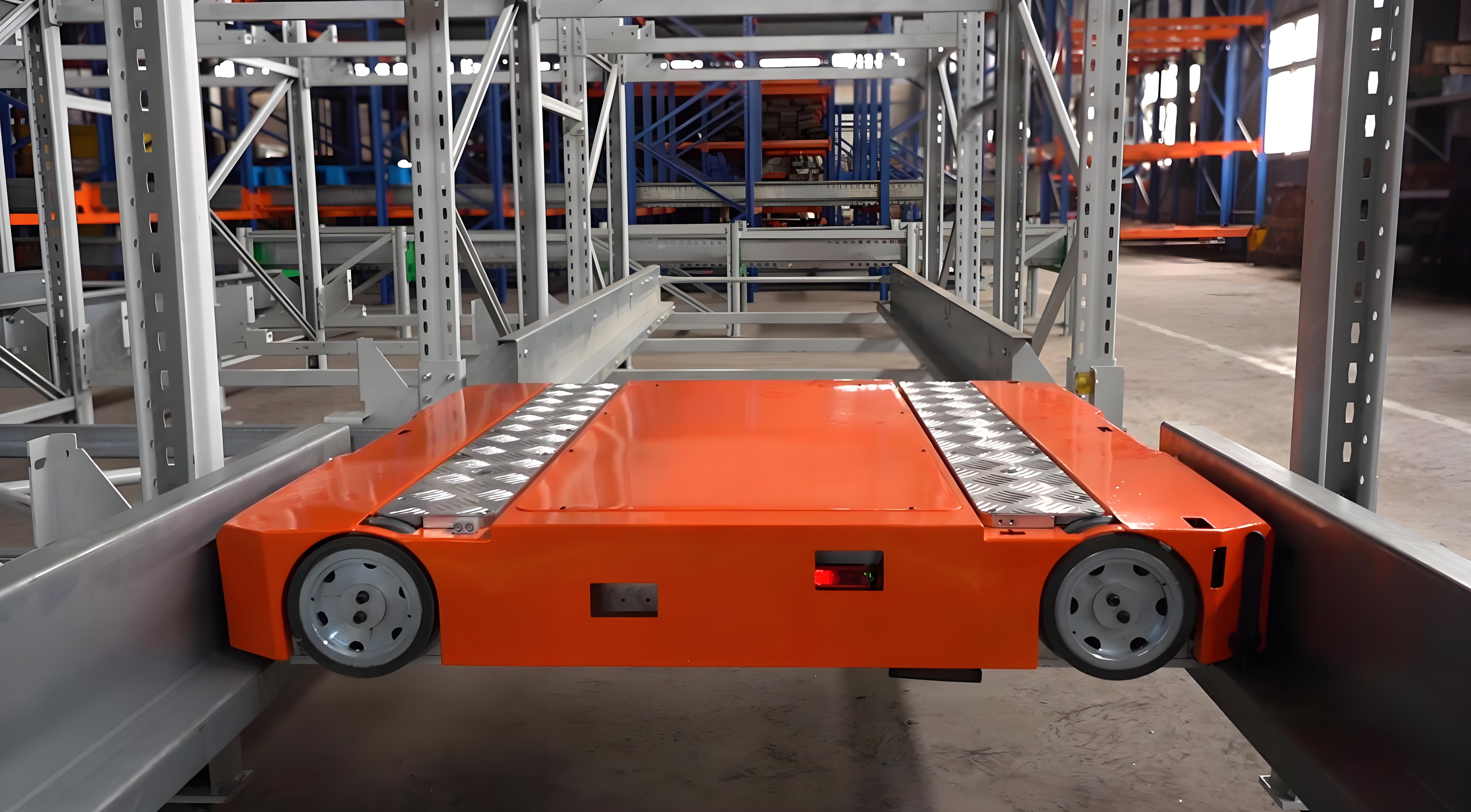

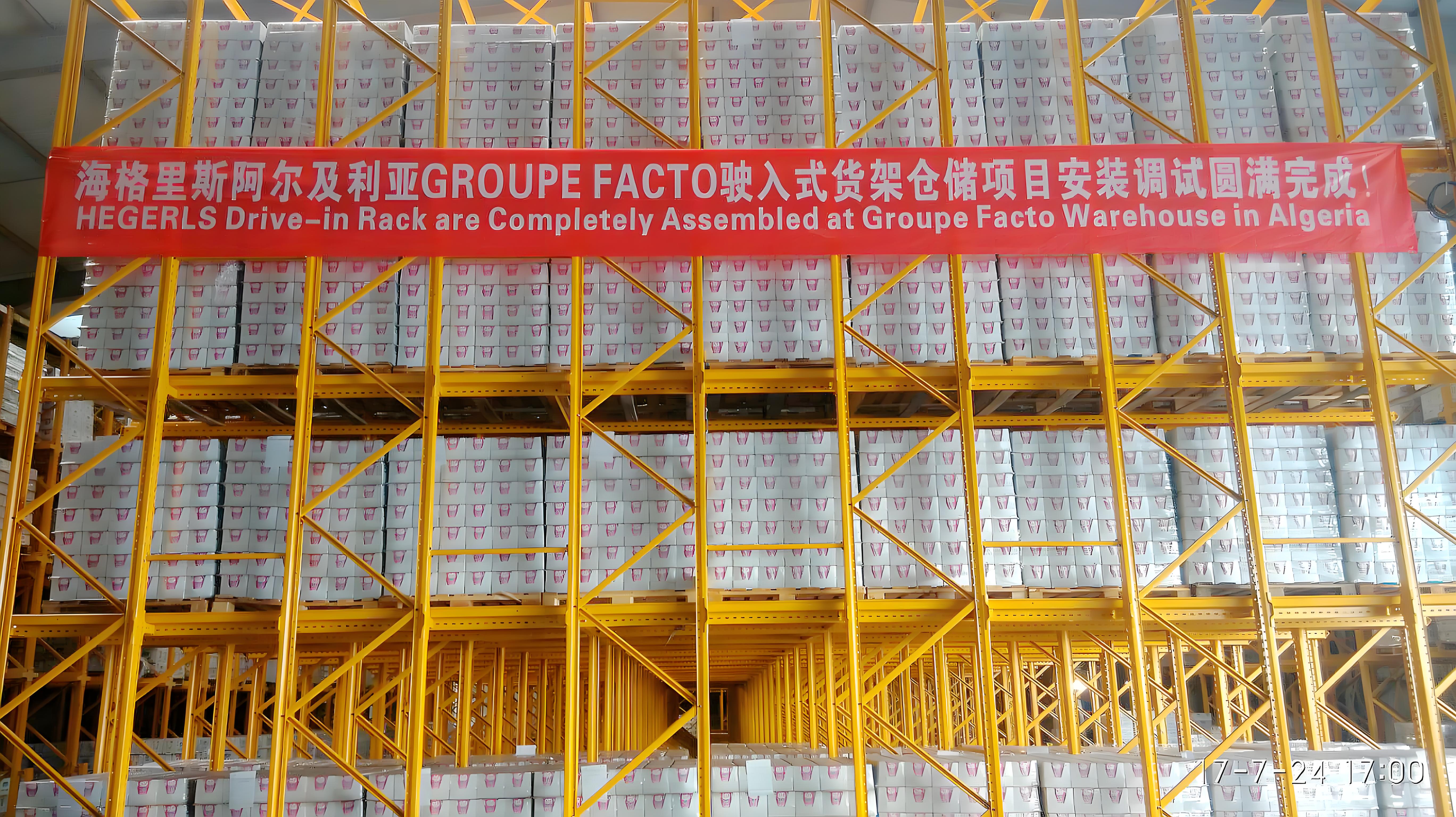
Algeria FACTO Group Storage Project
Related Products

MOBILE: +86 133 1595 3337
E-mails: hgls-wm@hbgysw.com
Office: Room 1118, Building No.6, Tatan Mall, Tatong Street, Shijiazhuang, China
Production base: 68 Shidai Road,Xinhe Industrial Park,Hebei Province
Website: https://www.woke-hercules.com



All rights reserved©2025 Hebei Woke Metal Products Co., ltd.