

-
SOLUTIONSIn recent years, “Hegerls" HD shuttle storage system have improved, upgraded, more intelligent, flexible, and more systematic, which can meet the different needs of customers in various industries.
 SERVICE
 -
-
R & DObtained more than ten national patents for automated logistics warehousing equipment such as shuttle cars, stackers, and mobile shelves, awarded SGS, BV, and TUV international product quality inspection agency certificates, as well as the "Quality, Environment, Health" ISO three major system certification certificates.
SERVICE
-
PROJECTSAfter Haigelis entered the international market in 2011, it exported supermarket equipment, warehousing equipment, and related supporting products to countries and regions such as North America, South America, Europe, Southeast Asia, and Africa. In recent years, the company has increased its efforts in the research and development of automated warehousing equipment.
SERVICE
-
BlogProfessional articles, guides, and insights on warehouse racking and automated storage systems.
SERVICE
-
HEGERLSIt's developed over 20 years, our company has become a one-stop integrated service provider of warehousing and logistics, integrating warehousing and logistics project design...
SERVICE

APPLICATION
Innovation and Development of Core Components in Logistics Equipment
Classification:
Industry Info
Release time:
2026-01-27
Introduction: Global Industry and Technology Background of Logistics Automation
Driven by the restructuring of global supply chains, the continuous growth of e-commerce, and the acceleration of industrial digitalization, the logistics equipment industry has entered a new cycle of technological upgrading. According to multiple international research institutions, the global market for warehouse automation and intelligent logistics has maintained double-digit growth over the past five years, with Automated Storage and Retrieval Systems (AS/RS), shuttle systems, logistics robots, and Vertical Lift Modules (VLMs) emerging as the fastest-growing segments.
From an industry perspective, the competitive logic of logistics equipment is undergoing a fundamental shift:
- In the early stage, competition focused on equipment manufacturing and single-machine performance;
- Today, the emphasis has moved toward system efficiency, long-term operational stability, and scalability;
- In high-end markets, competition has evolved into a comprehensive comparison of core component capability, software architecture, and scenario-based system solutions.
Against this backdrop, core components are no longer just a cost item within the bill of materials. Instead, they define the upper limit of system performance, reliability, and lifecycle value. As the industry transitions from standardized equipment deployment to system-level engineering, core components have become the true foundation of competitive advantage.
As a provider specializing in shuttle systems, AS/RS, Vertical Lift Modules, and integrated warehouse automation solutions, HEGERLS’s service portfolio closely aligns with the global evolution of logistics equipment technologies.

Global Development Context of Core Components in Logistics Equipment
Market Scale and Structural Transformation
Globally, the logistics equipment market has entered a growth phase dominated by automation and intelligence. In 2024, the global warehouse automation and intelligent logistics market exceeded USD 85 billion, and is projected to surpass USD 160 billion by 2030, with a compound annual growth rate (CAGR) of approximately 11–13%.
More importantly, the internal value structure of logistics systems is changing:
- The value share of core components and subsystems continues to rise, including control systems, drive systems, sensors, and software platforms;
- Core components now play a decisive role in system reliability, throughput efficiency, and scalability, surpassing traditional steel structures and purely mechanical parts;
- Customers increasingly evaluate projects based on lifecycle cost (LCC) rather than initial equipment investment alone.
Industry data indicates that the value contribution of core components and subsystems has increased from approximately 35% in 2018 to 45–50% today, clearly signaling that:
The value center of the logistics equipment industry is shifting from manufacturing capacity to core technology and system architecture.
High-Density Storage and Flexible Automation as Global Demand Drivers
Across major markets—including Europe, North America, and Asia-Pacific—high-density storage and flexible automation have become the dominant investment directions.
Europe faces high land and energy costs, accelerating the adoption of AS/RS and shuttle-based high-density storage systems;
North America is driven by e-commerce and third-party logistics (3PL) operators, requiring high-throughput, multi-SKU, flexible automation;
Asia-Pacific, particularly China, is experiencing rapid growth fueled by manufacturing upgrades and warehouse-to-distribution integration.
As a result, logistics system users now consistently demand:
- Maximum storage density per square meter
- High-frequency, multi-SKU inbound and outbound operations
- Modular system expansion without operational disruption
- 24/7 stable operation with minimal downtime
These requirements directly accelerate the adoption of four-way shuttle systems, rack-supported AS/RS, and Vertical Lift Modules (VLMs), while significantly raising technical standards for core components in terms of precision, durability, and safety redundancy.

HEGERLS Service Scope and Core Component Capability Mapping
HEGERLS’s solutions portfolio focuses on system-level automation rather than isolated equipment, including:
- Four-way shuttle systems
- Two-way shuttle systems
- Rack-supported Automated Storage and Retrieval Systems (AS/RS)
- Automated Vertical Lift Modules (VLMs)
- Integrated warehouse planning, WCS/WMS integration, and lifecycle services
Each of these systems imposes stringent and consistent requirements on core components, making component selection and system architecture critical to long-term performance.

Core Component Innovation Aligned with HEGERLS Solutions
Core Components in Shuttle Systems
Drive and Motion Systems
Shuttle systems are the execution backbone of high-density storage. Their drive systems directly affect:
- Operating speed and throughput
- Positioning accuracy
- Energy efficiency
- Service life and maintenance cycles
Key development trends include:
- High-efficiency servo motors combined with precision transmission structures
- Low-noise, high-wear-resistance wheel assemblies
- Modularized drive units enabling fast maintenance and scalability
Control and Scheduling Modules
Modern shuttle systems have evolved from simple execution devices into intelligent mobile nodes.
- Control architectures are shifting from traditional PLC-based logic to distributed control combined with intelligent WCS algorithms;
- Support for multi-shuttle parallel operations, dynamic task allocation, and real-time path optimization has become standard.
These capabilities form the core differentiation of HEGERLS four-way shuttle systems in complex, high-throughput environments.

Core Component Upgrades in AS/RS Systems
Lifting and Handling Mechanisms
In stacker cranes and lifting equipment, key core components include:
- High-precision guide rail systems
- Stable and durable lifting drive assemblies
- Load detection and safety monitoring modules
The primary engineering objective is:
Maintaining long-term stability and safety under higher speeds and increased operational intensity.
Sensing and Safety Control Systems
High-bay AS/RS environments rely heavily on:
- Laser distance measurement
- Anti-collision sensors
- Fork position and load monitoring systems
These components directly determine operational safety and system reliability, and represent a core element of HEGERLS’s system engineering expertise.
Core Logic of Vertical Lift Modules (VLMs)
VLM systems are highly dependent on:
- Precision vertical drive mechanisms
- Highly integrated control modules
- Human-machine interfaces tightly coupled with WMS logic
Key trends in VLM core components include:
- High-level integration to reduce mechanical complexity
- Low energy consumption and minimal maintenance requirements
- Deep software integration for seamless system coordination
HEGERLS’s advantage in this segment lies in its balanced approach to hardware reliability and software orchestration.

System-Level Value Creation: HEGERLS’s Differentiation
| Dimension | Typical Industry Approach | HEGERLS System-Oriented Approach |
| Component Selection | Focus on individual cost or specs | Focus on system stability and lifecycle performance |
| System Design | Standardized equipment assembly | Scenario-based engineering design |
| Control Logic | Standalone machine control | WCS/WMS collaborative scheduling |
| Scalability | High retrofit cost | Modular expansion with reserved interfaces |
This approach positions HEGERLS as a system solution provider, rather than a traditional equipment manufacturer.
Future Outlook: Strategic Directions Aligned with HEGERLS
Long-Term Growth of High-Density Storage
Rising land costs and labor shortages will continue to drive demand for:
- Four-way shuttle systems
- Rack-supported AS/RS
- Vertical Lift Modules
Localization and Supply Chain Resilience of Core Components
Amid global supply chain uncertainty, the stability, controllability, and engineering adaptability of core components are becoming critical decision factors for customers.
From Equipment Delivery to Capability Delivery
Customers increasingly prioritize:
- Overall system efficiency
- Long-term operational reliability
- Upgradeability and digital readiness
This shift aligns closely with HEGERLS’s solution-driven service model.
Conclusion
The logistics equipment industry is entering a new era defined by core component innovation, system architecture capability, and long-term service value. In the domains of shuttle systems, AS/RS, and automated storage solutions, HEGERLS’s service scope and technical focus are well aligned with the global evolution of logistics automation.
Ultimately, the companies that can translate core component excellence into stable, scalable, and future-ready systems will secure a lasting competitive position in the global logistics automation market.
Whether you are planning a new automated warehouse, upgrading an existing facility, or evaluating high-density storage solutions, selecting the right system architecture is critical to long-term performance and return on investment.
Contact HEGERLS today to discuss your project requirements with our engineering team. We provide scenario-based analysis, system-level design, and scalable automation solutions tailored to your operational needs.
Key words:
logistics equipment core components,automated warehouse systems,shuttle system warehouse,ASRS system,material handling equipment
Related Solutions
Related Cases
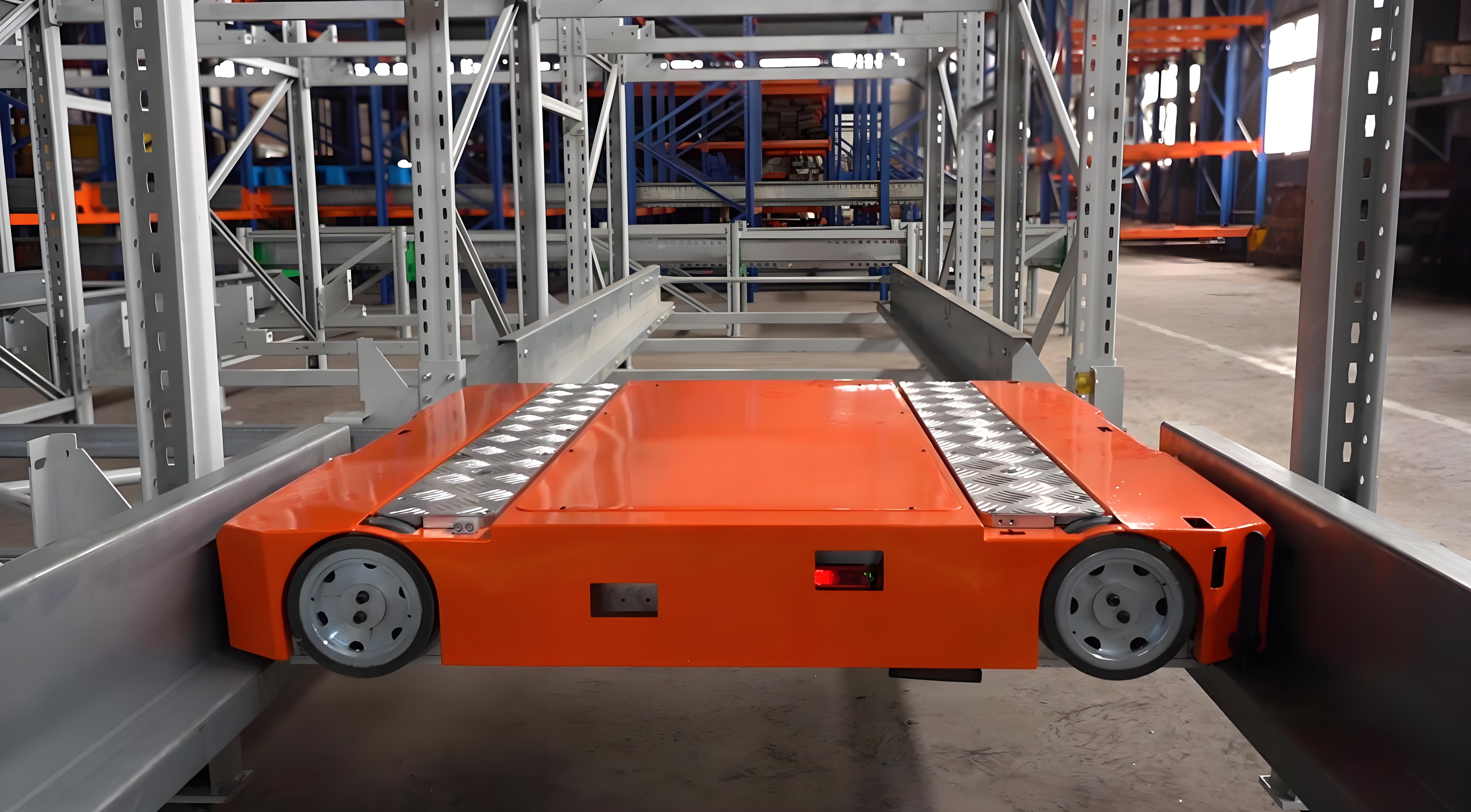

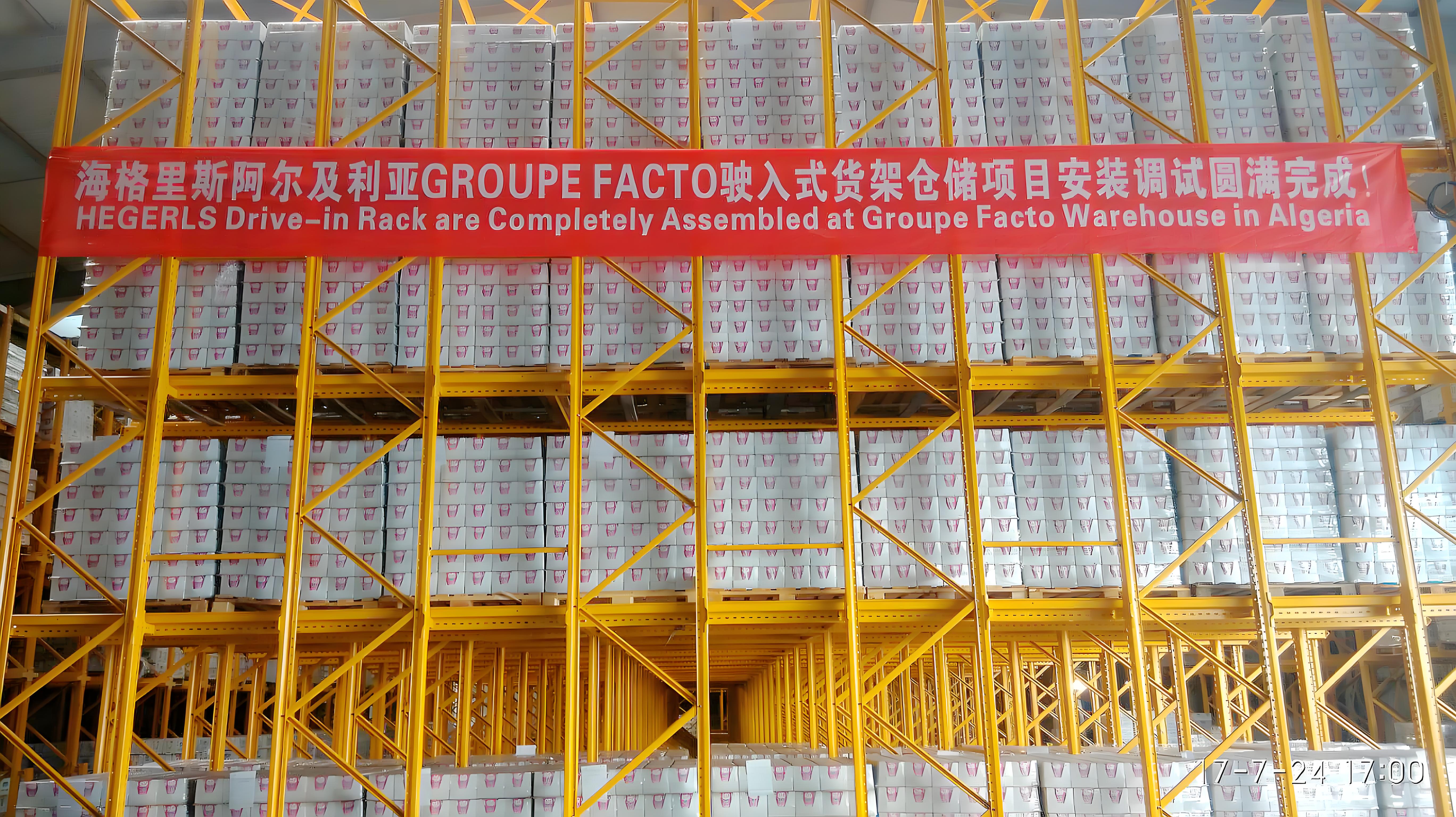
Algeria FACTO Group Storage Project
Related Products

MOBILE: +86 133 1595 3337
E-mails: hgls-wm@hbgysw.com
Office: Room 1118, Building No.6, Tatan Mall, Tatong Street, Shijiazhuang, China
Production base: 68 Shidai Road,Xinhe Industrial Park,Hebei Province
Website: https://www.woke-hercules.com



All rights reserved©2025 Hebei Woke Metal Products Co., ltd.